How to read tables of statistical regression results

Next week–January 21st–we’ll be looking at the debate between cultural and rationalist approaches to the analysis of political phenomena. As Whitefield and Evans note in the abstract of their 1999 article in the British Journal of Political Science:

There has been considerable disagreement among political scientists over the relative merits of political culture versus rational choice explanations of democratic and liberal norms and commitments. However, empirical tests of their relative explanatory power using quantitative evidence have been in short supply.

Their analysis of the political attitudes of Czech and Slovak residents is relatively rare in that the research is explicitly designed to assess the relative explanatory purchase of cultural and rationalist approaches to the study of political phenomena. Whitefield and Evans compile evidence (observational data) by means of a survey questionnaire given to random samples of Czech and Slovak residents. In order to assess the strengths of rationalist versus cultural accounts, Whitefield and Evans use statistical regression analysis. Some of you may be unfamiliar with statistical regression analysis, This blog post will explain what you need to know to understand the regression analysis results summarised in Tables 7 through 9 in the text.

Let’s take a look at Table 7. Here the authors are trying to “explain” the level of “democratic commitment”–that is, the level of commitment to democratic principles–of Czech and Slovak residents. Thus, democratic commitment is the dependent variable. The independent, or explanatory, variables can be found in the left-most column. These are factors that the authors hypothesize to have causal influence on the level of democratic commitment of the survey respondents. Some of these are nationality–Slovaks, Hungarians, political experience and evaluations–past and future–of the country’s and family’s well-being.

Each of the three remaining columns–Models 1 through 3–represents the results of a single statistical regression analysis (or model). Let’s take a closer look at the first model–ethnic and country dummy variables. In this model, the only independent variables analysed are one’s country and/or ethnic origin. The contrast category is Czechs, which means that the results are interpreted relative to how those of Czech residence/ethnicity answered. We see that the sign for the result of each of the two explanatory variables–Slovaks and Hungarians–is negative. What this means is that relative to Czechs, Slovaks and Hungarians demonstrated less democratic commitment. The two ** to the right of the numerical results (-0.18 and -0.07, respectively) indicate that this result is unlikely to be due to chance and is considered to be statistically significant. This would suggest that deep-seated cultural traditions–ethnicity/country or residence–have a strong causal (or correlational, at least) effect on the commitment of newly democratic citizens to democracy. Does this interpretation of the data still stand when we add other potential causal variables, as in Models 2 and 3? What do you think?


Signing up for a WordPress account

As I mentioned in lecture today, I’ve decided to allow those of you who are a little bit reticent about speaking in tutorial/lecture to supplement your participation grade via commenting on entries to this blog. In order to do so, you’ll have to sign up for a wordpress user account. To do so, go to and fill out the form. Make sure that you’re only signing up for an account rather than for a blog as well (unless, of course, you’d like to create your own blog). You can create a user name that is pseudonymous if you’re wary about publicly revealing your name. If you choose a pseudonym, make sure you e-mail me to let me know what it is.

In order to sign-up for a user name only, make sure that you click on the “sign up for just a user name” link after going to the link above. See the arrow in the diagram below. Happy commenting!!

Tips for Students on Writing Good Papers

Henry Farrell, who teaches political science at George Washington University, has posted an essay with tips for students writing political science papers. There are some important insights, such as “cut to the chase”, “organize, organize, organize”, and “avoid data dumps.” In my opinion, his most important tip (and this would also apply to examinations) is “read the requirements for the assignment.” If you’re unsure about the requirements, or there is something you don’t understand, seek clarification from your professor/instructor. The whole essay can be found here:


New and Old Wars Reading Questions

Here are some questions that we will try to answer in class, based on the Mueller, Kalyvas, Collier & Hoeffler, and Kaldor readings:

Thematic Questions:

  1. How has the nature of warfare changed (or has it) over the course of the last 70 years or so? Provide evidence from at least four sources.
  2. Comparatively assess the arguments of Collier & Hoeffer, Kalyvas, Mueller, and Kaldor. What are some commonalities? Divergence of opinion?
  3. What are the policy implications–from a humanitarian perspective–of taking each of the authors’ arguments seriously? Discuss.

Collier & Hoeffler (2004) “Greed and Grievance in Civil War

  1. De fine `greed’ and `grievance’ in the context of the analysis of rebellion/civil war.
  2. What are the types of causal mechanisms that each term implies?
  3. What do C & L mean by `opportunity’?
  4. Based on the statistical results, what conclusion do C & L draw regarding the causes of the onset of rebellion?
  5. What is the analytical importance of diaspora communities?
  6. How important are ethnic grievances in fomenting rebellion?

. Mueller (2000) The Banality of `Ethnic War’

  1. Why does Mueller put the words ethnic war in scare quotes in the title?
  2. What does Mueller mean when he says that ethnic war is `banal?’
  3. What evidence does Mueller use to support his main argument(s)?
  4. According to Mueller, what are the stages of ethnic war and ethnic cleansing?
  5. What is `ethnic cleansing’?
  6. Did ethnicity play any role in the inter-ethnic violence in Yugoslavia and Rwanda? Continue reading “New and Old Wars Reading Questions”

Excellent blog on Chinese Politics/Political Economy

Victor Shih, currently an assistant professor of political science at Northwestern University, keeps a blog at which he addresses issues related to Chinese politics. The blog deals mainly with topics related to Chinese political economy (an increasingly important topic as the rate for your car/home/student loan is intimately connected to the amount of US Treasury bonds purchased by the Chinese Central Bank) and elite politics in China.

Are Homebuyers Rational Decision-Makers?

According to rational choice theorists, how do individuals make decisions?  Put simply, they act so as to maximize their expected utility, given their a priori preferences and some general idea of the nature of the world (by this, they mean that individuals have some idea of the probability of certain actions leading to specific outcomes).  While rational choice theory was first developed in academic disciplines such as economics, political scientists have adopted the technique and it’s use has proliferated in that discipline.  One of the criticisms of using rational choice theory to explain political phenomena is that often individuals have difficulty ordering preferences adequately.  This is because there is no single “currency” of utility in political science.  The same, however, can not be said for economics as it is much easier to order preferences when there are dollar values attached.  But what happens when time, leisure, etc., have to be taken into account.  Well, it turns out that individuals make many “mistakes” that diverge from that expected of instrumentally rational decision-makers.

Jonah Lehrer informs his readers of a fascinating series of studies done by Ap Dijksterhuis, a psychologist at Radboud University in the Netherlands.  One of these studies looks at decisions related to real estate purchases.  The studies:

look at how people shop for “complex products,” like cars, apartments, homes, etc. and how they often fall victim to what he calls a “weighting mistake”. Consider two housing options: a three bedroom apartment that is located in the middle of a city, with a ten minute commute time, or a five bedroom McMansion in the suburbs, with a forty-five minute commute. “People will think about this trade-off for a long time,” Dijksterhuis writes. “And most them will eventually choose the large house. After all, a third bathroom or extra bedroom is very important for when grandma and grandpa come over for Christmas, whereas driving two hours each day is really not that bad.” What’s interesting is that the more time people spend deliberating, the more important that extra space becomes. They’ll imagine all sorts of scenarios (a big birthday party, Thanksgiving dinner, another child) that will turn the suburban house into an absolute necessity. The lengthy commute, meanwhile, will seem less and less significant, at least when compared to the allure of an extra bathroom.

But, as Dijksterhuis points out, that reasoning process is exactly backwards: “The additional bathroom is a completely superfluous asset for at least 362 or 363 days each year, whereas a long commute does become a burden after a while.” For instance, a recent study found that, when a person travels more than one hour in each direction, they have to make forty per cent more money in order to be as “satisfied with life” as someone with a short commute. Another study, led by Daniel Kahneman and the economist Alan Krueger, surveyed nine hundred working women in Texas and found that commuting was, by far, the least pleasurable part of their day. And yet, despite these gloomy statistics, nearly 20 percent of American workers commute more than forty-five minutes each way. (More than 3.5 million Americans spend more than three hours each day traveling to and from work: they’re currently the fastest growing category of commuter. For more on commuter culture, check out this awesome New Yorker article.) According to Dijksterhuis, these people are making themselves miserable because they failed to properly “weigh” the relevant variables when they were choosing where to live. Because these deliberative homeowners tended to fixate on details like square footage or the number of bathrooms, they assumed that a bigger house in the suburbs would make them happy, even if it meant spending an extra hour in the car everyday. But they were wrong.:

Cross-National Comparisons in Alcohol Consumption amongst Adults

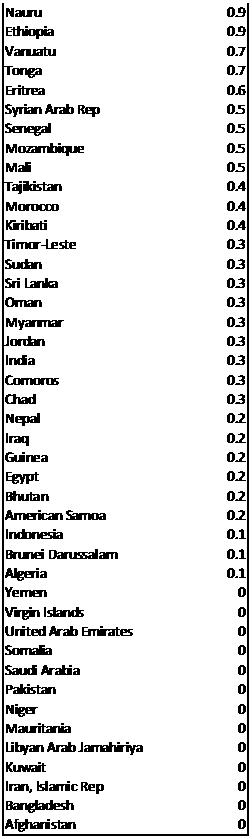
In response to a short assignment on the process of modeling social phenomena, one of my students (thanks, EE!) has chosen to try to understand why the residents of some countries consume (on average) more alcohol per capita than the residents of other countries. She argued that it may have something to do with the cultural acceptance of drinking alcohol as children. That’s seems to be a plausible hypothesis. You can find data on annual drinking rates from the EarthTrends website (which I’ve used on many previous occasions; it’s a fantastic resource!). Here is a link to 2003 data (the most recent year for which they have data) and here is a table, which I have created from the data. What do you think accounts for the difference in consumption across these countries?

Intro to International Relations–Second Paper–Morality and IR

A major component of the second half of this course was using the theories we learned in the first half to analyze international issues from a moral perspective. The second paper allows students to choose a topic that they find interesting and analyze it from a moral perspective. Here’s the assignment:

PLSC250–Intro to IR–Second Paper–International Ethics

Increasingly, the role of morality has played an important role in the conduct and analysis of
international affairs. For this paper, you will write about a topic in international relations that has an explicitly moral component. You can use the Amstutz book as a guide, or go to the journal Ethics and International Affairs for some other ideas. The choice of topic is wide open except for two conditions:

  1. You must not write on the same topic as your first paper!
  2. You may not use specific cases out of the Amstutz text. That is, if Amstutz has written a case about it, you are not allowed to write on that particular topic. Thus, you are free to write about the ethics of intervention, but do not use Kosovo as your case, as Amstutz doesin Case 1.1. You could choose to write on intervention in Somalia, or East Timor, instead.

Given the preceding, here’s what your paper should address:

  1. A topic that has an explicitly moral/ethical component.
  2. You should take a side on the issue. In other words, this should be an argumentative piece, in which you set out a clear declarative statement regarding the crux of the moral issue. For example: “In this paper I will argue that the the United States should lead a boycott of Canadian-made products (like hockey players, maple syrup and Celine Dion) as a means of stopping the annual baby seal hunt in Canada’s north (which, by the way, has just begun). I will prove unequivocally that the seal hunt violates basic international moral norms and that the means proposed to end the hunt are themselves morally legitimate.”
  3. You should argue why you believe the side for which you are arguing is the correct one. Thus, your ethical reasoning should be explicit. (We’ll discuss more about ethical reasoning in class on Monday.)
  4. The paper should be 4-5 pages in length, 1-inch borders on 8.5X11-inch paper. In addition, the paper should be formatted in the same manner as the first paper. Please also refer to videos I have posted on how to format the paper correctly (with correct page numbering, etc.) and also how to easily create a works cited page using Noodlebib. Remember also to copy and paste the paper evaluation sheet to the end of your paper. Instructions on how to do this are also in one of the videos.
  5. The paper is due electronically via Digital Dropbox on Monday, April 14th, by the beginning of class.

Good luck!

P.S. 1If you are uncertain whether your proposed topic is appropriate for the assignment, speak with me about it.

Mock German Election Simulation–Government Formation Results

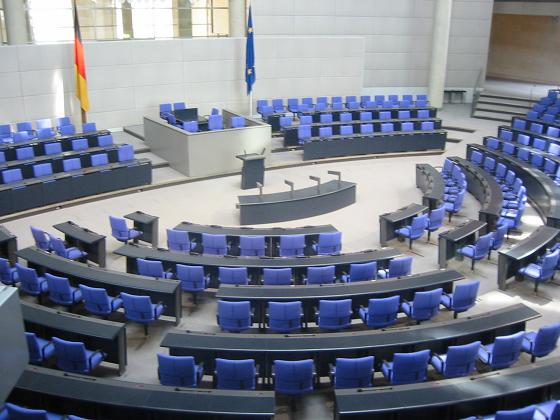
In the second part of our mock German election simulation–the government formation negotiations–we were able to get a new government voted into power by the recently elected Bundestag.  (I refer you to this post for more information about the electoral results.)

To remind you, following the election, we had the composition of the Bundestag was:

FDP–6 mandate (formateur party)

CDU/CSU–4 mandates

SPD–3 mandates

Greens–3 mandates

In order to have a secure governing coalition, a governing coalition of at least 9 mandates would be needed in this sixteen-member parliament.

The FDP were unable to convince any of the other parties to form a governing coalition with them, and the government that was voted into office, by a majority vote of 10-6 was a three-party coalition of the Greens, CDU/CSU, and the SPD.

In the end, it was the personal ambition of the CDU/CSU leader–Patrick S.–that ruled the day.  He wanted to become Chancellor and this steely determination served him well as he, with his fellow party members and advisory committee, was able to effectively forge a rather wieldy three-party governing coalition.

Why did Patrick S. want to become Chancellor so desperately?  There have been reports in some of the leading journals that it has been his dream since childhood.  But in a sit-down interview with Deutsche Welle following his ascension to the Chancellorship, Chancellor S. claimed that it was because this election was crucial to the future of the German state.  According to the Chancellor, he and his party believe that a moral crisis of epic proportions has descended upon Germany and only his party had the necessary moral acuity to set Germany back on the correct path.

The Chancellor and the six-member Cabinet is composed of the following:

Chancellor–Patrick S. (CDU/CSU)

Minister of Education–Becky W. (Greens)

Minister of the Interior–Erick K. (CDU/CSU)

Minister of the Environment–Zhivko I. (Greens)

Minister of Foreign Affairs–Kyle B. (CDU/CSU)

Minister of Health–Rip F. (SPD)

Minister of Labor–Andrew S. (SPD)

One of the advisers to the SPD commented that the SPD actually had refused to sign a coalition agreement offered to them by the FDP, which in retrospect, was better for the SPD than the one they signed ultimately.  There seemed to be a consensus within the SPD that the arrogance of the FDP had created friction between the two potential coalition partners.

I look forward to reading your impressions of the simulation exercise on your blogs.

Introduction to Comparative Politics–Second Paper

Here is the second paper, whose theme is “culture” (or not) and democracy.*”

Introduction to Comparative Politics Paper–Culture and Democracy

“In Islam, God is Caesar,in [Confucianism], Caesar is God; In [Eastern Christian] Orthodoxy, God is Caesar’s junior partner.”

“The underlying problem for the West in not Islamic fundamentalism. It is Islam.”

“Contemporary China’s Confucian heritage, with its emphasis on authority, order, hierarchy, and supremacy of the collectivity over the individual, creates obstacles to democratization.”

The quotes above will serve as the inspiration for your second paper this semester. I would like you to argue in favor or against the claims made by Huntington quoted above. You can argue that they are basically true, essentially false, or some combination thereof2. Regardless, your task is to provide a reasoned, well researched response to the declarative statements above, using Chapters 5 and 6 in O’Neil, and the articles by Fish, Stepan, Perry, Zakaria, and any others we have read, as your starting points.

Assess the arguments in light of what you know about the requirements (institutional, cultural, structural) of democracy and the nature of authoritarianism. Your outside research will most likely focus on understanding more about Islam, “Asian values,” and/or Christian Orthodoxy (as it is practiced in Eastern Europe).

While the main focus of your paper will be in setting up an argument for or against the claims above, I would like you to then use two states–one “predominantly Muslim”, and one Asian (or Eastern Orthodox)–to illustrate your main arguments and to act as supporting evidence for your claims. Please use chapters 5 and 6 of the Essentials and of Readings as the main source for the paper. For information related to your specific states, you will have to consult at least 4 other academically reputable sources. Note that this means Google is not your friend here!! This will entail a trip down to the library by foot, or a virtual trip to the library’s electronic resources.

Your paper should be 4-5 pages long, double-spaced on 8:5X11-inch paper, with 1-inch margins on the top, bottom, and the sides. The paper must be written in Times Roman 12pt. font. In addition, please cut and paste the “Paper Evaluation Sheet” from Blackboard to the end of your paper (after the works cited page). The paper is due electronically via Digital Dropbox in Blackboard by the beginning of class on Tuesday, April 15th.

Good luck, you kings and queens of comparative!!

*Note: See the version of this assignment posted to Blackboard as it has informative (and helpful) footnotes.

Design a site like this with WordPress.com
Get started