Tunisia’s President Steps Down and Flees Country

We’re witnessing the fall of another autocrat, this time in the northern African country of Tunisia. The (as of earlier today) former president, Zine al-Abidine Ben Ali, has stepped down amidst worsening violence and protests, ending 23 years of autocrat rule. The BBC reports:

Tunisia’s president has stepped down after 23 years in power amid unprecedented protests on the streets of the capital Tunis.

Prime Minister Mohammed Ghannouchi said he would be taking over from President Zine al-Abidine Ben Ali. A state of emergency has been declared amid protests over corruption, unemployment and rising prices.

BBC sources say Mr Ben Ali has flown to the Mediterranean island of Malta, but this has yet to be confirmed.

Earlier, police fired tear gas as thousands of protesters gathered outside the interior ministry.

Doctors say that 13 people were killed in overnight clashes in Tunis, and there are unconfirmed reports that five people have been killed in protests on Friday outside the capital.

Troops have surrounded the country’s main international airport, Tunis Carthage, and the country’s air space has been closed.

In an address on state television, Mr Ghannouchi said: “Since the president is temporarily unable to exercise his duties, it has been decided that the prime minister will exercise temporarily the duties.”
Tunisia’s President Zine al-Abidine Ben Ali addresses the nation in this still image taken from video, January 13, 2011. Zine al-Abidine Ben Ali was only Tunisia’s second president since independence from France in 1956

Mr Ghannouchi, 69, a former finance minister who has been prime minister since 1999, will serve as interim president. Earlier, the president – who had said in a TV address on Thursday night that he would relinquish power in 2014 – said he was dismissing the government and dissolving parliament, and that new elections would be held within six months.

The state of emergency decree bans more than three people from gathering together in the open, and imposes a night-time curfew. Security forces have been authorised to open fire on people not obeying their orders. Human rights groups say dozens of people have died in recent weeks as unrest has swept the country and security forces have cracked down on the protests.

The protests started after an unemployed graduate set himself on fire when police tried to prevent him from selling vegetables without a permit. He died a few weeks later.

If Tunisia manages to use this moment as the springboard towards democratisation, it would be only the second true democracy in the Middle East/North Africa. According to the Freedom House organisation, that region of the world is the least democratic, as the map below demonstrates

Freedom in the World 2010

Independence Referendum in Southern Sudan

The most important international political event occurring this week is arguably the independence referendum in southern Sudan. Despite clashes a couple of days ago along the border separating the north and south, which left dozens dead, the New York Times reports that voting is peaceful. As The Globe and Mail’s Geoffrey York notes, while the referendum may ultimately lead to a new state being created in the south, the cost “has been horrific.”

Southern Sudan has been consumed by devastating wars for most of the past half-century. An estimated 2.5 million people have perished in those wars, with atrocities on all sides that were shocking in their cruelty.

After decades of indifference by most of the world, the irony is that Southern Sudan suddenly became a fashionable cause over the past decade. Its oil exports became lucrative, forcing the north and south to try to settle their conflict in order to protect their revenue flows. Simultaneously, there was a rapid escalation of U.S. diplomatic pressure on both sides, including the threat of sanctions – partly because evangelical Christian lobbyists had persuaded Congress that it needed to protect the south’s Christians from Muslim persecution.

Here’s a fascinating set of maps creating by the BBC to show that the north and south of Sudan differ in more than simply ethnicity and oil wealth.

Here’s a report from Al Jazeera about some of the important issues related to the referendum:

Sarah Palin should have taken PLSC250

Had one of my Introduction to International Relations students been taking questions from Charlie Gibson tonight, s/he would have been well prepared to answer his question regarding the “Bush Doctrine”.  As my students (still?) know, the “Bush Doctrine” was most clearly and forcefully enunciated in the 2002 National Security Strategy of the United States.  While there are three major components to the “Bush Doctrine”, the most important of which (at least the one that received the most attention and presented the most radical departure from the part-realist, part-liberal, bi-partisan, pre-9/11 US foreign policy framework was the idea of using preemptive military force, without the need for there to be an imminent threat.

Democratic critics have often charged Bush and his administration with claiming that Saddam Hussein posed an “imminent threat”, but I have yet to see any evidence that anyone speaking for the administration did so.  And it’s not a surprise, as the Bush Doctrine allows the use of force without imminent threat.  Maybe Governor Palin should bring some of those critics along with her to my class.  And if the Republican Party would like to hire a IR tutor for Governor Palin, they’ll find my rates more than reasonable.

Citizenship, Jus Soli, and “Anchor Babies”

As we learned in Chapter 3 of O’Neil, there are two (main) types of citizenship (remember that citizenship describes the nature of one’s relationship to the state): jus sanguinis and jus soli.  Like many states, the United States of America grants citizenship to individuals on the basis of both (and also on the basis of naturalization).  The principle of jus soli gives persons citizenship status on the basis of being born on territory that the state formally controls.  

The legitimacy, efficacy of jus soli has increasingly become questioned in some political circles in the United States (and in other countries that grant citizenship on that basis.  Watch the clip below on the “anchor baby” phenomenon between U.S. Representative Virgil Goode (R-VA) and his challenger:

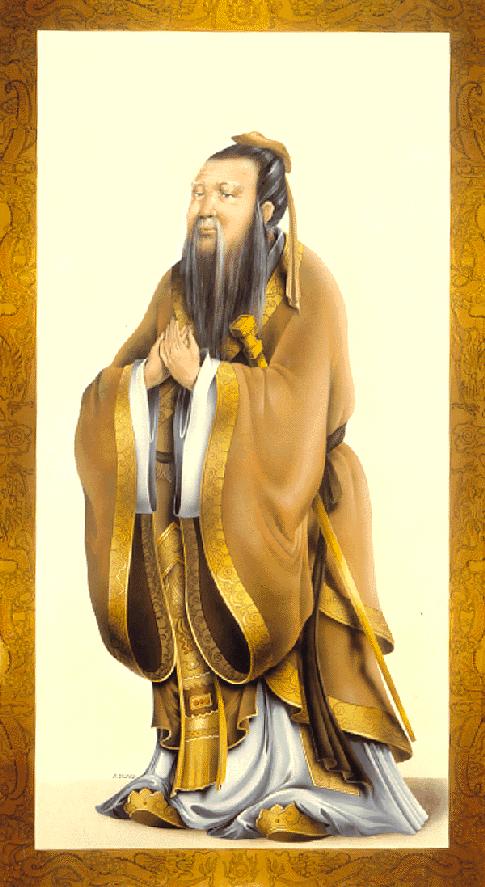
What are the Fundamental Tenets of Confucianism…Culture as Destiny?

Over the past few weeks, we have addressed the debate regarding the relative explanatory power of cultural versus institutional and rational choice approaches to the analysis of political phenomena.  In the book excerpt, “A Brief History of Human Liberty,” Newsweek editor Fareed Zakaria analyzes the cultural argument regarding economic growth and democracy. He quotes the former Singaporean Prime Minister Lee Kuan Yew:

“…if you want to see how culture works, compare the performance of German workers and Zambian workers anywhere in the world.  You will quickly come to the conclusion that there is something very different in the two cultures that explains the results.”

Zakaria has some sympathy for this argument, but then argues that it is strange that Lee Kuan Yew is such a strong proponent of cultural arguments* given that while Singapore is culturally very similar to its neighbor, Malaysia, Singapore has been much more effective in its economic policies than has its neighbor.  In fact, I would add that a strong argument against cultural explanations of democracy and economic development are the differences between East Germany and West Germany (in the post-WWII-era until unification) and the present difference between North and South Korea.

The 38th parallel may be just a line on a map, and the division of the nation of Korea into two separate states may be a historically contingent act, but it demonstrates the tremendously powerful impact of institutions on a society.  South Korea was able to develop good political and economic institutions, while North Korea has not.  The cultural foundation of each state was similar (although I’m not an expert on Korea, so maybe there was a cultural difference between the “north” and the “south” that can account for the vast differences in the two states today–although I’m highly skeptical) before the division and we know, in a methodological sense, that a constant can not explain an outcome that varies.

Getting back to Zakaria and Lee Yuan Kew, Zakaria writes that

“the key to Singapore’s success…is Lee Kuan Yew, not Confucius.  The point is not that culture is unimportant; on the contrary it matters greatly…But culture can change…A hundred years ago, when East Asia seemed immutably poor, many scholars–most famously Max Weber [we’ve read his Protestant Ethic argument]–argued that Confucian-based cultures discouraged all the attributes necessary for success in capitalism…A decade ago, when East Asia was booming, scholars had turned this explanation on its head, arguing that Confucianism actually emphasized the traits essential for economic dynamism. Today the wheel has turned again and many see in ‘Asian values’ all the ingredients of crony capitalism.”‘

What are these Confucian and ‘Asian values’ about which there has been so much discussion.  Well, needless to say Asia is a vast land mass, with exceedingly high levels of diversity–culturally, linguistically, religiously, racially, etc.  So the concept of ‘Asian values’ may be so amorphous as to http://onpoint.wbur.org/2006/08/15/china-and-confucian-democracy http://onpoint.wbur.org/2006/08/http://onpoint.wbur.org/2006/08/15/china-and-confucian-democracy/china-and-confucian-democracy.  Confucianism, however, is a distinct and compact body of ideas that has a comprehensive philosophical foundation.  What are Confucian values, then and do they help or hinder China’s precarious journey towards democracy and economic development?  Well, here’s an answer from political philosopher Daniel Bell, who insists that ultimately, Confucianism is about three core values.  What are these?  Listen to the first ten minutes of the audio podcast from this episode of “On Point.”  Here’s a link to the URL on which you can find an archived version of the show.

**Here, it should be noted that a reason Lee Kuan Yew is strongly predisposed to arguing on the basis of culture is his contempt for the licentiousness of Western values and his desire to prevent demands for those kinds of freedoms (as long as political liberty) to take root in the strongly authoritarian state of Singapore.  Just read his statements during the infamous Michael Fay incident.

It wasn’t long before Singapore patriarch Lee Kuan Yew weighed in. He reckoned the whole affair revealed America’s moral decay. “The U.S. government, the U.S. Senate and the U.S. media took the opportunity to ridicule us, saying the sentence was too severe,” he said in a television interview. “[The U.S.] does not restrain or punish individuals, forgiving them for whatever they have done. That’s why the whole country is in chaos: drugs, violence, unemployment and homelessness. The American society is the richest and most prosperous in the world but it is hardly safe and peaceful.”

Here’s another story on the incident.

John Cleese on Proportional Representation

There are generally two types of electoral system in use around the world–first-past-the-post (single-member district) and proporational representation (multi-member district).

As John Cleese explains in this public service announcement, the choice of which electoral system to implement in a democracy can have a dramatic impact on party politics and on the political system in general.  The idea behind proportional representation is that the composition of the legislative body is directly representative of the political opinions in the electorate.  So if, for example, 3% of the electorate votes for the Polish Beer-Lovers’ Party (PPPP–Polska Partia Przyjaciół Piwa), as happened in the Polish parliamentary elections of 1991, then that party will have 3% of the representatives in the legislative body (which it did).

In first-past-the-post systems, such as the USA, Canada, and the UK, the electorate is divided up into single-member-districts, from which a single representative is elected to represent that seat in the parliament.  The winner does not have to win a majority of the vote, only a plurality.  Thus, if there are 4 contenders for a particular seat, and three of them each garners 20% of the vote, the fourth candidate, with 40% of the vote, wins the seat, representing that district in parliament.  The rest of the votes (the 60% going to non-winning parties) is “wasted” as it is not used to determine representation in parliament.  These are the basics, but upon these foundations one can build a myriad of different types of systems, such as the “double-vote” system in Germany.

Monty Python’s take on Constitutional Government

I am a huge fan of the British sketch comedy group Monty Python.  For a political science professor, this clip is like politico-comedic gold.  Here is Dennis the peasant’s views on democratic legitimacy, the proper role of popular mandates in the wielding of supreme executive power, and a sarcastic critique of socialist critiques of liberal capitalism (“oh, there you go bringing class into it again!”).  And remember, “you don’t vote for kings.”

Fareed Zakaria calls John McCain’s Foreign Policy Vision Radical

I won’t be posting much over the next week or so as grading and exams are taking up most of my time. I did want, however, to alert my students to this interesting article by Newsweek editor Fareed Zakaria on Republican Presidential candidate John McCain’s foreign policy philosophy. Zakaria agrees with Pat Buchanan and others at the American Conservative magazine that McCain’s foreign policy views are a radical break with past administrations (Democratic and Republican). Zakaria writes:

On March 26, McCain gave a speech on foreign policy in Los Angeles that was billed as his most comprehensive statement on the subject. It contained within it the most radical idea put forward by a major candidate for the presidency in 25 years. Yet almost no one noticed.

I guess that’s because the American media knows what the real issues are–Barack Obama refusing coffee for orange juice at a diner in Pennsylvania, Hillary Clinton doing shots in a Pennsylvania bar (were they body shots?), and lapel flag pins.

In his speech McCain proposed that the United States expel Russia from the G8, the group of advanced industrial countries. Moscow was included in this body in the 1990s to recognize and reward it for peacefully ending the cold war on Western terms, dismantling the Soviet empire and withdrawing from large chunks of the old Russian Empire as well. McCain also proposed that the United States should expand the G8 by taking in India and Brazil—but pointedly excluded China from the councils of power.

We have spent months debating Barack Obama’s suggestion that he might, under some circumstances, meet with Iranians and Venezuelans. It is a sign of what is wrong with the foreign-policy debate that this idea is treated as a revolution in U.S. policy while McCain’s proposal has barely registered. What McCain has announced is momentous—that the United States should adopt a policy of active exclusion and hostility toward two major global powers. It would reverse a decades-old bipartisan American policy of integrating these two countries into the global order, a policy that began under Richard Nixon (with Beijing) and continued under Ronald Reagan (with Moscow). It is a policy that would alienate many countries in Europe and Asia who would see it as an attempt by Washington to begin a new cold war.

This is bang on. Hillary Clinton and others, who have tried to trash Obama on his views about dialogue with putative enemies would do well to remember that it was ultimately dialogue with China and the Soviet Union that lessened tensions between these states and the United States. What McCain wants to do is to return the world to the situation ex-ante, for what strategic reason I’m not sure. This is, in the immortal words of Chazz Michael Michaels, “mind-bottling!”

I write this with sadness because I greatly admire John McCain, a man of intelligence, honor and enormous personal and political courage. I also agree with much of what else he said in that speech in Los Angeles. But in recent years, McCain has turned into a foreign-policy schizophrenic, alternating between neoconservative posturing and realist common sense. His speech reads like it was written by two very different people, each one given an allotment of a few paragraphs on every topic.

The neoconservative vision within the speech is essentially an affirmation of ideology. Not only does it declare war on Russia and China, it places the United States in active opposition to all nondemocracies. It proposes a League of Democracies, which would presumably play the role that the United Nations now does, except that all nondemocracies would be cast outside the pale. The approach lacks any strategic framework. What would be the gain from so alienating two great powers? How would the League of Democracies fight terrorism while excluding countries like Jordan, Morocco, Egypt and Singapore? What would be the gain to the average American to lessen our influence with Saudi Arabia, the central banker of oil, in a world in which we are still crucially dependent on that energy source?

How many of these questions do you think will be asked at the first Presidential Debate? My over/under is one. Zakaria is right that McCain’s foreign policy vision is a triumph of ideology over strategy. Here is where McCain would most clearly take the mantle from George Bush and embark upon a third term for the ideological and policy goals of the current administration. “The King is dead…long live the king!”

New International Crisis Group Report on Serbia

Taking a cue from Marshall Mathers, the ICG has released a new report on Serbia entitled “Will the Real Serbia Please Stand up?”, please stand up, please stand up: (actually, I just added the second part.  Serbia is facing critical parliamentary elections in May, which were called upon the collapse of the previous coalition government as a result of Kosovo’s declaration of independence in February:  The full report is here, while the overview is below:

Europe Briefing N°49
23 April 2008

OVERVIEW

Kosovo’s independence declaration on 17 February 2008 sent shock waves through Serbia’s politics and society, polarising the former in a manner not seen since the Milosevic era. Rioting led to attacks on nine Western embassies, destruction of foreign property and massive looting. The government fell on 10 March, split over whether to pursue a nationalist or pro-Western path. Belgrade’s efforts to create a de facto partitioning of the north of Kosovo threaten the new state’s territorial integrity and challenge deployment of European Union (EU) missions there, and Serbian parliamentary and local elections on 11 May are unlikely to change the basic policy towards the new state, even in the unlikely event a pro-Western government comes to power. They may, however, well give Serbia’s nationalist parties new leverage.

The election campaign is heated. Verbal attacks have increased against opposition parties, independent media and non-governmental organisations (NGOs) that disagree with the hardline nationalist policy on Kosovo. After the polls, one of two main scenarios is likely, since no party will win enough votes to form a government alone. Nationalists from the Serb Radical Party (SRS) could form a coalition with the “People’s Bloc” led by Premier Vojislav Kostunica’s Democratic Party of Serbia (DSS) and the late dictator Slobodan Milosevic’s old Socialist Party of Serbia (SPS).

If nationalist forces win, Euro-Atlantic integration will come to a halt, and Serbia will enhance its ties with Russia. They will support a more belligerent response in Kosovo, and Kosovo Serbs’ use of low-level violence. They may encourage Republika Srpska to leave Bosnia-Herzegovina and meddle in Macedonian internal affairs. A backlash against pro-Western parties and their supporters and an increased climate of media repression can be expected. Uncertainty will lead to a fall in foreign direct investment and economic growth.

Alternatively, pro-Western forces might form a weak government, but only with the support of nationalists, such as the DSS or SPS. Serbia could then anticipate the same kind of domestic instability it experienced under the outgoing government. If the more pro-Western Democratic Party (DS) tried to chart an openly pro-EU course, it would face the type of obstruction and opposition that led to Premier Zoran Djindjic’s assassination in 2003.

At best, the EU and U.S. will have limited influence for many months, until a new government is formed, which may not be until September or later. Meanwhile, the public anger over Western support for Kosovo’s independence is such that any attempt to pressure or even induce Belgrade into more cooperation risks strengthening the nationalist vote. Brussels and Washington would be well served to lower levels of rhetorical support for the more pro-Western Democratic Party (DS) of President Boris Tadic, G17+ and the Liberal Democratic Party (LDP) and end interference in the campaign via promises of a Stabilisation and Association Agreement (SAA).

More specifically, in this pre-election period the EU and the U.S. should:

  • stop intervening directly in support of one or another political force;
  • not sign an SAA unless Serbia gives full cooperation to the International
    Criminal Tribunal for the Former Yugoslavia (ICTY); and
  • offer increased support to civil society.

CDU and Greens form Coalition Government in Hamburg

ollowing our mock election and government formation simulation, I thought it might be of interest to you to note that the CDU and the Green Party of have formed an historic alliance in the city-state government of Hamburg (Hamburg is one of the sixteen German states, or Lander). Der Spiegel (the German equivalent of Time magazine) has more on the new coalition government.

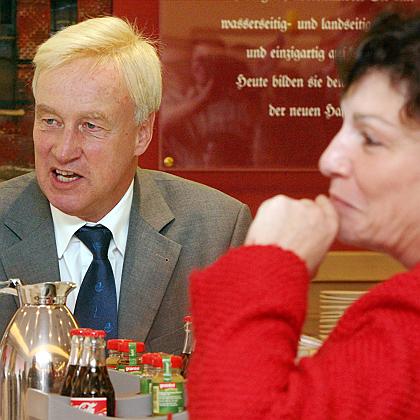
Hamburg mayor Ole von Beust, a Christian Democrat, has found \

The conservative Christian Democrats and the environmental Green Party have long been skeptical of one another. But now, the two have joined forces to form a government in the German city-state of Hamburg.

Members of the German Green Party and the conservative Christian Democrats (CDU) have arrived at an agreement “in principle” to govern together in Hamburg, SPIEGEL ONLINE has learned from Green Party sources. It would be the first CDU-Green coalition at the state level in German politics.

We just have to put it in writing,” said the source, who asked not to be named. “It’s just a matter of the preamble (to the coalition agreement), and such things.”

The coalition agreement will reportedly be unveiled late Thursday — which implies that some points of disagreement, like a Hamburg-area schools policy and the fate of two coal-fired power plants, have been settled.

“We have nothing else to discuss in a full meeting,” said a spokeswoman for the Greens, Antje Möller, after the last round of talks on Wednesday. The two sides had reached an understanding, she said, on “the points which still remained.”

(Picture Caption:Hamburg mayor Ole von Beust, a Christian Democrat has found “common ground” with Green leader Christa Goetsch.)

Design a site like this with WordPress.com
Get started