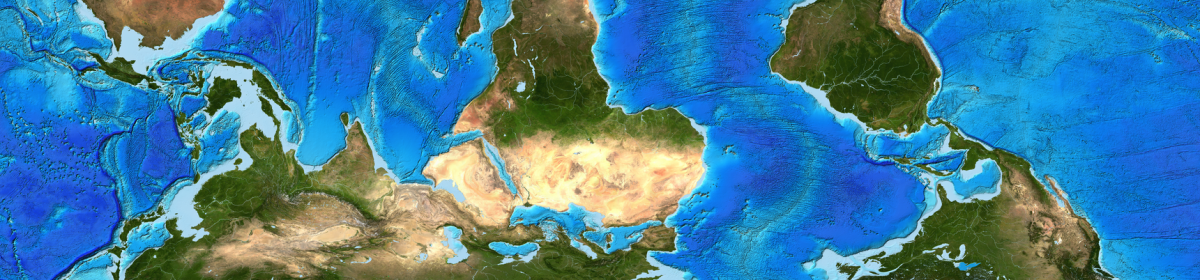
The Partition of India in 1947

The importance of international borders can not be overstated. Despite predictions that the combined forces of globalization would undermine the importance and political meaning of borders, the territorially-defined state remains the world’s predominant form of political organization. As multi-national empires/states collapse, much of the violence that ensues is the result of efforts to draw and redraw what had once been internal borders. Here is a fascinating documentary about the partition of the Indian sub-continent, into India and Pakistan. The narrator observes:

As a British barrister draws a line on a map, the once peaceful land implodes. People are forced out of the villages they have lived in for generations. Fifteen million scramble to be on the right side of the border. At least one million die in the process.

http://www.youtube.com/watch?v=WQcMPbHfxaA


Theories of Ethnic Identity Formation and Ethnic Violence & Ivory Coast

In IS 309 this evening, we assessed the strengths and weaknesses of three competing theories of ethnic identity (and ethnic violence)–constructivism, primordialism, and instrumentalism. We read the following:

  • Fearon, James D. and David D. Laitin. 2000. Review: Violence and the Social Construction of
    Ethnic Identity,” International Organization, 54:4, pp. 845-877
  • Harvey, Frank P. 2000. Primordialism, Evolutionary Theory and Ethnic Violence in the Balkans:
    Opportunities and Constraints for Theory and Policy,” Canadian Journal of Political Science, 33:1,
    pp. 37-65
  • Collett, Moya. 2006. Ivoirian identity constructions: ethnicity and nationalism in the prelude to
    civil war,” Nations and Nationalism, 12(4), 613-629
  • Kaplan, Robert. D. 1993. Balkan Ghosts: A Journey through history Part I and One Chapter from each of Parts II, III, and IV.
  • Hechter, Michael. 1995. Explaining Nationalist Violence,” Nations and Nationalism, Vol 1(1), 53-68.
  • We then viewed a video on the breakdown of political life in the Ivory Coast and the descent of that once relatively prosperous west African state into civil war. The civil war was characterised as a battle between the “Muslim-populated north and the Christian-dominated south.” How accurate is this characterisation of the ethnic character of Cote D’Ivoire’s civil war?

    http://www.youtube.com/watch?v=UOjgiPMs7nc

    For information about the current political situation, in the wake of the refusal of former(?) President Laurent Gbagbo to acknowledge having lost power in elections held several weeks ago, watch these.

    ICG Report–Diamonds and the Central African Republic (CAR)

    The International Crisis Group (ICG) has just released a new report on the influence of diamonds on the political situation in the Central African Republic (CAR). We’ve read various papers on the link between resource wealth (“lootable resources”) and political outcomes, such as regime type and economic outcomes. This report analyses the link between the presence of large stores of diamond wealth in CAR, the level of political instability (it’s essentially a failing state) and the existence of endemic conflict.  From the executive summary of the report:

    In the diamond mines of the Central African Republic (CAR), extreme poverty and armed conflict put thousands of lives in danger. President François Bozizé keeps tight control of the diamond sector to enrich and empower his own ethnic group but does little to alleviate the poverty that drives informal miners to dig in perilous conditions. Stringent export taxes incentivise smuggling that the mining authorities are too few and too corrupt to stop. These factors combined – a parasitic state, poverty and largely unchecked crime – move jealous factions to launch rebellions and enable armed groups to collect new recruits and profit from mining and selling diamonds illegally. To ensure diamonds fuel development not bloodshed, root and branch reform of the sector must become a core priority of the country’s peacebuilding strategy.

    Nature scattered diamonds liberally over the CAR, but since colonial times foreign entrepreneurs and grasping regimes have benefited from the precious stones more than the Central African people. Mining companies have repeatedly tried to extract diamonds on an industrial scale and largely failed because the deposits are alluvial, spread thinly across two large river systems. Instead, an estimated 80,000-100,000 mostly unlicensed miners dig with picks and shovels for daily rations and the chance of striking it lucky. Middlemen, mostly West Africans, buy at meagre prices and sell at a profit to exporting companies. The government lacks both the institutional capacity to govern this dispersed, transient production chain and the will to invest diamond revenues in the long-term growth of mining communities.

    Chronic state fragility has ingrained in the political elite a winner-takes-all political culture and a preference for short-term gain. The French ransacked their colony of its natural resources, and successive rulers have treated power as licence to loot. Jean-Bédel Bokassa, the CAR’s one-time “emperor”, created a monopoly on diamond exports, and his personal gifts to French President Giscard d’Estaing, intended to seal their friendship, became symbols of imperial excess. Ange-Félix Patassé saw nothing wrong in using his presidency to pursue business interests and openly ran his own diamond mining company. Bozizé is more circumspect. His regime maintains tight control of mining revenues by means of a strict legal and fiscal framework and centralised, opaque management.

    The full report can be accessed here. Here is a Al-Jazeera English news report on the situation in CAR.

    Yale’s Elizabeth Wood to give lecture on sexual violence in war

    I wanted to make all of you aware of a lecture by one of the world’s leading experts on the topic of sexual violence during war, Elizabeth Wood from the Department of Political Science at Yale University. The lecture is open to the public. Here are the details:

    Simons Lectures in the Social Dynamics

    of Peace and Conflict

    Guest Speaker:  Professor Elisabeth Jean Wood

    Elisabeth Wood is Professor of Political Science at Yale University and
    Professor at the Santa Fe Institute.

    Monday, 18 October 2010

    Public Lecture: ‘Sexual Violence During War: Rape Is Not Inevitable’
    1600 – 1730
    Room 7000 (Earl & Jennie Lohn Policy Room)
    Simon Fraser University, Harbour Centre, (7th floor),
    515 West Hastings Street, Vancouver

    Citizenship and Statelessness

    Do all persons have citizenship?

    No. It has been estimated that there are currently about 15 million stateless persons worldwide. From the Nubian people of Kenya to residents of the Dominican Republic of Haitian descent, statelessness is a global phenomenon affecting the health, economic well-being, and human security of the individuals, families, and groups involved.

    The Open Society Justice Initiative has produced a series of documentaries on the issue, the introduction to which can be viewed below. From the description:

    Although some stateless people are refugees, many have never crossed a border or left their country of birth. Although the problems related to statelessness may manifest themselves differently, at the root is a group of people who have been denied a legal identity.

    A stateless person is not recognized as a citizen by any state. Citizenship enables you not only to vote, hold public office, and exit and enter a country freely, but also to obtain housing, health care, employment, and education. Citizenship is necessary in order to live a decent human life. Stateless people are denied that right.

    For more information, visit http://www.soros.org/stateless

    The “New Humanitarianism” and Rule vs. Act Utilitarianism (Consequentialism)

    In chapter 3 of Humanitarian Intervention Weiss analyses “new wars” and “new humanitarianisms.”  The changing nature of humanitarian work is characterized by many things, but I’d like to focus on one particularly, which will lead us to a discussion of the importance of neutrality and the concepts of rule and act utilitarianism.

    Weiss argues that humanitarian responses, by NGOs particularly,  are becoming more ambitious in scope and thereby shifting from a focus on short-term emergency relief to “attacking the root causes and post-conflict peacebuilding.” He continues,

    “rather than provide band-aids, they [humanitarians] wish to use assistance and protection as levers. Many aid agencies desire to spread development, democracy, and human rights and create stable, effective, and legitimate states.” (76)

    This has led, concomitantly, to a change in the humanitarian principles of neutrality and impartiality. These principles, Weiss notes, “made sense if the objective was to provide relief and gain access to affected populations.” These principles, it is argued, foundered upon the reality that contemporary wars–“new wars”–were creating “unanticipated and unintended negative consequences.” Moreover, in a world in which the combatants are state militaries, neutrality and impartiality retained some internal logic. However, as genocidaires and other ty[es of rebel groups become the main combatants in civil wars and the predominant perpetrators of crimes against humanity, the principles of neutrality and impartiality come to be seen increasingly as relics of a bygone era.

    A few students took issue with this argument, insisting that there are also likely to be unintended consequences of humanitarian organizations repudiating the principles of neutrality and impartiality. They mentioned some of these in class. This prompted a quick excursion by me into the difference between act and rule utilitarianism/consequentialism. I’ll explain below the fold:

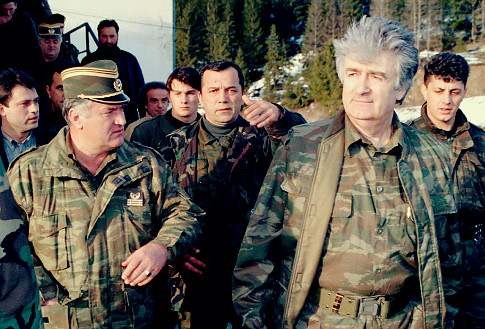
    Bosnia Muslim leaders argued that the neutrality policy allowed Messrs. Karadzic and Mladic free reign in their campaign to ethnically cleanse large swaths of Bosnia of (well-fed) Muslims.

    Continue reading “The “New Humanitarianism” and Rule vs. Act Utilitarianism (Consequentialism)”

    India–an “exceptional” Country with Democratic Deficit

    In comparative politics, there are two countries that are truly exceptional–the USA and India.  By “exceptional”, I mean just that; they are both exceptions to general rules that have solid support, empirically and theoretically.  For example, when looking cross-nationally there is a strong negative relationship between religiosity and economic development.  That is, the richer a country, the less religious (ceteris paribus) are its residents.  Except for the United States.  The USA is exceptional in many regards; i.e., it doesn’t behave like all other advanced industrial democracies.

    India is also exceptional, but in different ways from the US.  For example, there is strong support for hypotheses about democracy and social (ethnic/religious) heteroeneity, which suggest that there is no way that India should still be (after more than 60 years) a fairly well functioning democracy.  Many observers keep waiting for the other shoe to drop as India’s democracy has lurched from crisis-to-crisis, and has to contend with endemic levels of corruption, particularly in its judiciary (as we see in this excerpted report–written by the Asian Human Rights Commission and which I found at the Human Security Gateway, a great source for information about security issues in world politics).  Somehow, though, India’s democracy hangs on.

    By recommending the impeachment of a High Court judge, the Chief Justice of India has revived a dead debate concerning the Indian judiciary. On August 2, 2008 in a letter addressed to the Prime Minister, the Chief Justice recommended the impeachment of judge Soumitra Sen of Calcutta High Court. Judge Sen is accused of having been involved in financial misappropriation before he was appointed as a judge. It is reported that in 1984 while judge Sen was practising as a lawyer he was appointed as the receiver in a dispute concerning the Steel Authority of India. It is alleged that in the capacity of the receiver he misappropriated a sum of INR 2,500,000 [USD 59523], which judge Sen reportedly paid back on orders from the court. Later, he was appointed a judge at the Calcutta High Court in 2003. A judge accused of corruption facing impeachment, a process by which a sitting judge could be removed from service in India, is nothing special. A corrupt public servant is not worthy of continuing in service and is least desirable to serve as a judge in a court of law, a public office that demands scrupulous impartiality and untainted personality. Anyone accused of a crime must be prosecuted and the crime investigated into. The fact that the accused is a judge must not provide the person with any immunity. Judge Sen being the first person recommended for impeachment by a Chief Justice of India does not mean that the judiciary is immune from corruption and other vicious practices. There are similar allegations against some judges in India. But not a single judicial officer was impeached so far. The only exception was the case of judge V. Ramaswami who faced impeachment in 1991, an attempt that failed due to the absence of a political consensus. It is expected that history will not be repeated. If it is repeated it would be a shame upon the Indian judiciary and its accountability. The accountability of judges, particularly in the context of increasing allegations of malpractices resorted to by judges is a grave concern in India. As of now there is no open process for the selection, promotion and if required the dismissal of High Court or Supreme Court judges in the country. The entire process is retained within the whims of the Supreme Court. All attempts so far to enforce accountability on the judiciary were vetoed by the judiciary itself. There is also the absence of a political consensus over this issue.

    Is there a causal link between Natural Resources and Conflict?

    The “resource curse” is the name given to the alleged causal links between a country’s abundance of natural resourcee and the existence of all sorts of “bad things”, such as authoritarianism, economic stagnation and/or outright economic decline, increased probability of attempted coups d’etat, etc.  In our session on political economy we read Jensen and Wantchekon’s article on the link between natural resource wealth and authoritarianism, specifically, and we also looked at Richard Snyder’s article on the putative link between the existence of what he calls “lootable wealth” and political (in)stability in a state.  Their conclusions were at times complementary but at times divergent.  What matters (at least for political stability), according to Snyder, is the ability of the rulers (i.e., the government) to partake of the rents/riches accrued by the exploitation of the particular “lootable” resource.

    Snyder’s is, of course, not the final word on the topic and there is an avalanche of published research on this very topic.  A new resource that can be used to find data on the link between natural resources and conflict–political, civil, etc.–is the Resource Conflcit Monitor, maintained by the Bonn International Center for Conversion.  From their web site:

    Many developing countries rich in natural resources, such as diamonds and oil, have been plagued by poverty, environmental degradation and violent conflicts. In many of these countries, the natural wealth has not led to sustainable development. On the contrary, in some instances resource wealth has provided the funding and reasons for sustaining civil wars. This so-called ‘resource curse’ brought a lot of attention to the link between resources and conflict over the past decade. ’Governance’ has been identified as key factor for understanding the resource-conflict dynamic and for mitigating its negative impact in developing countries. ‘Resource governance’ in the present context describes the way in which governments regulate and manage the use of natural resources as well as the redistribution of costs and revenues deriving from those resources

    The Resource Conflict Monitor (RCM) monitors how resource-rich countries manage, administer and govern their natural resources and illustrates the impact of the quality of resource governance on the onset, intensity and duration of violent conflict. The RCM serves as a tool for identifying and supporting viable resource governance and contributes to conflict prevention, post-conflict reconstruction and sustainable development….

    There is an informative, and user-friendly, application that provides historical annual information on conflict and resources in individual countries.  Here is the result for Sierra Leone, the specifics of which should be familiar to those of you who watched Cry Freetown.  For an explanation of “resource governance” and “resource regime compliance, go here and scroll down.

    There’s an additional methodological point that is crying out to be made here.  Notice that the level of conflict intensity first decreases rather significantly between 1996 and 1997, then increases dramatically between 1997-1999, to then fall just as dramatically between 2000 and 2002, while at the same time “resource governance” and “resource regime compliance” do not change much at all.  This means that we have to be very careful about attributing the level of conflict to the two afore-mentioned phenomena.  Maybe the causal link between these two and conflict intensity is not monotonic, maybe there is a threshold effect at work, or maybe the existence of an abundance of natural resources is a sufficient (under certain conditions) cause of conflict intensity.  On the whole, though, there certainlly doesn’t seem to be a clear linear, and/or monotonic relationship between resources and conflict (at least in Sierra Leone,  between 1996-2006)

    Political Terror Scale

    Authoritarian regimes use both “carrots” and “sticks” in order to control their citizens. The “sticks” approach encompasses everything from surveillance to outright physical brutality.  While the use of physical terror to undermine the bodily integrity of their citizens by authoritarian regimes is fairly well known, it is also evident that democracies are not immune to using this form of control over their populations.  Almost by definition, authoritarian regimes terror-prone, but how much more so than democracies. You can fine the answers to this at the Political Terror Scale website, where they have a set of interesting interactive maps.

    How is “political terror” defined?  Well, they have created a scale (from 1-5) which is an indicator of the level of political terror citizens in a country face in any given year. The definitions for each of the categories is below.

    El Salvador during the 1980s was ruled by a military regime, which used to death squads to “disappear” its internal opponents.  U2 took note:

    rating scale Political Terror Scale Levels
    Level 5 : Terror has expanded to the whole population. The leaders of these societies place no limits on the means or thoroughness with which they pursue personal or ideological goals.
    Level 4 : Civil and political rights violations have expanded to large numbers of the population. Murders, disappearances, and torture are a common part of life. In spite of its generality, on this level terror affects those who interest themselves in politics or ideas.
    Level 3 : There is extensive political imprisonment, or a recent history of such imprisonment. Execution or other political murders and brutality may be common. Unlimited detention, with or without a trial, for political views is accepted.
    Level 2 : There is a limited amount of imprisonment for nonviolent political activity. However, few persons are affected, torture and beatings are exceptional. Political murder is rare.
    Level 1 : Countries under a secure rule of law, people are not imprisoned for their view, and torture is rare or exceptional. Political murders are extremely rare.

    Israel and Syria once again Negotiating over Golan Heights

    In intro to IR on Wednesday we addressed global environmental issues and we went over this chart outlining Thomas Homer-Dixon’s overview regarding the link between environmental scarcity and security. According to Homer-Dixon, environmental degradation is not only an important economic, social, and health issue, it is crucially an issue of importance for global security.

    We see the important link between increased environmental scarcity and social effects (like ethnic conflicts, deprivation conflicts and coups d’etat), facilitated indirectly at times by the conditions of weakened states.

    Homer-Dixon argues that these environmentally-driven conflicts will increase the more the environment degrades. Moreover, it is just those places in the world that have the least capacity to deal with the potentially negative effects of environmental degradation whose environments will be most likely to suffer.

    In the far left column is “unequal resource access”. One of the most important resources to humankind is water. The conflict between Syria and Israel over the Golan Heights is crucially linked to water. As we learn from the New York Times:

    JERUSALEM — Peace overtures between Israel and Syria moved up a gear on Wednesday when a Syrian cabinet minister said that Prime Minister Ehud Olmert of Israel had sent a message to President Bashar al-Assad to the effect that Israel would be willing to withdraw from all the Golan Heights in return for peace with Syria.

    The Syrian expatriate affairs minister, Buthaina Shaaban, told Al Jazeera television, “Olmert is ready for peace with Syria on the grounds of international conditions; on the grounds of the return of the Golan Heights in full to Syria.” She said that Turkey had conveyed the message.

    Israeli officials did not deny the statement from Damascus but would not confirm it either, offering a more general, positive reaction. “Israel wants peace with Syria; we are interested in a negotiated process,” said Mark Regev, a spokesman for Mr. Olmert. “The Syrians know well our expectations, and we know well their expectations…”

    “…Withdrawal from the Golan Heights is a contentious issue in Israel. The territory is a strategic plateau that overlooks a large swath of northern Israel. Israel has objected to past Syrian demands for access to the shore of the Sea of Galilee, a main water source for Israel.

    Yehuda Raizner/Agence France-Presse — Getty Images

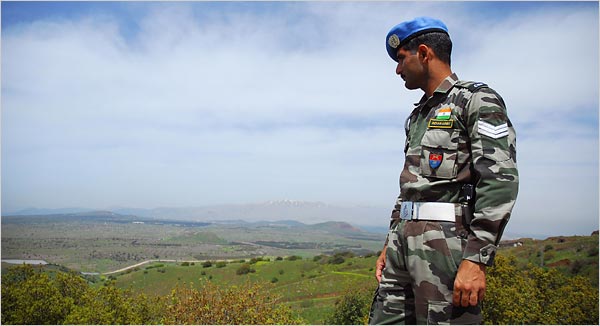
    An Indian member of the United Nations force in the Golan Heights, a strategic

    plateau that overlooks a swath of northern Israel.

    Design a site like this with WordPress.com
    Get started