International Relations–Paper One Assignment

Academic use theories as a lens/filter through which to analyze and discuss important events in international relations. In that way, we can understand more about the event and compare it to other events, which we believe may have similar characteristics and causes.  We’ll be using IR theories profusely in this course so it is important that the student has a strong understand of the main theories used in IR.

Introduction to International Relations Paper 1–Using Theory to
Understand Stuff

As Mingst notes in the conclusion of Chapter 3, the theoretical lens/filter through which one views the world determines to a large extent what one sees. Realists look at the Iraq war and see and understand it in a particular way, whereas radicals/Marxists see the same event and interpret it very differently. For this first paper assignment, I would like you to select an important event in international politics (it could be as grand as the Second World War, or less grand–the US decision to boycott the Olympic Games in Moscow in 1980) and critically analyze from the perspective of two competing
IR theories. Some of the elements of the paper should be:

  • A description of the basic tenets/principles of the competing IR theories.
  • Reference to any levels-of-analysis that are important in understanding the event.
  • A short description of the event itself (i.e., the who, what, where, when).
  • An assessment of the event from a theoretical perspective, including an evaluation of which of the theories provides more support for understanding why the event occurred, or why it developed in the manner in which it did.

You will obviously use Chapter 3 of the Mingst book (Essentials of International Relations) as a source for the paper. For information related to your specific states, you will have to consult at least 3 other academically reputable sources. Note that this means Google is not your friend here!! This will entail a trip down to the library by foot, or a virtual trip to the library’s electronic resources. Finally, use the course page at the Library’s web-site for further sources to use.
Your paper should be 4 − 5 pages long (maximum!!), double-spaced on 8.5X11 − inch paper, with 1-inch margins on the top, bottom, and the sides. The paper must be written in Times Roman 12pt. font, with a separate title page and works cited page.3 The paper is due electronically via Digital Dropbox in Blackboard by the beginning of class on Wednesday, February 20th4. Finally, I
will also require that you electronically append a “paper evaluation sheet to the end of your paper, which I’ll use as a rubric to evaluate the paper. (Once again, I’ll show you exactly how to do this next week.)


Comparative Politics–Paper One Assignment

Here is the prompt for the first paper in Comparative. The state is an extremely important concept in comparative politics and we will refer to it and its characteristics again and again over the course of the semester. As such, it is important to develop a strong understanding of the state as a concept, and it is, therefore, the topic of the first paper assignment.

Introduction to Comparative Politics Paper 1

O’Neil writes that while many different types of political organization have existed throughout orld history, the

globe is now clearly demarcated by only one type of political organization–the state–that over the past few hundred years has displaced vitually all other political structures. Almost no inhabitable territory or people on the face of the earth is not claimed by some state.

For this paper, please select two states as the subject of your paper, one of which is s developed state and the other of which is a “Top-40” state on the Failed States Index (i.e. it falls in either the red or orange categories). Your task is to comparatively analyze the nature of the state in each of these two states. I want you to mostly describe (i.e., what, where, when, etc.), but also explain (how, why) the similarities and differences between the state in these two states by answering the following questions:

  • When was the state formed? How was it formed? That is, was it formed through revolution, secession, de-colonization, etc.
  • What is the nature of the current ruling regime (democratic, authoritarian), how long has this regime been in place, and does this state have a tendency to rotate types of regime frequently?
  • The nature of the government? Do governments tend to last? Are they replaced democratically?
  • Assess the nature of the legitimacy of the regime. Is the regime seen as legitimate? On which of the three Weberian ideal-types of legitimacy does the legitimacy of the regimes mostly rest?
  • Is this state centralized or decentralized?
  • Is the state strong and does it have high capacity? What kinds of evidence have you used to support the previous claim?
  • Lastly, is state autonomy high or low? Please explain.

Please use chapter 2 of the O’Neil book (Essentials of Comparative Politics) as a source for the paper. For information related to your specific states, you will have to consult at least 3 other academically reputable sources. Note that this means Google1 is not your friend here!! This will entail a trip down to the library by foot, or a virtual trip to the library’s electronic resources. In addition, pleaes avail yourself of the many posts on my link to resources that collect data on different aspects of the state. Finally, use the course page at the Library’s website for further sources to use, such as Country Watch.
Your paper should be 4 − 5 pages long, double-spaced on 8.5X11 − inch paper, with 1-inch margins on the top, bottom, and the sides. The paper must be written in Times Roman 12pt. The paper is due electronically via Digital Dropbox in Blackboard by the beginning of class on…

Resource Dependent Regimes in Sub-Saharan Africa

Jensen and Wantchekon (2000) have created an index of resource dependence and determined the level of the same for the states of sub-Sarahan Africa.  The scores range from 1 (no resource dependence) to 4 (extreme resource dependence).  They use this as an important independent variable in determining democratic transition, consolidation, and government effectiveness.  How much of an effect does resource dependence have on each of these dependent variables?  You’ll have to read the paper to find out, or attend my class in intro to comparative tomorrow.

resource_dependence_scores.jpg

Learning Objectives for Intro to Comparative

Here are the learning objectives for my introduction to comparative politics course.  In other words, students who have taken that course should have developed the following competencies:

  • learning.jpgUnderstand and use the tools of both qualitative and quantitative analysis to ask and answer questions about substantive issues in comparative politics.
  • Identify the strengths and weaknesses of the comparative method and its variants.
  • Effectively discuss the development of comparative politics as a sub-discipline in the field of political science.
  • To be able to understand and effectively critique a state-of-the art scholarly article in the field of comparative politics.
  • Discuss competently the merits of empirical and statistical evidence that is used in the field of comparative politics.
  • Analyze various substantive issues in comparative politics from culturalist, institutionalist, and rational choice perspectives.
  • Express fundamental concepts in comparative politics both verbally and in written form.
  • Use extant on-line cross-national databases to access and find data appropriate to comparing countries across the world with respect to basic political attitudes and ideologies.
  • Describe and understand the tri-partite structure of society–state, civil society, and market–and understand the interactions amongst them.
  • Assess the nature of democracy–its causes, consequences and how democratic regimes vary across the world.
  • Develop a broad understanding of the nature of contemporary states across the world, from the most developed states to the least developed.
  • Acquire the ability and the tools to effectively compare the states of the world on a broad range of issues, from economic development, to state strength, to governance, and social diversity.
  • Write an effective critical paper on a topic related to comparative politics.
  • Effectively use the electronic educational tool, Blackboard, to upload and download materials, make use of discussion-type tools facilitating online discussion and interaction with class members outside of class sessions.
  • Locate appropriate library resources, both printed and electronic, to aid in the writing of critical papers.
  • Learn to find, assess the legitimacy and veracity of, and use online resources related to comparative politics.
  • Demonstrate a strong understanding of these aforementioned concepts in examination format, working under the pressure of a time limit.
  • Develop the skills necessary to effectively critically evaluate and discuss the production of political knowledge.
  • Develop the ability to become discerning and thoughtful consumers of political knowledge, whether that knowledge is created by politicians and other political leaders, the media, other citizens, or the students themselves.

No Torture. No Exceptions.

no_torture_no_exceptions.jpg

The above sketch by Thomas V. Curtis, a former Reserve M.P. sergeant, is of an Afghan detainee, Dilawar, who was taken into U.S. custody on December 5, 2002, and died five days later. Dilawar was deprived of sleep and chained to the ceiling of his cell—techniques that the Bush administration has refused
to outlaw for use by the CIA. Further, his legs were, according to a coroner, “pulpified” by repeated blows. Later evidence showed that Dilawar had no connection to the rocket attack for which he’d been apprehended.

One of the most important tenets of my teaching philosophy is to make the classroom a safe forum for diverse and competing points of view. In order to facilitate this, I believe that it is necessary, as much as is humanly possible, to refrain from promoting my own views and importing my personal biases into what I teach. I will temporarily put that tenet aside in order to address the topic of torture.

The United States government tortures. That’s a difficult sentence for me to write. The human rights organization for which I worked in Croatia during the 1990s–the Croatian Helsinki Committee–was at the forefront of the effort in that country to stop human rights abuses, such as torture, that the Tudjman-led regime was committing during those years. I would often find myself in debate with individuals–soldiers, police officers, government officials, religious leaders, and average citizens–about the human rights abuses the government was committing. My argument was basically, “we (in Croatia) are being hypocritical if, on the one hand, we claim that we are superior–in some civilizational sense (this is argument that was made, though I don’t adhere to it)–to the Serbs because we are more “Western” and more democratic, yet we allow our government (with our support) to commit absolutely horrific human rights abuses. We should try to mimic the behavior, then, of Western democracies such as Canada and the United States rather than the abhorrent policies of the Milosevic regime.”

My interlocutors would usually reply, “but, Canada’s, and America’s government would be doing the same thing if 1/3 of their territory was under foreign occupation.” I replied that they would not. I have to apologize to every single one of those people, because they were right and I was wrong. And it didn’t even take foreign occupation for the US government to begin to undermine the fundamental tenets upon which democracy and the respect for human dignity are based. My attitude towards torture is nicely captured by the title of a recent series on torture put out by the magazine Washington Monthly–“No Torture. No Exceptions.”

We’ll take a look at the debate on torture near the end of the semester (in intro to IR) and we’ll see that the strongest moral claim for torture comes from a consequentialist (or utilitarian) perspective; this is why the “ticking bomb scenario” is customarily trotted out to refute deontological arguments. I will argue (and I encourage you to try to prove me wrong) that there are consequentialist reasons for not torturing. I encourage you to read the essays in “No Torture. No Exceptions.” (In fact, if you’re in intro to IR, you’ll have to.)

U.N. Security Council Silent on Tibet Protests

How do changing ideas about sovereignty–from sovereignty viewed as a “right” to sovereignty viewed as a “responsibilty”–affect the nature of how states act and the functioning of organizations such as the United Nations?  Just before spring break we viewed the documentary The Peacekeepers, where you were able to witness the deliberations that take place behind the scenes at the United Nations and the Security Council specifically. For Wednesday, we’ll read Erik Voeten’s article on “The Political Origins of the UN Security Council’s Ability to Legitimize the Use of Force”, the main point of which is obvious given the title. Today, the Guardian reports that the Security Council remains silent on the current situation in Tibet.

UNITED NATIONS, March 17 (Reuters) – The U.N. Security Council will likely keep silent about China’s crackdown on demonstrations in Tibet, mostly due to belief that provoking Beijing would accomplish nothing, diplomats said on Monday.
China, which has sent in troops to enforce control in the regional capital Lhasa, said earlier that the violent protests by Tibetans were organized by followers of the Dalai Lama seeking to derail the Beijing Olympics in August. Tibet’s exiled spiritual leader has denied this charge.
“The issue did not come up in the council,” China’s Deputy permanent U.N. representative Liu Zhenmin told Reuters after a meeting of the council on unrelated issues. “This has nothing to do with peace and security,” he said. “It is local violence, … a domestic issue.”
China, like the United States, Britain, France and Russia, is a permanent veto-wielding member of the council and would be able to block any attempts by the council to act on Tibet.
Russia’s U.N. Ambassador Vitaly Churkin, currently president of the council, told reporters without elaborating that he did not expect the 15-nation Security Council to discuss Tibet. Several other ambassadors confirmed this view.

Book Review: “Justice in Conflict? The ICC and Peace Processes”,

icc.jpgWe will be analyzing international law next week upon our return from spring break. The recently established International Criminal Court (ICC), an independent (i.e., it has no linkn to the United Nations, unlike the International Court of Justice–ICJ) international court located in the Hague, has in its short existence (it came into force in 2002) been the subject of heated debate between those who view it as a bold and necessary step in the fight for international justice, and those who view its powers as undermining to a dangerous degree state sovereignty.

This week’s weekly letter from the International Crisis Group (ICG) contains a book review of Nicholas Waddell and Phil Clark’s “Justice in Conflict: The ICC and Peace Processes. The author of the review, Nicholas Gronko, writes:

The International Criminal Court (ICC) is now investigating or prosecuting individuals involved in three of the most devastating conflicts in Africa – Darfur, northern Uganda and the Democratic Republic of Congo (DRC). In each case, the ICC has been forced to confront the challenges inherent in pursuing peace and justice simultaneously. What happens – and what should happen – when efforts to prosecute perpetrators of mass atrocities coincide with a peace process? What is the best approach when the price of a peace deal may be a degree of impunity for those most responsible for such abuses? One common and convenient response is to hide behind truisms and make general statements of principle to the effect that no trade-off is required because peace and justice are inextricably linked. Clearly peace and justice are complementary in that justice can deter abuses and can help make peace sustainable by addressing grievances non-violently. But good things don’t always go together, and to present peace and justice as invariably mutually reinforcing is misleading and unhelpful when the difficult reality of peacemaking often proves otherwise. We review below arguments surrounding the ICC’s impact on prospects for peace in Uganda and go on to offer some general considerations that international policymakers should heed when seeking to balance peace and justice demands.

Here is a look at the 106 (most recent count) signatories to the Statute of Rome (which established the ICC).  States in green are signatories to the statute.

iccmemberstates.png

Globalization, the Catholic Church, and Classroom Pedagogy

A while back I had the opportunity to allow a job candidate to come in and use my intro to IR class to give a her candidate classroom lecture. Following the 40-minute lecture–after the candidate and the rest of the faculty had left the room–I asked my students to anonymously write down their impressions of the teaching style of the job candidate. One of the responses was particularly illuminated and the latest news about the Catholic Church’s efforts to reform the concept of sin reminded me of that student’s response. The student’s response was (and I’m paraphrasing here):

“I didn’t like that she went around the room and made everyone answer her introductory question. I pay $40,000 in tuition annually and I have the right to sit in the classroom and be bored and do nothing if that’s what I want to do.”

I felt sorry for this student, because s/he has forgotten a couple of important rules about life, let alone post-secondary education: first, you only get out of something what you put in. Second, and more important, the whole classroom experience is a social experience, and the outcome of the educational process is not only a function of what the student him/herself is doing, and what the instructor is doing, but what others in the classroom are doing as well.

Apropos of the preceding, here is news from the London Times online, which demonstrates the Catholic Church’s approach to the concept of sin:

seven_poster.jpg…[Bishop Gianfranco Girotti] said that priests must take account of “new sins which have appeared on the horizon of humanity as a corollary of the unstoppable process of globalisation”. Whereas sin in the past was thought of as being an invididual matter, it now had “social resonance”.

“You offend God not only by stealing, blaspheming or coveting your neighbour’s wife, but also by ruining the environment, carrying out morally debatable scientific experiments, or allowing genetic manipulations which alter DNA or compromise embryos,” he said.

Bishop Girotti said that mortal sins also included taking or dealing in drugs, and social injustice which caused poverty or “the excessive accumulation of wealth by a few”.

He said that two mortal sins which continued to preoccupy the Vatican were abortion, which offended “the dignity and rights of women”, and paedophilia, which had even infected the clergy itself and so had exposed the “human and institutional fragility of the Church”.

Maybe it’s time for Brad Pitt and Morgan Freeman to do a sequel to Seven. 🙂

Comparative Political Party and Electoral Systems

In a few weeks, we will conduct an in-class exercise that simulates a German national election.  This will give you a good idea of the specifics of the German political party and electoral systems, which you will then be able to compare to other systems around the world.  The German system is fairly complicated in that each citizen casts two votes, one for a member running in a single-member district, while the other is cast for a party via a proportional system.

Elections are, of course, the conditio sine qua non–and the minimal institutional requirement–of democratic political systems.   A great web site dedicated to keeping track of elections around the world is electionguide.org They do not as of yet have the results from the most recent national elections in Spain, (they will shortly) but they do have election results for countries around the world going back decades for some countries.  You should check them out.

The Christian Science Monitor  on the incumbent Spanish government’s re-election this past week:

oresults_p1.jpgAided by a near-record turnout, José Luis Rodríguez Zapatero and the Socialist Party won the Spanish national elections – suggesting further changes toward diversity in a young democracy whose older generations cut their teeth on the Franco dictatorship and the moral authority of the Roman Catholic church.

The Socialist victory suggests Mr. Zapatero’s party has broken out of the longtime secondary status it has labored under, despite winning the last election in 2004.

Now, say analysts, the Socialists’ more liberal appeal to young people, women, and immigrants – along with its contemporary style of campaigning – must be taken seriously by the conservative Popular Party (PP), which ran on an older message of Spanish traditionalism and antipathy toward the feisty Basque and Catalonia regions.

Do the cited paragraphs remind you of any other electorate?

The United Nations and Peacekeeping in Congo

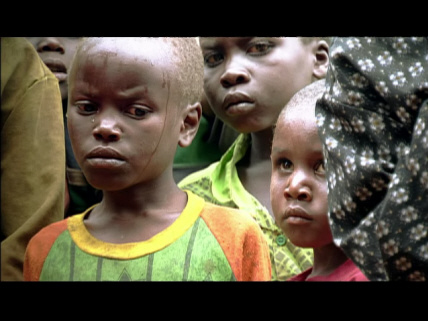
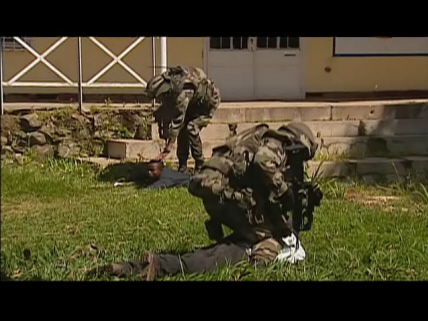
In PLSC250–intro to IR–this week we viewed a documentary made by the National Film Board of Canada, which addresses the UN’s peacekeeping role in Congo. After reading Chapter 7 of Mingst, you should now be aware that the UN in the world’s most important and powerful IGO, and the UN Security Council plays the most prominent global role in the area of international security. Here are a couple of screen shots from the film and the film’s description:

peacekeepers_1.jpg

peacekeepers_2.jpg

With unprecedented access to the United Nations Department of Peacekeeping, The Peacekeepers provides an intimate and dramatic portrait of the struggle to save “a failed state.” The film follows the determined and often desperate manoeuvres to avert another Rwandan disaster, this time in the Democratic Republic of Congo (the DRC).
Focusing on the UN mission, the film cuts back and forth between the United Nations headquarters in New York and events on the ground in the DRC. We are with the peacekeepers in the ‘Crisis Room’ as they balance the risk of loss of life on the ground with the enormous sums of money required from uncertain donor countries. We are with UN troops as the northeast Congo erupts and the future of the DRC, if not all of central Africa, hangs in the balance.
In the background, but often impinging on peacekeeping decisions, are the painful memory of Rwanda, the worsening crisis in Iraq, global terrorism and American hegemony in world affairs. As Secretary General Kofi Annan tells the General Assembly at the conclusion of The Peacekeepers: “History is a harsh judge. The world will not forgive us if we do nothing.” Whether the world’s peacekeeper did enough remains to be seen.
Design a site like this with WordPress.com
Get started