The Political Economy of Revolution–Egypt

In our last session of IS 210 we looked at the topic, political economy. O’Neil defines political economy as “the study of the role of economic processes in shaping society and history.” The recent overthrow of the Mubarak regime in Egypt is a good case study with which to highlight some of the links between political revolution and political economy. Anybody who has taken a political economy course in political science at the graduate level in the last 15 years or so has almost certainly read Stephen Haggard and Robert R. Kaufman’s influential work, The Political Economy of Democratic Transitions. The authors attempt to answer a series of inter-related questions related to the politics/economics nexus as it appeared to them in the early 1990s:

“What role have economic crises played in the near-global wave of political liberalization and democratization? Can new democracies manage the daunting political challenges posed by economic crises and reform efforts? Under what economic and institutional conditions is democracy most likely to be consolidated?”

Haggard and Kaufman ultimately eschew both liberal theories of modernization and (neo)-Marxist theories of dependency and turn to a rational choice framework that focuses on the strategic actions of political elites–especially presidents and military leaders–under conditions of economic and institutional constraint. In addition, the authors make a few key assumptions, one of which I will highlight here: “…the 0pportunities for political elites to mobilize political support or opposition will depend on how economic policy and performance affect the income of different social groups.” (6) The empirical evidence draws from countries such as Uruguay, Brazil, Argentina, Philippines, Peru, and Bolivia. There argument certainly has relevance for the situation in Egypt today and for the potential for the Egyptian polity to make a successful transition toward consolidated democracy.

Jake Caldwell, Director of Policy for Agriculture, Trade, and Energy at American Progress, and coauthor of The Coming Food Crisis, has written recently about the daunting economic challenges facing any new government with respect to food security. In the midst of rapidly increasing global commodity prices–especially foodstuffs–the government must find a way to continue to feed its people, many of whom live on less than $2/day in income. Caldwell writes:

“Egypt has spent $4 billion a year, or 1.8% of GDP, on its bread subsidization program in an attempt to insulate the 40% of Egyptians living on less than $2 a day from inflation. But prices continue to rise…

…Egypt faces daunting challenges as it prepares for broad presidential and parliamentary elections within a year. Ongoing volatility in global food prices will strain resources during this critical transitional period.

As the world’s largest importer of wheat, Egypt is acutely vulnerable to any surge in food prices. Wheat prices have risen 47 percent over the last year and other staples are rapidly approaching dangerously high levels.

Food price inflation and volatility strike hard at the household budgets of average Egyptian families. Many of them spend 40 percent of their monthly income on food. As prices rise, purchasing power is eroded, and the recovery of Egypt’s fragile economy during the transition is slowed.”

How much time will the new Egyptian government have to provide food security for the Egyptian people before the polity’s patience with democracy is compromised? Or is the public yearning for democracy and liberty so strong that economic crisis will have little effect on democratization in Egypt going forward?
Social Network Media and Revolution

In the wake of the revolutionary changes that have (hopefully) taken place in Tunisia and Egypt, much has been made about the role of social media–particularly Facebook–in facilitating the participatory aspect of the revolutionary end-game. (A Google search of `Facebook AND Egypt revolution’ turns up over 22 million hits.) The Globe and Mail’s  Chrystia Freeland is the latest journalist to address the phenomenon, quoting economists Daron Acemoglu and Matthew Jackson.

Freeland notes that social network media have helped resolve what social scientists refer to as the collective action problem.

“It is a question of co-ordinating people’s beliefs,” said Daron Acemoglu, a professor of economics at the Massachusetts Institute of Technology, who, with Matthew Jackson of Stanford University in California, is working on a paper about the effect of social networks on collective action problems.

Protesting against an authoritarian regime is a prime example of this issue, Mr. Acemoglu said, because opponents of a dictator need to know that their views are widely shared and that a sufficient number of their fellow citizens are willing to join them to make opposition worthwhile.

“I need to know if other people agree with me and are willing to act,” he said. “What really stops people who are oppressed by a regime from protesting is the fear that they will be part of an unsuccessful protest. When you are living in these regimes, you have to be extremely afraid of what happens if you participate and the regime doesn’t change.”

That makes publicly protesting an oppressive regime a classic collective action problem: If everyone who wants regime change takes to the streets, the group will achieve its shared goal. But if too few protest, they will fail and be punished. Even if an overwhelming majority wants change, it is smart for individuals to speak out only if enough compatriots do, too.

To Freeland’s characterisation of the collective action problem I would add that the reason it is “smart for individuals to speak out only if enough compatriots do, too” is because each individual reasons in the following manner:

  • I am only one person; my individual marginal contribution to the probability of having a successful revolution is infinitesimally small.
  • Thus, my taking part or not will not be determinative. That is, the revolution will succeed or fail regardless with or without my participation.
  • Given the above, and given potential costs of participating, it is rational for me to not participate.

Social media, however, can help to change the calculus of participation by assuring the would-be participant that millions of others will also participate, thereby decreasing the potential costs of participation to any one individual. I do have an issue, however, with Freeland’s use of the Groupon analogy, which is based on the difference between the types of private goods Groupon specialises in and the truly public good that is a revolution.

The Sectarian Division in the Middle East

The revolutions in Tunisia and Egypt have prompted similar uprisings in many other countries of the Middle East and North Africa. Though the vast majority of the populations in each of these countries are Muslim, the societies are far from homogeneous. In addition, to social class and ethnic cleavages, Brian Ulrich–Assistant Professor of Middle East History–notes the Sunni/Shi’a sectarian split within Islam:

The sectarian split between a Shi’ite majority and Sunni monarchy and minority matters, but not in a straightforward way. The country’s rulers have played a game of divide and rule, one which seems to have accelerated over the past few years which have seen an increase in anti-Shi’ite discrimination. Presumably hoping to keep smaller the popular base to which they must dispense patronage while tying that base to them ideologically, the Al Khalifa dynasty has portrayed Shi’ites as potential Iranian catspaws and pointed to Iraq as an example of the negative consequences of Shi’ite democratic empowerment. What you see in the government’s rhetoric is an attempt to cast the Shi’ites themselves as the sectarian ones primarily on the grounds of their Shi’ism, much like the Mubarak and Ben Ali regime claimed to suppress Islamic extremism.

Bahrain has also seen major protests before, with a 1990’s “intifada” almost exclusively Shi’ite demographically. During that period, the key to the uprisings’ longevity was a social base in the winding narrow streets of the Shi’ite neighborhoods in and around Manama that the mostly South Asian police had trouble penetrating.

Here’s the video of an interesting debate on the Shi’a/Sunni division in Islam, with some very interesting guests, including U. of Michigan Professor of Middle Eastern History, Juan Cole, who has a very informative blog on Islam and Middle East politics.

Germany’s National Soccer Team and Citizenship Law

Citizenship, O’Neil writes, is “an individual’s relationship to the state, wherein states swear allegiance to that state and the state in return is obligated to provide rights to those citizens.” Each state has the right to determine the basis upon which individuals-residents and non-residents alike–fulfill the requirements of citizenship. (Indeed, the extent of citizen obligations also varies from state to state.) As you know, there are three ways in which citizenship can be acquired: jus soli (birth on the territory of the state), jus sanguinis (on the basis of blood relations), and naturalisation.

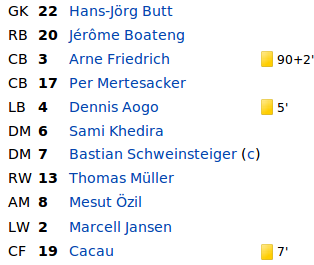
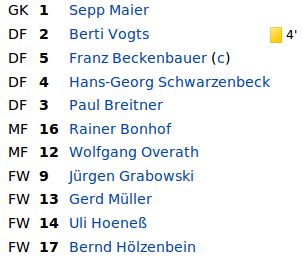
Prior to changes in its citizenship law in the late 1990s, Germany was a state that based its citizenship law almost exclusively on jus sanguinis. That is, if one were (considered to be) a part of the German nation (“folk”), then one could relatively easily acquire German citizenship, even if they were not born on the territory of the modern German state. Conversely, even those who were born in Germany (and whose parents had also been born and raised in Germany) but were not nationally (or “ethnicity”) German could not obtain German citizenship. A vivid example of the impact the recent changes in German citizenship law have had on German society comes from international soccer (football, really!) where we can see the rosters of two respective German national teams. One of these rosters is the starting lineup for the 1974 World Cup Final (West Germany defeated the Johan Cruyff-led Dutch 2-1 in Munich), while the second is Germany’s starting lineup for the 3rd-place game (Germany defeated Uruguay 3-2) at this past summer’s World Cup held in South Africa. Which one is which? (Note, in order to be eligible to play for an international match for a country, the player must be a citizen of that country,)

N.B.: If you are a soccer fan, you’d be able to distinguish which roster belongs to which year on the basis of the position names (DM,, RW, AM, FW, etc.) alone! Soccer tactics sure have changed a bit over the last few decades!

Rwandan Journalists Jailed for Stirring up Ethnic Tensions

Last week in IS 302, we addressed the issue of how governments should approach the existence of ethnic division in a post-conflict setting. We saw that Rwanda and Burundi have chosen different approaches. Burundi’s leaders have decided to address ethnic grievances via assuring ethnic balance in important institutions such as the military. Rwanda’s government has chosen a different approach, endeavouring to make the society as ethnicity-blind as possible. As such, there has been a zero-tolerance policy with respect to any demonstration or acknowledgement of ethnic particularism. As a recent Amnesty International report states unequivocally:

Rwanda’s laws banning “genocide ideology” and “sectarianism” are vague and sweeping, and have been used to silence legitimate dissent. The laws were designed to encourage unity and restrict speech that could lead to hatred. However, they have had dangerous and chilling effect on Rwandan society.”

The most recent example of this “dangerous and chilling effect on Rwandan society” is news of the conviction of two Rwandan journalists of having “stirred up ethnic divisions.” As this BBC article makes clear, it seems highly likely that President Paul Kagame has been using the role of “hate media” during the Rwandan genocide to silence legitimate opposition:

Editor Agnes Nkusi was sentenced to 17 years, while reporter Saidath Mukakibibi was imprisoned for seven. Among several articles, the judge referred to one saying some Rwandans were unhappy with the country’s rulers. Prosecutors said this was “meant to stir [up] hatred and fury against the government”.

President Paul Kagame came to power in 1994, ending the genocide in which some 800,000 ethnic Tutsis and moderate Hutus were slaughtered. He has recently been accused of intolerance and harassing anyone who criticises him. His government defends its tough media laws, pointing to the role of “hate media” ahead of the genocide.

The newspaper was suspended for six months last year, just ahead of elections which saw Mr Kagame re-elected by a landslide. Nkusi was found guilty of disrupting state freedom, propagating ethnic division, genocide revisionism and libel.

Two Opportunities for Summer Study Abroad

Via the polcan listserv (Canadian Political Science Association) comes word about two opportunities for study abroad in the area of (ethnic) conflict. The first is a course offered in Kenya by the University of Toronto. The course, PCS361Y–Special Topics in Peace and Conflict Studies: Conflict in Africa: Causes, Consequences, and Responses–is described as “an intensive inquiry into the causes, consequences, and especially possible to conflict in Africa.” The course will be taught in Nairobi, Masai Mara, and Mombasa from May 13 through June 6. For more information, go here.

The second course will be taught as part of the American University in Kosovo summer program. Here is a description of the program:

American University in Kosovo is now accepting applications for the Summer of 2011 to study Peacebuilding, Post-conflict Transformation, and Development in the fun and safe ‘living laboratory’ of the Balkans. This four-week program offers a wide selection of courses in related areas from an impressive array of global scholars, diplomats, retired military officers, ex-combatants, practitioners, and representatives of international organizations. The goal of the program is to bridge the gap between theory and practice. Last year’s program included about 60 students from over 30 countries — including 6 Canadians. About 2/3 of the students were undergraduates — the remaining graduate students. Undergraduate course credits are transferrable. Several participants from 2010 referred to their experiences in the program as ‘life transforming.’

For more about this program, go here.

China and Civil Society

This week in IS 210 we addressed the concept of civil society–its institutions, and the relationships thereof with the state and market sectors. As part of today’s lecture, we viewed an excerpt of a video recording of a roundtable discussion about China and civil society. In a highly informative presentation, George Mason University (Fairfax, VA) research professor, Carol Lee Hamrin, assessed the changes in Chinese civil society over the last few decades. As the power and reach of the Chinese party-state recedes it has opened up room for the increasing independence of civil society institutions and (especially) the commercialisation of the Chinese economy.

You can view the whole video here.

Links to Articles and other Sources on State Capacity

For your first paper assignment (IS 210) you will be required to compare the nature of the state in two countries. One of the dimensions across which you will compare is state capacity. To help you out, here are some interesting sources:

First, here is the link to a presentation at the World Bank building state capacity in Africa. Here is a description:

If Africa is to have a well-functioning public sector there needs to be a paradigm shift in how to analyze and build state capacity. This is the core message in a new book from the World Bank, Building State Capacity in Africa: New Approaches, Emerging Lessons. Specifically, African governments and their partners should move from a narrow focus on organizational, technocratic, and public management approaches, to a broader perspective that incorporates both the political dynamics and the institutional rules of the game within which public organizations operate.BUILDING STATE CAPACITY IN AFRICA presents and analyzes recent experiences with supply-side efforts to build administrative capacity (administrative reform, pay policies, budget formulation), and demand-side efforts to strengthen government accountability to citizens (role and impact of national parliaments, dedicated anticorruption agencies, political dynamics of decentralization, education decentralization).

The second source is a paper by Mauricio of the Brookings Institution on “State Capacity in Latin America”. Cardenas writes:

State capacity is exceptionally low in Latin America, even when compared to other former colonies. This paper analyzes four possible factors that could potentially explain this troubling feature: political inequality, inequality, interstate conflict and civil war. With the exception of external war, these variables have a negative effect on state-building in models where the accumulation of state capacity is analogous to investment under uncertainty. These analytical predictions are then tested with cross-country data, paying special attention to Latin America. Democracy’s impact on state capacity is quite positive, as is the effect of the frequency of external wars when data for the last century is used. However, in the data for the last half century, external wars have little effect, but the negative effects of internal wars and income inequality become highly significant. The model explains why Latin America has failed to develop its state, despite the improvement in the various measures of democracy. In fact, both the theoretical model and the empirical evidence suggest that the effects of democracy are undermined in the presence of high economic inequality.


Egypt’s Mubarak Seeks Dissolution of Government Amidst Mass Protests

In today’s session of IS 210 we analysed the concept of the state and also talked about the related political concepts of regime and government. We noted that they were conceptually distinct political phenomena with differing levels of institutionalisation–with the state being the most institutionalised, and the government being the least.

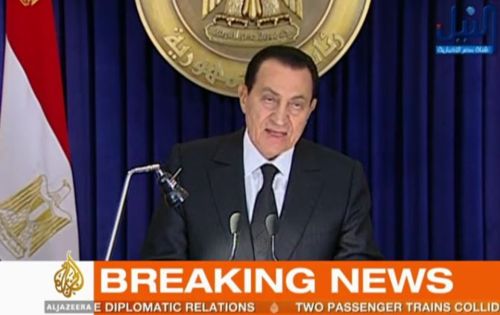
In the midst of continuing mass demonstrations against his rule in Egypt, president Hosni Mubarak has asked the government to resign. Mubarak seemingly hopes that the government’s resignation will appease the demonstrators. What’s interesting from our perspective–as students of comparative government–is that Mubarak hopes to maintain his regime at the expense of the government. It is accurate to call the current leadership of Mubarak a regime, since the norms/rules associated with political authority at the national level have been institutioinalised over the course of the almost three-decade reign by Mubarak as Egypt’s president. The question then becomes will the protesters be satisfied with a change in government alone, or will they insist on a change in the nature of this authoritarian regime, which will obviously not be effected without the removal from office of Mubarak himself. As in the case of many authoritarian regimes, in Egypt it is also true that the autocrat is the regime himself.

Here’s more from the CBC on Mubarak’s latest moves:

Egyptian President Hosni Mubarak says he has asked the government to resign and promised reforms as protests engulf his country.

In a televised speech broadcast early Saturday local time, Mubarak used his first public comments since the unrest began to defend the security crackdown on demonstrations.

“I assure you … I’m working for the people…. as long as you’re respecting the law,” Mubarak said.

“We have to be careful of anything that would allow chaos,” he said.

At the same, Mubarak tried to speak to the demonstrators who have filled Egypt’s streets for days.

“I’ll always be on the side of the poor,” he said. “I am with bettering the economy.”

Mubarak, who has ruled Egypt for three decades, has been facing the biggest pressure of his tenure.

Before the president spoke, tens of thousands of anti-government protesters defied a night curfew and some reportedly set fire to Mubarak’s party headquarters in Cairo. Flames were seen licking at the National Democratic Party headquarters shortly after 6 p.m. local time, though it was not immediately confirmed how the fire began.

The best real-time coverage of the political events in Egypt is, in my opinion, Al-Jazeera. You can watch live streaming coverage of Al-Jazeera here.

A Wave of Protests across North Africa and the Middle East

Following closely in the aftermath of the dramatic changes that have taken place in Tunisia recently, the political unrest seems to have swept its way across northern Africa, with the situation in Egypt now drawing most of the attention. Alan Cowell of the New York Times writes:

After days of protests that have toppled one president and shaken many others, governments across the Middle East braced on Friday for http://www.guardian.co.uk/global/blog/http://www.guardian.co.uk/global/blog/2011/jan/25/middleeast-tunisia://www.guardian.co.uk/global/blog/2011/jan/25/middleeast-tunisia/jan/25/middleeast-tunisia outbursts of rage and discontent directed at entrenched regimes confronting an exceptional clamor for democracy.

The immediate epicenter of the protests was Egypt, where Internet and cellphone connections were closed or restricted in Cairo, Alexandria and other places. Riot police took to the streets of Cairo before the Friday noon prayers that in http://www.guardian.co.uk/global/blog/2011/jan/25/middleeast-tunisia parts of the Islamic world have been a prelude to unrest as worshippers pour onto the streets.

The protests have underscored the blistering pace of events that have transformed the visage of the Arab world, particularly among regimes that have traditionally enjoyed the support of successive administrations in Washington.

Note the words that I have changed to red in the quote above. Is this author using these words as synonyms? If so, is he using them as precisely as he could be? Is he using them incorrectly?

For more information, here’s a useful set of reports, with myriad links to video and audio, from the UK Guardian’s Jack Shenker reporting in Cairo. In addition, the CBC website has an interesting flash-type graphic showing how the geographical extent of the spread of the protests.

Design a site like this with WordPress.com
Get started