Events/Lectures that may be of Interest

I’ll use this blog to keep you informed about lectures and events that may be of interest to you that are taking place on campus or in the greater Vancouver area. There are two events this week that are relevant.

This evening, Monday September 13th, at 7:00pm the Philosophers’ Cafe is kicking off the first event of its fall series at the Shadbolt Centre for the Arts at Deer Lake in Burnaby. This evening’s discussion is titled “Mixed Up: Is Canada’s cultural mix more like a melting pot, mosaic or matrix?” We’ll be addressing issues of identity and culture in about two weeks time in IS 210. The admission is $5, and the event will be moderated by Randall Mackinnon, who has served as a president, board member, executive and consulting staff for a diversity of community service organizations since 1970. For more information about tonight’s event and directions to the venue, click here.

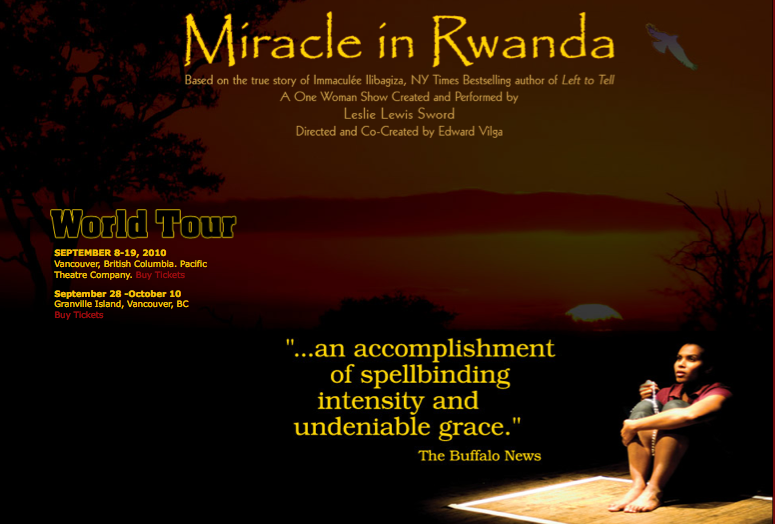
The second event is a one-woman show entitled Miracle in Rwanda, which is showing all of this week at Pacific Theatre Company and will also have a two-week run on Granville Island beginning later this month. To learn more about the show, and to purchase tickets, go here.

Update: The website I linked to above links to the wrong page. Miracle in Rwanda is part of this year’s Vancouver Fringe Festival. Here’s the correct link to information regarding show times and tickets.

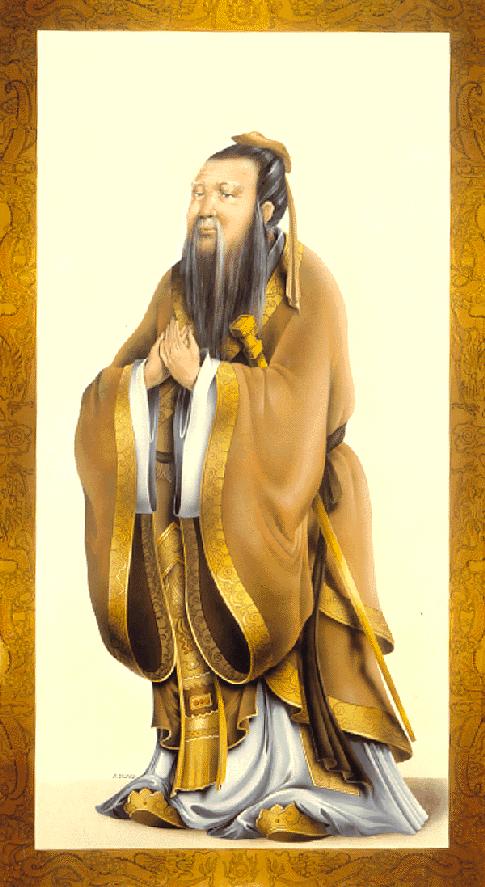
What are the Fundamental Tenets of Confucianism…Culture as Destiny?

Over the past few weeks, we have addressed the debate regarding the relative explanatory power of cultural versus institutional and rational choice approaches to the analysis of political phenomena.  In the book excerpt, “A Brief History of Human Liberty,” Newsweek editor Fareed Zakaria analyzes the cultural argument regarding economic growth and democracy. He quotes the former Singaporean Prime Minister Lee Kuan Yew:

“…if you want to see how culture works, compare the performance of German workers and Zambian workers anywhere in the world.  You will quickly come to the conclusion that there is something very different in the two cultures that explains the results.”

Zakaria has some sympathy for this argument, but then argues that it is strange that Lee Kuan Yew is such a strong proponent of cultural arguments* given that while Singapore is culturally very similar to its neighbor, Malaysia, Singapore has been much more effective in its economic policies than has its neighbor.  In fact, I would add that a strong argument against cultural explanations of democracy and economic development are the differences between East Germany and West Germany (in the post-WWII-era until unification) and the present difference between North and South Korea.

The 38th parallel may be just a line on a map, and the division of the nation of Korea into two separate states may be a historically contingent act, but it demonstrates the tremendously powerful impact of institutions on a society.  South Korea was able to develop good political and economic institutions, while North Korea has not.  The cultural foundation of each state was similar (although I’m not an expert on Korea, so maybe there was a cultural difference between the “north” and the “south” that can account for the vast differences in the two states today–although I’m highly skeptical) before the division and we know, in a methodological sense, that a constant can not explain an outcome that varies.

Getting back to Zakaria and Lee Yuan Kew, Zakaria writes that

“the key to Singapore’s success…is Lee Kuan Yew, not Confucius.  The point is not that culture is unimportant; on the contrary it matters greatly…But culture can change…A hundred years ago, when East Asia seemed immutably poor, many scholars–most famously Max Weber [we’ve read his Protestant Ethic argument]–argued that Confucian-based cultures discouraged all the attributes necessary for success in capitalism…A decade ago, when East Asia was booming, scholars had turned this explanation on its head, arguing that Confucianism actually emphasized the traits essential for economic dynamism. Today the wheel has turned again and many see in ‘Asian values’ all the ingredients of crony capitalism.”‘

What are these Confucian and ‘Asian values’ about which there has been so much discussion.  Well, needless to say Asia is a vast land mass, with exceedingly high levels of diversity–culturally, linguistically, religiously, racially, etc.  So the concept of ‘Asian values’ may be so amorphous as to http://onpoint.wbur.org/2006/08/15/china-and-confucian-democracy http://onpoint.wbur.org/2006/08/http://onpoint.wbur.org/2006/08/15/china-and-confucian-democracy/china-and-confucian-democracy.  Confucianism, however, is a distinct and compact body of ideas that has a comprehensive philosophical foundation.  What are Confucian values, then and do they help or hinder China’s precarious journey towards democracy and economic development?  Well, here’s an answer from political philosopher Daniel Bell, who insists that ultimately, Confucianism is about three core values.  What are these?  Listen to the first ten minutes of the audio podcast from this episode of “On Point.”  Here’s a link to the URL on which you can find an archived version of the show.

**Here, it should be noted that a reason Lee Kuan Yew is strongly predisposed to arguing on the basis of culture is his contempt for the licentiousness of Western values and his desire to prevent demands for those kinds of freedoms (as long as political liberty) to take root in the strongly authoritarian state of Singapore.  Just read his statements during the infamous Michael Fay incident.

It wasn’t long before Singapore patriarch Lee Kuan Yew weighed in. He reckoned the whole affair revealed America’s moral decay. “The U.S. government, the U.S. Senate and the U.S. media took the opportunity to ridicule us, saying the sentence was too severe,” he said in a television interview. “[The U.S.] does not restrain or punish individuals, forgiving them for whatever they have done. That’s why the whole country is in chaos: drugs, violence, unemployment and homelessness. The American society is the richest and most prosperous in the world but it is hardly safe and peaceful.”

Here’s another story on the incident.

Ethnic Conflict and Strife

A couple of days ago all blog posts seemed to be related to the theme “the social logic of politics”. Today, there seems to be a surge in episodes of inter-ethnic conflict worldwide. First, we learn from the Washington Post, that there is unrest and violence in the Tibetan capital of Lhasa, where a week of increasing confrontations between native Tibetans and the Chinese government have turned violent, with native Tibetans battling with Chinese police and troops and also attacking ethnic Han Chinese, which is either unprecedented or extremely rare.

BEIJING, March 14 — A week of tense confrontations over Chinese rule in Tibet erupted in violence Friday, as hundreds of protesters clashed with police and set fire to shops in the center of Lhasa. Doctors reported dozens of wounded streaming into area hospitals, and one witness said the downtown area was “in a state of siege.”

The rare breakout of violence, the worst in 20 years in the capital city of a remote mountainous region that is the heart of Tibetan Buddhism, posed a challenge to the Chinese government as it prepares to host the 2008 Olympic Games in August. Seeking to make the Games a worldwide celebration of its swift economic progress during the past three decades, the Chinese government has steadfastly attempted to project an image of harmony and stability, even while tightening its grip over the restive region.

“This spiraling unrest has triggered the scenario the Chinese prayed would not happen,” said Robbie Barnett, director of modern Tibetan studies at Columbia University. “Now we’re just watching the clock tick until people get off the street or the Chinese open fire.”

In a different part of the world, Malaysia, in which once again ethnic Chinese are involved, the New York Times reports on post-electoral tension on the island of Penang:

PENANG, Malaysia — Chanting “Long Live the Malays!” several hundred members of Malaysia’s largest ethnic group gathered Friday on this largely Chinese island, defying a police ban on protests and raising communal tensions after sharp electoral losses by the country’s governing party.

Newly elected state governments have moved rapidly to abolish some of the long-held privileges of ethnic Malays. Those efforts have challenged the core of Malaysia’s ethnic-based political system and inflamed the sensibilities of Malays. Until the March 8 elections, Malays thoroughly dominated politics through the country’s largest party, the United Malays National Organization, known by its initials, U.M.N.O.

The opposition parties that beat U.M.N.O. and its partners in five states say affirmative action should be based on need rather than ethnicity. But the opposition, too, is struggling to contain fissures along ethnic lines as a Chinese opposition party competes with its Malay counterpart.

“We’re living in very sensitive times,” said Tricia Yeoh, director of the Center for Public Policy Studies, an independent research center in Kuala Lumpur, the capital.

The affirmative action program favoring the Malays has been in place for more than three and a half decades and gives Malays everything from discounts on new houses to 30 percent quotas in initial public offerings of companies. It is known as the New Economic Policy.

Finally, in Iraq, where in the last four years the minority Christian community has been decimated, either through targeted killings or ethnic cleansing, we hear news of the killing of a prominent Catholic Bishop:

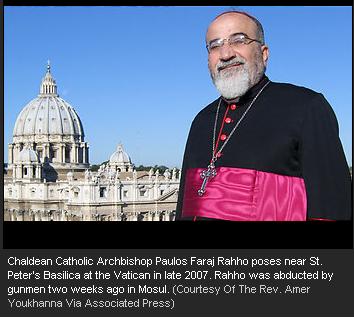
bishop_rahro.jpg BAGHDAD, March 13 — The body of a senior Christian cleric was found Thursday in the northern city of Mosul, two weeks after gunmen abducted him there and killed three of his associates.

The death of Paulos Faraj Rahho, 65, archbishop of Mosul’s Chaldean community, prompted expressions of remorse and condemnation from the Iraqi government and Christian leaders.

Pope Benedict XVI, in a message to the Chaldean patriarch in Iraq, called the killing an “act of inhuman violence that offends the dignity of the human person and seriously harms the cause of fraternal coexistence among the beloved Iraqi people.”

Iraqi Prime Minister Nouri al-Maliki said it was a crime of “aggression aimed at inciting sedition among” Iraqis.

Serbian Electorate Must Choose–Stomach or Heart?

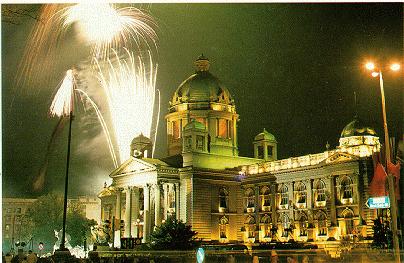
narodna_skupstina_srbije.jpgThe Serbian coalition government, with moderate nationalist Vojislav Koštunica as Prime Minister–has collapsed following dissension within the multi-party governing coalition over the “loss of Kosovo.” Voters will go to the polls to elect a new government on May 11th having to make a stark choice in the polling booth: whether to side with the nationalists in their struggle to forestall Kosovar independence, or to vote in a more moderate pro-European government, thereby placating not only members of the European Union but calming the nerves of wary international investors, who have become the life-blood of the Serbian economic system. As reports reports:

…The coalition government collapsed at the weekend, with nationalist Prime Minister Vojislav Koštunica blaming disunity over the conflicting goals of pursuing European Union membership versus defending Kosovo, the province which seceded last month with EU backing.

“Right now, around 1.0 billion euros worth of investments have been put on hold,” [Deputy Prime Minster Božidar] Djelić said. “There is a growing risk perception considering that some parties want to halt Serbia’s road to Europe. The elections will be a choice between Europe and investors are extremely careful.”

Heavily reliant on foreign investment for growth, Serbia is believed to need between 3.0 billion and 5.0 billion euros a year to ensure solid economic growth, single digit inflation and financing of its current account gap of 16 percent of GDP.

“In the absence of the required level of foreign investment, foreign creditors could also decide to put on hold lending to Serbian companies,” said Pavle Petrović of the FREN/CEVES thinktank said.

“The resulting crisis would lead to forcible reduction in external gaps through inflation, currency depreciation, a fall in output and wages. In that case, the central bank could soothe and postpone, but not eliminate the crisis,” he said.

How do you Prove You’re a Jew?

Gershon Gorenberg has written a new article in the New York Times Sunday Magazine
on the difficulties some Israeli Jews are having proving their Jewishness before rabbinic courts in that country.  The article is interesting and touches upon many of the issues we discussed in intro to comparative that deal with concepts of identity–nationhood, ethnicity, citizenship, etc.  In fact, I think I’ll be including this article in the syllabus during future iterations of this course.  In addition, I did not know that there is no civil marriage ceremony (marriage ceremonies are purely a religious affair in Israel) in Israeli law, but upon further reflection, I probably should have guessed that would be the case.

The story is particularly significant for American Jews, to which the accompanying snippets below attest:

02jewish1-500.jpgOne day last fall, a young Israeli woman named Sharon went with her fiancé to the Tel Aviv Rabbinate to register to marry. They are not religious, but there is no civil marriage in Israel. The rabbinate, a government bureaucracy, has a monopoly on tying the knot between Jews. The last thing Sharon expected to be told that morning was that she would have to prove — before a rabbinic court, no less — that she was Jewish. It made as much sense as someone doubting she was Sharon, telling her that the name written in her blue government-issue ID card was irrelevant, asking her to prove that she was she…

…In recent years, the state’s Chief Rabbinate and its branches in each Israeli city have adopted an institutional attitude of skepticism toward the Jewish identity of those who enter its doors. And the type of proof that the rabbinate prefers is peculiarly unsuited to Jewish life in the United States. The Israeli government seeks the political and financial support of American Jewry. It welcomes American Jewish immigrants. Yet the rabbinate, one arm of the state, increasingly treats American Jews as doubtful cases: not Jewish until proved so.

More than any other issue, the question of Who is a Jew? has repeatedly roiled relations between Israel and American Jewry. Psychologically, it is an argument over who belongs to the family. In the past, the casus belli was conversion: Would the Law of Return, which grants automatic citizenship to any Jew coming to Israel, apply to those converted to Judaism by non-Orthodox rabbis? Now, as Sharon’s experience indicates, the status of Jews by birth is in question. Equally important, the dividing line is no longer between Orthodox and non-Orthodox. The rabbinate’s handling of the issue has placed it on one side of an ideological fissure within Orthodox Judaism itself, between those concerned with making sure no stranger enters the gates and those who fear leaving sisters and brothers outside.

The story reminds me of a friend of mine who–of Croatian parentage but born in Canada– upon her arrival in Croatia (she had decided to move there during the middle of the war in the 1990s) had gone to the local police station with the aim of registering her presence (at that time, all foreigners were required to report to police within 24 hours of their arrival).  When she took out her Canadian passport, a clerk at the Ministry of Internal Affairs asked her the names of her parents.  After my friend responded, the clerk refused to allow her to register as a foreigner and insisted that she take out Croatian citizenship on the spot.  When my friend insisted that she was a Canadian citizen, the clerk responded “your father is ours, your mother is ours, that makes you  one of us also.”


Patriotism–What is it? How can we Measure it?

As budding “social scientists” (the scare quotes are legitimate), it is good form to not only define concepts that are malleable but also to provide qualitative and/or quantitative evidence regarding their existence. A recent brouhaha in American politics centers around the political concept patriotism. What is it? How do we know it exists? Can it be measured? These are all important questions, so important, in fact, that they could determine the outcome of the next US presidential election.

In intro to comparative, we’ve been analyzing social identities, ethnic, national, etc. As we know from reading O’Neil, patriotism is based on the idea of citizenship–an individual’s relationship to the state in which s/he lives. O’Neil defines patriotism as “pride in one’s state.”

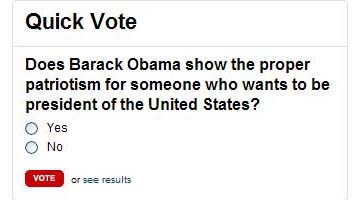
As near as I can tell, some opponents of Barack Obama’s candidacy have based some of their resistance on what they view as his lack of patriotism. If I’m reading this correctly, the base their argument on the fact that Obama does not (in fact, may even refuse to) wear a lapel pin in the shape of an American flag. This is interesting since it also touches upon issues of national identity; remember that we tried to determine just what is meant to be American. Does one have to wear an American flag lapel pin to be considered patriotic? If any of you think that this is an issue of negligible import, I refer you to this screen shot of the CNN website:

cnn-obama-patriotism.jpg

Given that I’m not a citizen of the United States, I’ll leave that for others to answer. I am, however, a citizen of the Republic of Croatia and this episode does remind me of an incident from the mid 1990s, which I, then working for the Helsinki Committee for Human Rights, witnessed. Join me after the jump.

hrvatska-zastava.jpgThe Croatian flag is a tri-color, with horizontal fields of red, white, and blue (from top to bottom), which contains the coat of arms–the “Šahovnica“–in the middle field. The šahovnica has been used in various guises throughout Croatian history as a symbol of Croatian nationhood. While Croats have lived under many different types of regime–Communist Yugoslavia, the Fascist Ustasa regime during WWII, the unitarist, Serb-dominated inter-war regime, the Austro-Hungarian monarchy (you get the point!)–the šahovnica has remained a constant expression and symbol of the Croatian people.

Continue reading “Patriotism–What is it? How can we Measure it?”

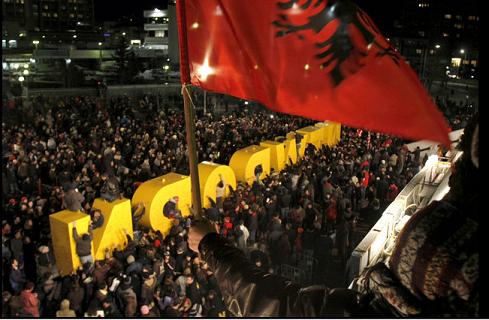
U.S. Formally Recognizes Kosovo Independence

We discussed in class today that of the four characteristics of a state, the only one that Kosovo had, at that point, not fulfilled was international recognition by other states. According to this Washington Post story, the United States has begun to change that:

kosovo_independence1.jpgPresident Bush hailed the newly independent Kosovo and officially recognized it as a state and a “close friend” on Monday, expressing strong support for the new Balkans nation even as he rebuffed protests by Serbia and Russia.

The formal announcement came in a statement issued by Secretary of State Condoleezza Rice, who is traveling in Africa with the president. “The United States has today formally recognized Kosovo as a sovereign and independent state,” she said. “We congratulate the people of Kosovo on this historic occasion.”

I understand what it feels like to be a Kosovar Albanian today as it takes me back to 15 January 1992, when European and other states, including the United States, formally recognized the independence of the Republic of Croatia. I can also sympathize with Serbs, who must feel like their heart has been ripped out of their body given that Kosovo is integral to history and spirit of the Serbian nation. Ivo Banac has written that “the history of the Balkans is a history migrations, not only peoples, but of lands.” The Serbian nation was founded on land that the Serbs no longer control politically as a result of the vicissitudes of politics in that part of the world and the drift of the center of gravity of Serb political northward over the centuries. It is incumbent upon the new Kosovo government and the international community to allow Serbs to continue to have access to the sacred religious and spiritual monuments of their past.

You can see a comprehensive slide show of photographs marking the situation here.

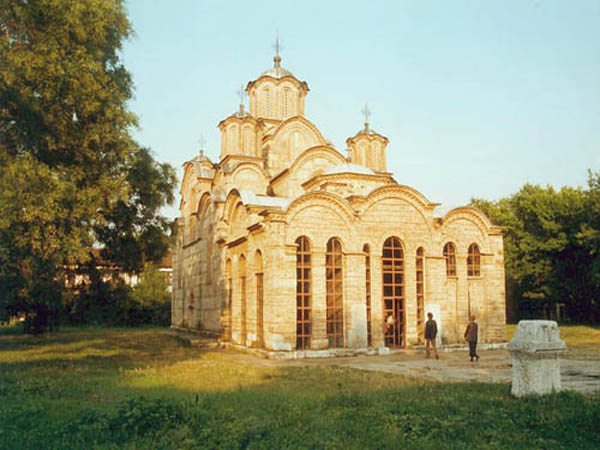
Below is a photograph of the famous Serbian Christian Orthodox Gračanica Monastery in Kosovo.

gracanica1.jpg

Life, Liberty, and the Pursuit of Happiness

We hold these truths to be self-evident, that all men are created equal, that they are endowed by their Creator with certain unalienable Rights, that among these are Life, Liberty and the pursuit of Happiness.

All of us immediately recognize these powerful sentences as being part of the Declaration of Independence of the United States of America. Happiness is an important concept and has been the object of increased study in political science and comparative politics. Ronald Inglehart (he of World Values Survey fame) argues that there is a strong relationship between happiness and democracy across countries. Inglehart writes:

Correlation is not causation, and this linkage could reflect any of the following things: (1) living under democratic institutions makes people much happier than living under authoritarian institutions; or (2) high levels of subjective well-being are conducive to democratic institutions; or (3) the correlation could be spurious, due to the fact that both subjective well-being and democracy are strongly correlated with some other variable such as high levels of economic development.

Solving this puzzle has far-reaching implications. If the linkage is not spurious and democracy makes people happy, this provides a strong additional argument on behalf of democracy; while if high levels of happiness are conducive to democracy, this can lead to a better understanding of how democracy emerges and flourishes. Using World Values Survey data on happiness levels from 1981 to 2006, and the Freedom House measures of democracy levels from 1972 to 2005, this paper analyzes the relationships between happiness and democracy in order to determine what is causing what.

How happy are Americans? How happy are Germans, Chinese, or Brazilians, for that matter? Who are the happiest people on earth? According to the new World Database of Happiness, it’s the Danes, Swiss and Maltese. Is this a political cultural trait, as Inglehart assumes, or are there structural and institutional factors at work? All three countries are rather small, and European. (Malta and Denmark are, additionally, amongst the most homogeneous states in the world, and this could be having an effect, given new research by Robert Putnam on the potential socially, politically, and economically detrimental effects of ethnic diversity.) Americans, by the way, are ranked #25 in level of happiness.

The Economist’s Diary on Kenya

The eminent British magazine, The Economist, currently has a correspondent in Kenya writing up daily reports in the Internet edition, which can be viewed here. There is, of course, much to be concerned about in Kenya these days, but as an academic I found the latest dispatch especially interesting:

Morning, Professor Alan Ogot’s office, Kisumu

ALAN Ogot (pictured below), one of Kenya’s leading historians, is the chancellor of Moi University in Eldoret. Like me, he graduated from St Andrew’s University in Scotland, but he was there in the 1950s, and his life before and since has been colourful and consequential.

Mr Ogot spends the first part of our interview delving into Luo history. Contrary to their reputation among some Kikuyus and white Kenyans as agitators, he says the Luo have always done the jobs no one else wanted to do. For a thousand years they have aspired to “fairness” and “reciprocity”. He gives examples of religious and political movements to argue that Luoland was the most progressive part of Kenya. That changed with independence in 1963 and the rise of a Kikuyu elite who mistrusted Luos.

Mr Ogot had lunch with Tom Mboya on the day Mboya was shot dead in 1969. Mboya was one of several Luo politicians tipped for the presidency and Mr Ogot thinks the Luo have never recovered from his death. “What followed was a police state. We were not allowed to speak our mind.”

 Then Mr Ogot moves on to the damage done to academia in Kenya by the post-election violence. He wonders what the future of research is in the country. Some of Africa’s best research institutions are located around Nairobi. Most are closed, he says, some burned, and the best minds driven out.

He points out that Maseno, the local university in Luoland, was over half Kikuyu. “Most of these people are not coming back. Who will provide them with security?” Other universities across the country are being similarly ethnically cleansed. “You call these universities? They’ll be worse than primary schools…”

…Since the election he has hardly left his house. A woman and child were shot dead outside his front gate. The police mistakenly killed a caretaker in a neighbouring house. “They have apologised, but what will that do?”

I’ve highlighted what I think are the interesting parts of the snippet I posted. First, contrary to what I have been reading in the newspapers lately, inter-ethnic relations between the Kukuyu and Luo, specifically, have not been as tolerant and peaceful and many have led us to believe. Second is the horrific damage that is being done to Kenya’s post-secondary educational system as a result of the current political situation there. A Boston Globe column that was published before the elections held out hope for Africa, and pointed to Kenya’s potential role as a leader for the rest of the continent. Now what?

CNN’s Startling use of its “Arab Affairs Editor”

A couple of students in my PLSC250 class have posted a clip of part of CNN’s reaction to news of the death of Al Qaeda’s Number 3 in command. (I thought that I’d never see the day when there was a more dangerous gig than being Spinal Tap’s drummer, but being Al Qaeda’s number 3 must be it.)*

Anyway, the anchor relays the news to viewers and turns to get expert advice from CNN’s “Senior Arab Affairs Editor.” What!?! An Arab affairs editor to give us insight into the area of the Pakistani/Afghan border where there are large numbers of Pashtuns, Tajiks, and Hazara, but no Arabs?

Go and watch the clip for yourself.

*I never thought that I’d be able to fit Al Qaeda and Spinal Tap into the same post.

A bio of Spinal Tap’s first drummer:

pepys.jpgPepys, John “Stumpy” (1943-1969): David and Nigel met the tall, blond geek in 1964 while touring as members of the Johnny Goodshow Revue. At a Southampton pub then known as the Bucket (now the Bucket and Pail), the boys jammed with the bespectacled drummer, nicknamed “the peeper” and then a member of the Leslie Cheswick Soul Explosion (now Les and Mary Cheswick). The three men would go on to form the Thamesmen and later, with Ronnie Pudding and Denny Upham, Spinal Tap, which played its first gig in December 1966. Pepys would die in a bizarre gardening accident shortly after the release of the band’s third album, “Silent But Deadly.” (IST) Nigel: “It was really one of those things the authorities said, ‘Well, best leave it unsolved.’ “

Design a site like this with WordPress.com
Get started