Drezner explains Neo-conservatism

Here‘s a nice, and concise, description from Dan Drezner* of neo-conservatism, the theoretical underpinning of the Bush administration’s foreign policy.

Neo-conservatism borrows many ideas from liberal internationalism, though it promotes those ideas in terms of more expansive aims and aggressive methods. The first sentence of the March 2006 National Security strategy reads, “It is the policy of the United States to seek and support democratic movements and institutions in every nation and culture, with the ultimate goal of ending tyranny in our world.” Like liberal internationalists, neo-conservatives believe that the spread of free markets, democratic values, and human rights leads to a more prosperous and pacific world. But neo-conservatives reject the “third leg” of the Kantian triad: multilateralism. Whereas liberals put greater faith in international institutions as a means of promoting American interests, neo-conservatives view them as constraints on US action: in place of multilateral agreements, neo-consevatives prefer more unilateral and more forceful means of promoting regime change.

*If you are interested in international political economy, you should take a look at Drezner‘s blog.  You also may be interested in his new book–Daniel W. Drezner, All Politics Is Global Princeton: Princeton University Press, 2007).

The Future of US Foreign Policy post-Bush?

Daniel Drezner, an associate professor of international politics at the Fletcher School of Law and Diplomacy at Tufts University, has published an article in the latest issue of Internationale Politik und Gesellschaft (“International Politics and Society”) entitled “The Future of U.S. Foreign Policy.”  In it he envisions what a post-Bush US foreign policy (regardless of which party wins the White House) should look like.  

As we have already discussed, and will discuss further throughout the course, a fundamental tenet of the realist theory of international relations is that the nature of the domestic regime does not matter as it pertains to the manner in which a state acts in the world.  Thus, whether a regime is democratic, authoritarian, or even a theocracy, the compelling logic of trying to ensure security in an anarchic world means that all states will act the same way.  A corollary of that is that it does not matter, say the realists, whether the leadership of a state is more left-wing or more right-wing, the fundamental character of foreign policy will be the same.  Does Drezner agree with the realists?

For Europe, American foreign policy in 2009 will clearly be an improvement on its current incarnation. Regardless of who wins the presidential election, there will likely be a reaching out to Europe as a means of demonstrating a decisive shift from the Bush administration’s diplomatic style. This does not mean, however, that the major irritants to the transatlantic relationship will disappear. On several issues, such as GMOs or the Boeing–Airbus dispute, the status quo will persist. On deeper questions, such as the use of force and the use of multilateralism, American foreign policy will shift, but not as far as Europeans would like. When George W. Bush leaves office, neo-conservatism will go with him. This does not mean, however, that Europeans will altogether agree with the foreign policy that replaces it.

Drezner also has some interesting things to say about neoconservatism, the theory underpinning the Bush administration’s view of international relations:

 It would appear that Americans are now disenchanted with neo-conservatism
as a foreign-policy doctrine. Five years ago, the idea of muscular,
unilaterally-imposed democratization was believed to resonate with
American values in a post-9/11 world. This is no longer the case. In October
2006, a Public Agenda poll found that 83 % of Americans are worried
about the way things are going for the United States in world affairs.
Their new »Anxiety Indicator« found that »a significant majority of the
public is feeling anxious and insecure about the country’s place in the
world.« Iraq – an obsession of neo-conservatives for over a decade now –
is obviously a major cause of this discontent…

…Neo-conservatism will formally expire as the grand strategy of the
United States on January 20, 2009: the date George W. Bush leaves office.
What will take its place? There are myriad ways in which us foreign
policy could diverge from the neo-conservative approach.

Kenyan Violence Menacing for Intertribal Marriages

Kenya’s political troubles have had a immediate impact on marriages composed of partners of different tribes. Individuals in inter-tribal or inter-ethnic marriages are often twice cursed in the event of inter-ethnic violence. On the one hand, each marriage partner is increasingly distrusted by members of the other ethnic/tribal group. But what makes matter even worse is that they are also ostracized and often the victims of violence on the part of members of their own group. Their sin is that, having married someone from the rival ethnic group/tribe, they are no longer seen as trustworthy. In noticed in Croatia that this led to counter-intuitive outcomes where individuals who had married spouses of the other ethnic group often become publicly intolerant toward members of the spouse’s group. This was not the result of true ethnic hostility but in order to prove the individual’s ethnic/nationalist bona fides to his (and it was mostly males in this case) own ethnic brethren.

Here is a report from the Associated Press about a woman in Kenya whose husband had to leave home, fearing for his life.

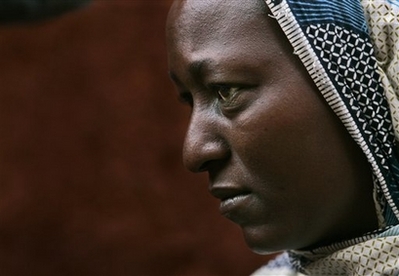
He doesn’t call. He doesn’t write. His cell phone has been switched off for weeks. After 17 years, Naomi Kering’s husband is gone — one more intertribal marriage fallen victim to the violence that has followed Kenya‘s disastrous presidential election.

“The kids always ask me, ‘Where is he?’ And I always say he is going to come back,” Kering, a 34-year-old of the Kalenjin tribe, told The Associated Press as she stood in the rubble of her home, torched by a mob last month because her kenya_divided_love_abc5031.jpghusband is a Kikuyu. “But I hope he stays away, because I love him and I want him to be safe.”

Since the Dec. 27 vote, marriages that united different ethnic groups have felt the strain as communities shun the Kikuyu tribe of President Mwai Kibaki, whose disputed re-election unleashed a wave of bloodshed that has killed at least 685 people.

Until now, marriages like Kering’s were common enough to go largely unnoticed, representing hope for what Kenya could be as a nation. But now the fabric of Kenyan society is fraying, forcing families to confront tribal identities many had cast aside long ago.

“This election has changed the very essence of these marriages,” said the Rev. Charles Kirui, a Catholic priest whose church in the nearby town of Burnt Forest shelters hundreds of Kikuyus. “Marriages are breaking up because of a tribal conflict, which means we really have a problem in Kenya.”

There are no figures on how many families are affected, but the impact is particularly felt in the heart of opposition territory in western Kenya, where tribal tensions have been most inflamed by the election.

This country of 38 million was once seen as a stable democracy on a violent continent. But it depended on a delicate balance of intertribal power.

NATO Report Cites Four Most Dangerous Threats to the West

The authors of the NATO-commissioned report I mentioned in the post below have listed what they believe are the most potentially dangerous threats to international security. If you’d like, you can choose to select one of these as your blog project for the semester.

Once more, from the Guardian:

The authors – General John Shalikashvili, the former chairman of the US joint chiefs of staff and Nato’s ex-supreme commander in Europe, General Klaus Naumann, Germany’s former top soldier and ex-chairman of Nato’s military committee, General Henk van den Breemen, a former Dutch chief of staff, Admiral Jacques Lanxade, a former French chief of staff, and Lord Inge, field marshal and ex-chief of the general staff and the defence staff in the UK – paint an alarming picture of the threats and challenges confronting the west in the post-9/11 world and deliver a withering verdict on the ability to cope.

The five commanders argue that the west’s values and way of life are under threat, but the west is struggling to summon the will to defend them. The key threats are:

  1. Political fanaticism and religious fundamentalism.
  2. The “dark side” of globalisation, meaning international terrorism, organised crime and the spread of weapons of mass destruction.
  3. Climate change and energy security, entailing a contest for resources and potential “environmental” migration on a mass scale.
  4. The weakening of the nation state as well as of organisations such as the UN, Nato and the EU.

We will address the impact of environmental change on migration later in the semester when we read the work of Thomas Homer-Dixon.

NATO–Preemptive Nuclear Strike a Key Option?

We discussed in class today the use of preemptive force to respond to potential security threats and how this was a central component of President Bush’s National Security Strategy (NSS) of the United States (2002). Now, according to the Guardian newspaper, it seems that “five of the west’s most senior military officers and strategists” have insisted that NATO (the North Atlantic Treaty Organization) and the

west must be ready to resort to a preemptive nuclear attack to try to halt the “imminent” spread of nuclear and other weapons of mass destruction.

Calling for root-and-branch reform of Nato and a new pact drawing the US, Nato and the European Union together in a “grand strategy” to tackle the challenges of an increasingly brutal world, the former armed forces chiefs from the US, Britain, Germany, France and the Netherlands insist that a “first strike” nuclear option remains an “indispensable instrument” since there is “simply no realistic prospect of a nuclear-free world”.

The manifesto has been written following discussions with active commanders and policymakers, many of whom are unable or unwilling to publicly air their views. It has been presented to the Pentagon in Washington and to Nato’s secretary general, Jaap de Hoop Scheffer, over the past 10 days. The proposals are likely to be discussed at a Nato summit in Bucharest in April.

“The risk of further [nuclear] proliferation is imminent and, with it, the danger that nuclear war fighting, albeit limited in scope, might become possible,” the authors argued in the 150-page blueprint for urgent reform of western military strategy and structures. “The first use of nuclear weapons must remain in the quiver of escalation as the ultimate instrument to prevent the use of weapons of mass destruction.”

Remember that in one of our earlier sessions we wondered aloud if there were any institutionalized norms in international relations and we thought that maybe there was a normative injunction against the use of nuclear weapons. Nina Tannenwald has written about the “nuclear taboo” but suggests that in the aftermath of WWII, officials in the US and Europe thought that nuclear weapons would come to be seen as another type of conventional weapon.

Continue reading “NATO–Preemptive Nuclear Strike a Key Option?”

Gapminder–How has the World Changed over time?

Gapminder is a fantastic resource that provides a fascinating glimpse of a myriad of different indicators of income and development across the world. One of the true virtues of Gapminder is that it allows the user, from her computer, to visualize trends across the world and over time.  The user can find information such as clean water levels, GDP, poverty, education, health, etc. Below is a video that shows some of the capabilities of Gapminder, analyzing income and poverty levels worldwide over the last few decades.

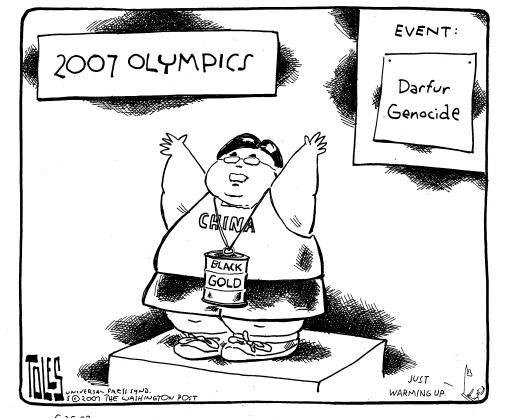
The “Genocide Olympics”?

china_darfur.jpg

(Image from the San Francisco Chronicle)

In a piece published today New York Times op-ed columnist, Nicholas Kristof, addresses the link between China’s foreign policy goals and the continuing genocide in the Sudanese region of Darfur. Hundreds of thousands have been killed or have died from starvation, disease and malnutrition, and millions have been displaced, whether internally or as refugees abroad, for which, Kristof argues, China bears some moral culpability. Kristof is not alone in this view and the NGO, Olympic Dream for Darfur, has decided to try to do something about it by establishing the “Genocide Olympics” campaign, which is meant to shame China into changing its policies toward Sudan.* Will this work? Is it good foreign policy? Is it morally acceptable to mix sport with politics? Remember, there is historical precedent for this type of thing as the United States boycotted the 1980 Moscow Olympics in retaliation for the Soviet invasion of Afghanistan. Quoting Kristof:

The Beijing Olympics this summer were supposed to be China’s coming-out party, celebrating the end of nearly two centuries of weakness, poverty and humiliation.

Instead, China’s leaders are tarnishing their own Olympiad by abetting genocide in Darfur and in effect undermining the U.N. military deployment there. The result is a growing international campaign to brand these “The Genocide Olympics.”

This is not a boycott of the Olympics. But expect Darfur-related protests at Chinese Embassies, as well as banners and armbands among both athletes and spectators. There’s a growing recognition that perhaps the best way of averting hundreds of thousands more deaths in Sudan is to use the leverage of the Olympics to shame China into more responsible behavior.

The central problem is that in exchange for access to Sudanese oil, Beijing is financing, diplomatically protecting and supplying the arms for the first genocide of the 21st century. China is the largest arms supplier to Sudan, officially selling $83 million in weapons, aircraft and spare parts to Sudan in 2005, according to Amnesty International USA. That is the latest year for which figures are available.

As the highlighted portion of the quote above implies, China is acting in a fundamentally realist manner, eschewing moral concerns in order to increase its power and security.

*Please do not refer to Sudan as the Sudan, or to Ukraine as the Ukraine, but Sudan and Ukraine, respectively, as they are no longer regions within colonial empires, but are independent states in their own right. Adding the in front of their country names is anachronistic.

Blog Assignment PLSC240 Introduction to Comparative Politics

The function of your blog will be to select, research, analyze, and contribute knowledge and information on a topic of interest to you (the group will select one topic only) in comparative politics. As we address the theories and principles of comparative politics over the course of the semester, you will post to your blog analyzing how these theories, principles, and ideas apply to your chosen topic. In addition, since this course is called “comparative” politics, I would like you to analyze at least two (and up to four) different countries, one of which should be a developing country. The goal is for the members of your group to learn more about that topic than we could ever hope to cover in class over the course of a single semester. You will have to post your topic of choice (with potential countries), and a brief description, by midnight, Wednesday, January 30th.

My goal is to allow you to be as resourceful, self-initiated and creative as possible. These are your blogs and you will ultimately be responsible for the nature of the posts. I will guide you, but will allow much latitude in what you decide to post and how you use this assignment to express yourself and demonstrate to me how much you are learning about a particular topic. I want us to build a learning environment and community together, which means that we will all be involved in this enterprise. To make an analogy, it would be as if I were to instruct you to build an apartment building with X number of units on a particular plot of land, and pretty much let you loose to create your vision. I will guide you along the way, for certain, but will let you be the ultimate owner of the finished product. So your first step is to select a topic.

As you may have noticed we have already addressed some topics in comparative politics that may be of interest to you. To help you begin to narrow down your choice of topic, use some of the resources that you already have available to you. First, go to my blog and search for PLSC240, and you’ll see a series of posts with potential topics/ideas. Another immediate source is the textbook. For example, browse the entries in the index of O’Neil’s Essentials.

Continue reading “Blog Assignment PLSC240 Introduction to Comparative Politics”

Modeling Social Processes–Abortion in Cross-national Comparison

Thanks to a post by Zoe and Geoff, I decided to use the social fact of variation in abortion rates from country to country as the inspiration for class discussion today on the modeling process in social sciences. First, the data* (listing only the top and bottom 10–the US is 30th (out of 90 countries with data available) with a rate of 23.9% in 2003):

Country

Year

%

Russia

2005

52.5

Greenland

2004

50.2

Bosnia and Herzegovina

1988

48.9

Estonia

2004

47.4

Romania

2004

46.9

Belarus

2004

44.6

Hungary

2004

42.0

Guadeloupe

2005

41.4

Ukraine

2004

40.4

Bulgaria

2004

40.3

Suriname

1994

3.0

Puerto Rico

2001

2.2

Malta

2004

1.7

Qatar

2004

1.3

Portugal

2005

0.8

Venezuela

1968

0.8

Mexico

2003

0.2

Poland

2004

0.06

Panama

2000

0.02

Chile

1991

0.02

Now, according to Lave and March, the next step in the model-building process is to consider a social process that would lead to this outcome. There were three potential answers given in class, which correspond to three categories of explanation that we will address throughout the course:

1) Cultural–it would seem that religion is very important to individuals in the countries with the lowest rates. Most of these countries are strongly Catholic and the Church’s official policies are strongly anti-abortion (pro-life). Thus, individuals in these societies are inculcated with a strong view of what to do in the case of an unwanted pregnancy.

2) Rational Choice–one of the groups argued that the decision to abort (or not) a fetus was made on the basis of strategic calculations of self-interest. The countries at the bottom, these students argued, were agricultural and poorer, and children are needed as a source of labor for the household, as a future hedge against retirement for parents who live in societies with a poorly developed social welfare state, with little hope of receiving retirement funds from the government.

3) Institutional–rules, laws, regulations. Some students argued that some countries (like Chile) have laws making abortion illegal, thus either lowering the number overall, or decreasing the incentive for those having illegal abortions to report them to the official authorities.

That was great work; give yourselves a pat on the back or a round of applause.

The third step in the modeling process is, then, to tease out further implications of your preferred hypothesis above. Let’s go back to the cultural explanation. If it’s true that the Catholic Church has a tremendous impact on people’s views of what is right and wrong then, as one student asked, “wouldn’t it also be the case that divorce levels in these countries should be lower than divorce levels in the countries at the top of the list (since the Catholic Church also frowns upon divorce) ?

Continue reading “Modeling Social Processes–Abortion in Cross-national Comparison”

Voter Turnout Across the World

O’Neil (in Chapter 6) argues that democracies are institutionalized through the institutions of participation, competition, and liberty.  The most common form of participation in democracies is voting in elections.  Yet, the general sense seems to be that voters are turning out to vote in ever smaller numbers over the years.  Do the data bear that out?

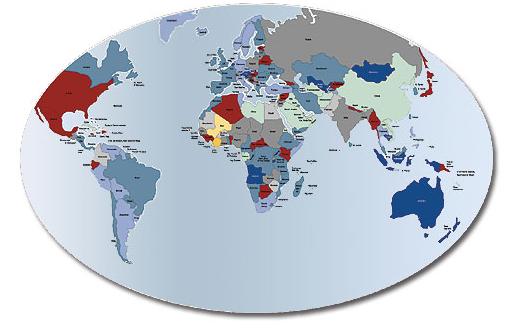
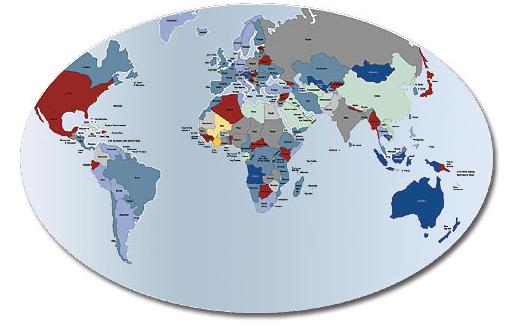
The IGO IDEA–The International Institute for Democracy and Electoral Assistance–has a fantastic website dedicated to, amongst other things, tracking voter turnout levels in elections around the world. Referring to the map below, we see that voter turnout levels differ from country to country. Why might this be the case? This observation could be used as the first step in demonstrating Lave and March’s four-step process of modeling social and political phenomena. Thus, step one (“observe a social fact”) is voter turnout levels are higher in some countries and lower in others. Step two, then, requires us to consider a social process that could have accounted for this variation in outcomes. Can you think of a social process that can account for the findings on the map below?

world_voter_turnout1.jpg

Here are some important findings from IDEA’s report on world voter turnout trends.  For a complete list of data for each respective country, go here.

  • High turnout is not solely the property of established democracies in the West. Of the top 10 countries in the 1990s only three were Western European democracies.
  • Turnout across the globe rose steadily between 1945 and 1990 – increasing from 61% in the 1940s to 68% in the 1980s. But post-1990 the average has dipped back to 64%.
  • Since 1945 Western Europe has maintained the highest average turnout (77%), and Latin America the lowest (53%), but turnout need not necessarily reflect regional wealth. North America and the Caribbean have the third lowest turnout rate, while Oceania and the former Soviet states of the Commonwealth of Independent States (CIS) and Central Eastern Europe are respectively second and third highest in the regional league table over this period.
  • The overall average turnout in the post-war period for established democracies is 73%, which contrasts with an average of 58% for all other countries. However, turnout rates in both established and non-established democracies have been converging over time.
  • Out of the 81 countries which had first and subsequent elections between 1945 and 1997, the average turnout in first elections (61%) is actually lower than the average for subsequent elections (62%). This represents a mixed pattern backed up by the fact that turnout in 41 countries dropped between the first and second elections but turnout actually rose in another 40 countries.
Design a site like this with WordPress.com
Get started