Thomas Friedman’s First Law of Petropolitics

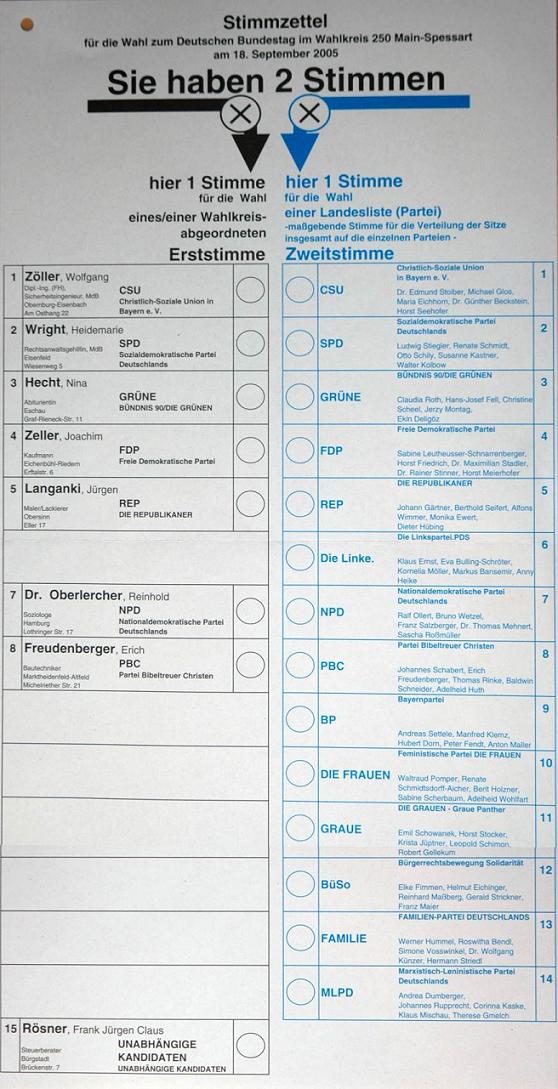
New York Times columnist wrote a fairly interesting article in Foreign Policy magazine a couple of years entitled “The First Law of Politics.” Here are some excerpts:

When I heard the president of Iran, Mahmoud Ahmadinejad, declare that the Holocaust was a “myth,” I couldn’t help asking myself: “I wonder if the president of Iran would be talking this way if the price of oil were $20 a barrel today rather than $60 a barrel.” When I heard Venezuela’s President Hugo Chávez telling British Prime Minister Tony Blair to “go right to hell” and telling his supporters that the U.S.-sponsored Free Trade Area of the Americas “can go to hell,” too, I couldn’t help saying to myself, “I wonder if the president of Venezuela would be saying all these things if the price of oil today were $20 a barrel rather than $60 a barrel, and his country had to make a living by empowering its own entrepreneurs, not just drilling wells.”

As I followed events in the Persian Gulf during the past few years, I noticed that the first Arab Gulf state to hold a free and fair election, in which women could run and vote, and the first Arab Gulf state to undertake a total overhaul of its labor laws to make its own people more employable and less dependent on imported labor, was Bahrain. Bahrain happened to be the first Arab Gulf state expected to run out of oil. It was also the first in the region to sign a free trade agreement with the United States. I couldn’t help asking myself: “Could that all just be a coincidence? Finally, when I looked across the Arab world, and watched the popular democracy activists in Lebanon pushing Syrian troops out of their country, I couldn’t help saying to myself: “Is it an accident that the Arab world’s first and only real democracy happens not to have a drop of oil?”

The more I pondered these questions, the more it seemed obvious to me that there must be a correlation—a literal correlation that could be measured and graphed—between the price of oil and the pace, scope, and sustainability of political freedoms and economic reforms in certain countries.

Mock German Election Simulation–Government Formation Results

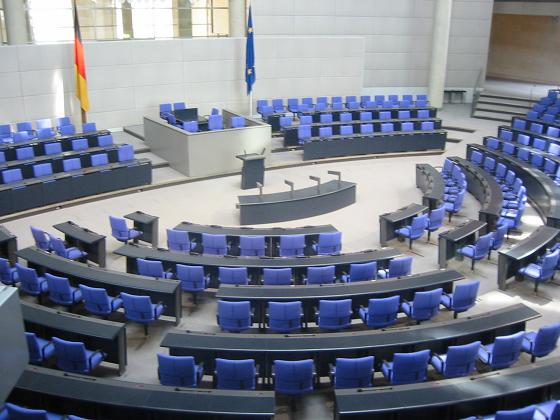
In the second part of our mock German election simulation–the government formation negotiations–we were able to get a new government voted into power by the recently elected Bundestag.  (I refer you to this post for more information about the electoral results.)

To remind you, following the election, we had the composition of the Bundestag was:

FDP–6 mandate (formateur party)

CDU/CSU–4 mandates

SPD–3 mandates

Greens–3 mandates

In order to have a secure governing coalition, a governing coalition of at least 9 mandates would be needed in this sixteen-member parliament.

The FDP were unable to convince any of the other parties to form a governing coalition with them, and the government that was voted into office, by a majority vote of 10-6 was a three-party coalition of the Greens, CDU/CSU, and the SPD.

In the end, it was the personal ambition of the CDU/CSU leader–Patrick S.–that ruled the day.  He wanted to become Chancellor and this steely determination served him well as he, with his fellow party members and advisory committee, was able to effectively forge a rather wieldy three-party governing coalition.

Why did Patrick S. want to become Chancellor so desperately?  There have been reports in some of the leading journals that it has been his dream since childhood.  But in a sit-down interview with Deutsche Welle following his ascension to the Chancellorship, Chancellor S. claimed that it was because this election was crucial to the future of the German state.  According to the Chancellor, he and his party believe that a moral crisis of epic proportions has descended upon Germany and only his party had the necessary moral acuity to set Germany back on the correct path.

The Chancellor and the six-member Cabinet is composed of the following:

Chancellor–Patrick S. (CDU/CSU)

Minister of Education–Becky W. (Greens)

Minister of the Interior–Erick K. (CDU/CSU)

Minister of the Environment–Zhivko I. (Greens)

Minister of Foreign Affairs–Kyle B. (CDU/CSU)

Minister of Health–Rip F. (SPD)

Minister of Labor–Andrew S. (SPD)

One of the advisers to the SPD commented that the SPD actually had refused to sign a coalition agreement offered to them by the FDP, which in retrospect, was better for the SPD than the one they signed ultimately.  There seemed to be a consensus within the SPD that the arrogance of the FDP had created friction between the two potential coalition partners.

I look forward to reading your impressions of the simulation exercise on your blogs.

Newsweek Editor Fareed Zakaria Says “No” to Olympic Boycott

In a recent column, Newsweek’s Fareed Zakaria argues that the US should not boycott the Olympic Games in Beijing this summer.  He argues that it would have the opposite of the intended effect.  Here are some snippets:

Public humiliation does not work nearly as well on the regime in Beijing as private pressure. At first glance, China’s recent crackdown in Tibet looks like a familiar storyline: a dictatorship represses its people. And of course that’s part of the reality — as it often is in China. But on this issue, the communist regime is not in opposition to its people. The vast majority of Chinese have little sympathy for the Tibetan cause. To the extent that we can gauge public opinion in China and among its diaspora, ordinary Chinese are, if anything, critical of the Beijing government for being too easy on the Tibetans. The real struggle here is between a nationalist majority and an ethnic and religious minority looking to secure its rights.

In these circumstances, a boycott of the Olympics would have precisely the opposite effect that is intended. The regime in Beijing would become only more defensive and stubborn. The Chinese people would rally around the flag and see the West as trying to humiliate China in its first international moment of glory. (There are many suspicions that the United States cannot abide the prospect of a rising China.) For most Chinese, the Games are about the world’s giving China respect, rather than bolstering the Communist Party’s legitimacy…

…Some want to punish China for its association with the Sudanese government, which is perpetrating atrocities in Darfur. But to boycott Beijing’s Games because it buys oil from Sudan carries the notion of responsibility too far. After all, the United States has much closer ties to Saudi Arabia, a medieval monarchy that has funded Islamic terror. Should the world boycott America for this relationship?

Happy Tax Day–April 15th

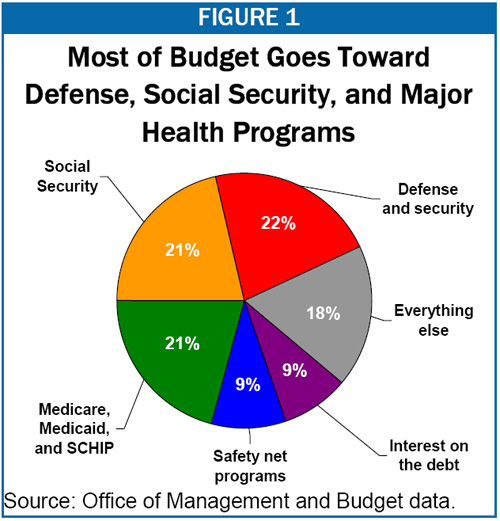
Well, today is tax filing day and I’ve often wondered just where my taxes go.  I’ve often thought that given the extant technological capabilities, and the normative desire for more direct forms of democracy, that each and every taxpaying citizen should be given the opportunity not only to file her taxes electronically, but to be able to specifically allocate her tax dollars to the uses that she sees fit.  How would you choose to allocate your tax dollars?  How does the federal government choose to allocate its tax dollars?  Look at the figure below–from the Office of Management and Budget–to see what the Federal government spends its money on.  This graph goes a long way to undermining the demagoguery of politicians when talking about taxes and spending.  When a politician tells you that he is going to cut taxes and does not mention spending cuts, then he is playing politics (unless, of course, he thinks that budget deficits are a non-issue).

The fact is that discretionary spending is a small minority (18%) of total spending.  In order to put a real dent in the budget deficit and the federal debt (two different–but related–concepts), you must cut entitlements, cut defense spending, raise taxes, or a combination of the three.

Happy Tax Day!

H/T Andrew Sullivan

Reagan to Gorbachev–“Tear Down This Wall”

Getting ready for our mock German election tomorrow has me thinking about the German political system, the respective political parties, and German reunification.  It reminded me of this famous speech by President Ronald Reagan at Brandenburg Gate in (West) Berlin.

60 Minutes Report on Torture in Guantanamo Bay

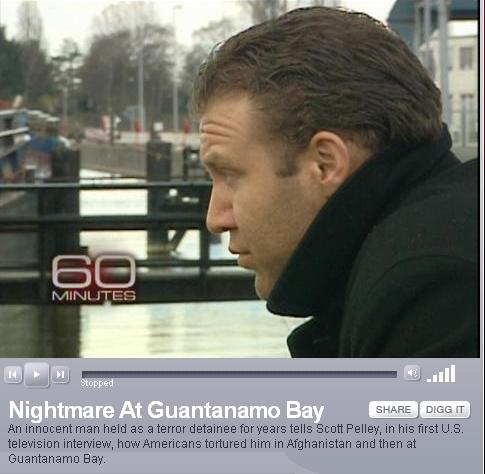
Via the CBS news program 60 Minutes, we learn about a German resident of Turkish origin who was tortured by his captors in Afghanistan and Guantanamo Bay.  From the description:

An innocent man held as a terror detainee for years tells Scott Pelley, in his first U.S. television interview, how Americans tortured him in Afghanistan and then at Guantanamo Bay.

You can find the video report here.

Lecture on German Political Parties April 17th

Talk about serendipity!  We will finish our mock German election and government formation simulation on Tuesday, April 15th and two days later there will be a guest lecture on campus by Dieter Dettke, Visiting Scholar at the American Institute for Contemporary German Studies and Adjunct Professor at Georgetown University, Security Studies Program.  on “Is Germany Moving to the Left?  The Changing German Party System.

You can find below a copy of the flyer announcing the lecture, which will begin at 5:30 at the Gottwald Science Center Auditorium.  I’ll see you there.

The Richmond Eric M. Warburg Chapter

of the American Council on Germany

cordially invites you to a

Discussion and Reception

with

Dr. Dieter Dettke

Visiting Scholar at the American Institute for Contemporary German Studies and

Adjunct Professor at Georgetown University, Security Studies Program

on

“Is Germany Moving to the Left?

The Changing German Party System"

Thursday, April 17, 2008

5:30 – 6:45 pm

at

The University of Richmond, Gottwald Science Center Auditorium

Directions: If coming from Three Chopt Road, turn onto Boatwright Drive and continue straight ahead at the welcoming wall at the bottom of the winding hill (do not turn left for the main campus gate). After passing the Robins Center on your left and a large parking lot on your right, proceed for another 300 yards on College Road to the Westhampton entrance on your left. (If coming from River Road, turn onto College Road and turn right into the Westhampton entrance.) Continue on Keller Road to the Modlin Center and pass through the archway. Opposite the stop sign are parking spaces in front of the Westhampton Deanery and even more spaces between it and the cafeteria and science center. The science center auditorium is in the Gottwald Science Center across from the cafeteria. (In case the above parking spaces are full,  there is a parking lot behind the Modlin Center which you can access by turning right at the stop sign or left if exiting the parking lot across from the stop sign.)

If you have any questions, please contact Dr. Arthur B. Gunlicks,

Dr. Dieter Dettke is currently a visiting scholar at the American Institute for Contemporary German Studies and Adjunct Professor at Georgetown University, Security Studies Program. He is working on a book on German foreign policy and transatlantic relations – with the working title “In Search of Normalcy: German Foreign and Security Policy Between Realpolitik and the Civilian Power Paradigm.” He has also been a fellow at both the Woodrow Wilson Center and the German Marshall Fund of the United States.

From 1985 to 2006 he served as US Representative and Executive Director of the Washington Office of the Friedrich Ebert Foundation – which is affiliated with Germany’s Social Democratic Party (SPD). Prior to his work with the Ebert Foundation, Dr. Dettke was Political Counsellor of the SPD Parliamentary Group of the German Bundestag (1974 – 1984) and Staff Director of the Working Group on US-German relations. In this capacity, he coordinated all foreign, security and defence policy related issues on the agenda of the German Bundestag and the Committees for Foreign Affairs, Defence, German-German relations, Development Policy and European Affairs.

He has lectured frequently in Europe and the United States on transatlantic relations, German-American security issues and European-American economic relations. He has also presented papers, acted as a discussant and/or chair at U.S. and international conferences of the American Political Science Association, the International Studies Association, the German Studies Association and the American Association of Slavic Studies. In addition, Dr. Dettke testified in Congress on the implications of German unification for the United States and US-European relations.

Dr. Dettke has appeared on the News Hour with Jim Lehrer, C-SPAN, Voice of America as well as other American, German, Swiss, and British television and radio programs to discuss issues and developments related to domestic and foreign policy developments in Europe and the United States. Dr. Dettke studied political science and law at the universities of Bonn and Berlin (Germany) and Strasbourg (France). He was a Fulbright Scholar at the University of Washington in Seattle (1967/68).

Mock German Election and Government Formation Simulation

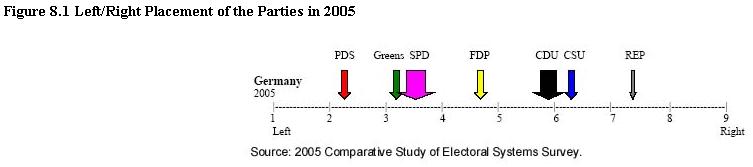
Here is a great link to information about the German electoral and political party system. You can find all sorts of information and links (to youtube videos even!) related to German political parties and the electoral system. Here are a couple of images from the link above:

The first is a one-dimensional left-right placement of political parties. Remember that given our relatively small class size, you will be a representative of only one of four parties–CDU/CSU, FDP, SPD, Green Party. [Update: I notice that they have the CDU and CSU listed as separate parties, which they technically are.  As I noted in the assignment instructions, the CSU is essentially the CDU, but in Bavaria.  They always forms coalitions in the Bundestag when deciding on government formation.]

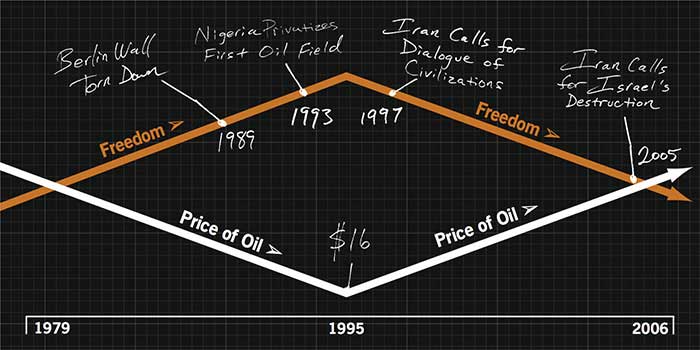
The second image is the unique two-vote electoral ballot; remember that Germans get to vote twice–once for a candidate to fill one of the 299 single-member districts, and once for a party list in a multi-member district. You’ll notice the left side of the ballot has the individual candidate’s name prominently displayed, whereas the party-list side (the right-side of the ballot) has the party name prominently displayed.

Here’s a nice breakdown of the characteristics of demographic support for each of the parties during the 2005 Bundestag elections, the result of which was a “grand coalition” between Angela Merkel’s CDU/CSU (Merkel was voted in by parliament as the Chancellor) and Gerhard Schroeder’s SPD.

Alan Dershowitz Defends Torture…”in Extraordinary Circumstances”

In a previous post, I linked to a series of articles published by the Washington Monthly, the contributors to which all were firm in their belief that torture is never justified. I mentioned in class the other day that one of the tenets of my teaching philosophy is to create a strict wall of separation between my own political beliefs and the substance and content of my teaching. Torture is the one area where I make an exception as I believe that this is not a partisan issue (a claim that is supported by the partisan views of the contributors to the Washington Monthly special report on torture–Republican, Democrats, and Independents all contributed to the report) and that torture is morally wrong and the United States government should never use it as official public policy.

In order to provide some balance to the debate, however, please find below an interview of Alan Dershowitz, who–by his own admission–supports torture only in “exceptional circumstances”, by veteran British journalist David Frost. Dershowitz, a professor at Harvard Law School, is the most erudite of those who support torture. Most of the comments of those who support the use of torture by the US government aren’t nearly as thoughtful as Dershowitz. Here are some examples from Michael Goldfarb of the Weekly Standard:

Andrew Sullivan is yet again calling the president a “war criminal.” This time in response to today’s New York Times article revealing that the Bush administration has subjected terror suspects captured abroad to ‘severe’ and ‘brutal’ interrogations.

Sullivan has a history of trotting out the charge of “war criminal,” sticking the label on George Tenet, Donald Rumsfeld, Pentagon counsel Jim Haynes, and Berkeley law prof John Yoo.

And for what? The Times indicts the Bush administration for exposing terrorists captured abroad to “head-slapping, simulated drowning and frigid temperatures.” Boo hoo. And why does the Times consider this such a dangerous policy? The reporters end the story with this quote, from former Navy lawyer John Hutson, which they must believe to be compelling:

“The problem is, once you’ve got a legal opinion that says such a technique is O.K., what happens when one of our people is captured and they do it to him? How do we protest then?” he asked.

As Jules Crittenden notes in response:

[The] article neglects to mention we are fighting an enemy that considers powerdrills into kneecaps and videotaped beheading of captives business as usual. That in fact, we have yet to face an enemy in the modern era that observes anything approaching the standards we do. Germany, Japan, North Korea, North Vietnam, Iran, Iraq. Disorientation, isolation, beatings, starvation, summary executions, torture … of the bone-breaking, organ-smashing, electrocuting, bloody-drawing variety.

That is, real torture. And it trivializes the seriousness of it to apply the word to “head-slapping, simulated drowning and frigid temperatures.” It also trivializes the seriousness of real war crimes for someone to throw around the charge so promiscuously. A quick search of Sullivan’s blog for “war criminal” turns up 34 hits, all of them referring to members of the Bush administration. No doubt hit number 35 will be Andrew’s attack on the war criminals of the Worldwide Standard.

Here is another example from Goldfarb:

I haven’t really been following this issue, mostly because I’m pretty sure that whatever the government is doing to these terrorists wouldn’t “shock my conscience.” Like my man Scalia says, sometimes you’re going to have to take these terrorists and “smack them in the face.” But, some folks are more easily shocked than I am, and they are in full moral outrage mode this morning with the release of a 2003 memo by John Yoo (now a professor at Berkeley!) approving “harsh interrogation techniques.” Oh, the humanity!

Unfortunately, in a sad twist of fate, Andrew Sullivan has taken the week off, and so there will be no calls for a new Nuremberg trial featuring the prosecution of George Bush, Dick Cheney, Donald Rumsfeld, and everyone else Andrew doesn’t agree with. But if you need your fix of self-righteous lefty demagoguery, Glenn Greenwald is a pretty good substitute with his post on “John Yoo’s War Crimes.”

Ken Roth Lecture on Human Rights and the Environment

We watched a video of a lecture given by Ken Roth (the Executive Director of the human rights NGO, Human Rights Watch) on the link between human rights and environmental degradation.  You can watch the entire lecture on youtube.  It is also embedded below.  Here is the description of the lecture:

Human Rights Watch Executive Director Ken Roth explains how environmental abuse has led to human rights violations in Darfur, Nigeria, Indonesia and Angola in the first of this season’s Joan B. Kroc Institute for Peace & Justice Distinguished Lecture Series at the University of San Diego. Series: “Joan B. Kroc Institute for Peace & Justice Distinguished Lecture Series” [10/2007]

Design a site like this with WordPress.com
Get started