Citizenship, Jus Soli, and “Anchor Babies”

As we learned in Chapter 3 of O’Neil, there are two (main) types of citizenship (remember that citizenship describes the nature of one’s relationship to the state): jus sanguinis and jus soli.  Like many states, the United States of America grants citizenship to individuals on the basis of both (and also on the basis of naturalization).  The principle of jus soli gives persons citizenship status on the basis of being born on territory that the state formally controls.  

The legitimacy, efficacy of jus soli has increasingly become questioned in some political circles in the United States (and in other countries that grant citizenship on that basis.  Watch the clip below on the “anchor baby” phenomenon between U.S. Representative Virgil Goode (R-VA) and his challenger:

The State and Democratization

The Polity IV data set code book, has a section entitled Indicators of Democracy and Autocracy (Composite Indicators), the authors write about the development of the state and the evolution of political participation as a corollary.  If you read it in tandem with this post on Max Weber’s view of the state and state legitimacy, you’ll begin to understand the nature of the state and why it has become the dominant contemporary form of political organization.

Three broad processes have reshaped the global landscape of state structures during the last two centuries One is an extraordinary expansion in the absolute and relative power of the state, a process that began i Europe. The new states created by the American and French revolutions marked the threshold between political world dominated by monarchies, whose claims to absolutism were belied by the fact that most social and economic life was autonomous from state control or extraction, and a political world in which state power was based on ever-widening control and mobilization of human and material resources exchange for broadened rights of popular participation. An integral part of this process was the development of bureaucracies with high capacities to regulate, tax, and mobilize people in the service of state policy. 

The second process was the transformation of the structures of political participation and legitimation. This transformation followed one of two paths, toward plural democracy or mass-party autocracy. The popular side of the bargain by which most West European rulers built state power in the nineteenth century was to acknowledge the right of widespread participation in policy making.  That right was given institutional expression in elected assemblies which could review, and sometimes initiate, public policy; in elections direct or indirect, of chief ministers; and in recognition of citizens’ rights to voice and act on political opinions. The concept of bargain is a metaphor for sequences of political crises and reforms in which these rulers granted rights for participation, however limited, to all significant social classes and groups, while simultaneously extending the state’s right and capacity to regulate, tax, and mobilize the human and material bases of state power. 

The process of political democratization had its own logic and dynamic which, in most of Western Europe, eroded all but a few symbolic vestiges of traditional autocracy (see for example Bendix 1978). Nonetheless, pressures to extend democratization have always contended with the self-interested desire of rulers to preserve and enhance their autonomy from political constraints. Theempires of Central and Eastern Europe–Germany, Russia, Austro-Hungary–implemented thetrappings but not the substance of effective democratic participation in the late nineteenth and early

Political Terror Scale

Authoritarian regimes use both “carrots” and “sticks” in order to control their citizens. The “sticks” approach encompasses everything from surveillance to outright physical brutality.  While the use of physical terror to undermine the bodily integrity of their citizens by authoritarian regimes is fairly well known, it is also evident that democracies are not immune to using this form of control over their populations.  Almost by definition, authoritarian regimes terror-prone, but how much more so than democracies. You can fine the answers to this at the Political Terror Scale website, where they have a set of interesting interactive maps.

How is “political terror” defined?  Well, they have created a scale (from 1-5) which is an indicator of the level of political terror citizens in a country face in any given year. The definitions for each of the categories is below.

El Salvador during the 1980s was ruled by a military regime, which used to death squads to “disappear” its internal opponents.  U2 took note:

rating scale Political Terror Scale Levels
Level 5 : Terror has expanded to the whole population. The leaders of these societies place no limits on the means or thoroughness with which they pursue personal or ideological goals.
Level 4 : Civil and political rights violations have expanded to large numbers of the population. Murders, disappearances, and torture are a common part of life. In spite of its generality, on this level terror affects those who interest themselves in politics or ideas.
Level 3 : There is extensive political imprisonment, or a recent history of such imprisonment. Execution or other political murders and brutality may be common. Unlimited detention, with or without a trial, for political views is accepted.
Level 2 : There is a limited amount of imprisonment for nonviolent political activity. However, few persons are affected, torture and beatings are exceptional. Political murder is rare.
Level 1 : Countries under a secure rule of law, people are not imprisoned for their view, and torture is rare or exceptional. Political murders are extremely rare.

What are the Fundamental Tenets of Confucianism…Culture as Destiny?

Over the past few weeks, we have addressed the debate regarding the relative explanatory power of cultural versus institutional and rational choice approaches to the analysis of political phenomena.  In the book excerpt, “A Brief History of Human Liberty,” Newsweek editor Fareed Zakaria analyzes the cultural argument regarding economic growth and democracy. He quotes the former Singaporean Prime Minister Lee Kuan Yew:

“…if you want to see how culture works, compare the performance of German workers and Zambian workers anywhere in the world.  You will quickly come to the conclusion that there is something very different in the two cultures that explains the results.”

Zakaria has some sympathy for this argument, but then argues that it is strange that Lee Kuan Yew is such a strong proponent of cultural arguments* given that while Singapore is culturally very similar to its neighbor, Malaysia, Singapore has been much more effective in its economic policies than has its neighbor.  In fact, I would add that a strong argument against cultural explanations of democracy and economic development are the differences between East Germany and West Germany (in the post-WWII-era until unification) and the present difference between North and South Korea.

The 38th parallel may be just a line on a map, and the division of the nation of Korea into two separate states may be a historically contingent act, but it demonstrates the tremendously powerful impact of institutions on a society.  South Korea was able to develop good political and economic institutions, while North Korea has not.  The cultural foundation of each state was similar (although I’m not an expert on Korea, so maybe there was a cultural difference between the “north” and the “south” that can account for the vast differences in the two states today–although I’m highly skeptical) before the division and we know, in a methodological sense, that a constant can not explain an outcome that varies.

Getting back to Zakaria and Lee Yuan Kew, Zakaria writes that

“the key to Singapore’s success…is Lee Kuan Yew, not Confucius.  The point is not that culture is unimportant; on the contrary it matters greatly…But culture can change…A hundred years ago, when East Asia seemed immutably poor, many scholars–most famously Max Weber [we’ve read his Protestant Ethic argument]–argued that Confucian-based cultures discouraged all the attributes necessary for success in capitalism…A decade ago, when East Asia was booming, scholars had turned this explanation on its head, arguing that Confucianism actually emphasized the traits essential for economic dynamism. Today the wheel has turned again and many see in ‘Asian values’ all the ingredients of crony capitalism.”‘

What are these Confucian and ‘Asian values’ about which there has been so much discussion.  Well, needless to say Asia is a vast land mass, with exceedingly high levels of diversity–culturally, linguistically, religiously, racially, etc.  So the concept of ‘Asian values’ may be so amorphous as to http://onpoint.wbur.org/2006/08/15/china-and-confucian-democracy http://onpoint.wbur.org/2006/08/http://onpoint.wbur.org/2006/08/15/china-and-confucian-democracy/china-and-confucian-democracy.  Confucianism, however, is a distinct and compact body of ideas that has a comprehensive philosophical foundation.  What are Confucian values, then and do they help or hinder China’s precarious journey towards democracy and economic development?  Well, here’s an answer from political philosopher Daniel Bell, who insists that ultimately, Confucianism is about three core values.  What are these?  Listen to the first ten minutes of the audio podcast from this episode of “On Point.”  Here’s a link to the URL on which you can find an archived version of the show.

**Here, it should be noted that a reason Lee Kuan Yew is strongly predisposed to arguing on the basis of culture is his contempt for the licentiousness of Western values and his desire to prevent demands for those kinds of freedoms (as long as political liberty) to take root in the strongly authoritarian state of Singapore.  Just read his statements during the infamous Michael Fay incident.

It wasn’t long before Singapore patriarch Lee Kuan Yew weighed in. He reckoned the whole affair revealed America’s moral decay. “The U.S. government, the U.S. Senate and the U.S. media took the opportunity to ridicule us, saying the sentence was too severe,” he said in a television interview. “[The U.S.] does not restrain or punish individuals, forgiving them for whatever they have done. That’s why the whole country is in chaos: drugs, violence, unemployment and homelessness. The American society is the richest and most prosperous in the world but it is hardly safe and peaceful.”

Here’s another story on the incident.

John Cleese on Proportional Representation

There are generally two types of electoral system in use around the world–first-past-the-post (single-member district) and proporational representation (multi-member district).

As John Cleese explains in this public service announcement, the choice of which electoral system to implement in a democracy can have a dramatic impact on party politics and on the political system in general.  The idea behind proportional representation is that the composition of the legislative body is directly representative of the political opinions in the electorate.  So if, for example, 3% of the electorate votes for the Polish Beer-Lovers’ Party (PPPP–Polska Partia Przyjaciół Piwa), as happened in the Polish parliamentary elections of 1991, then that party will have 3% of the representatives in the legislative body (which it did).

In first-past-the-post systems, such as the USA, Canada, and the UK, the electorate is divided up into single-member-districts, from which a single representative is elected to represent that seat in the parliament.  The winner does not have to win a majority of the vote, only a plurality.  Thus, if there are 4 contenders for a particular seat, and three of them each garners 20% of the vote, the fourth candidate, with 40% of the vote, wins the seat, representing that district in parliament.  The rest of the votes (the 60% going to non-winning parties) is “wasted” as it is not used to determine representation in parliament.  These are the basics, but upon these foundations one can build a myriad of different types of systems, such as the “double-vote” system in Germany.

Monty Python’s take on Constitutional Government

I am a huge fan of the British sketch comedy group Monty Python.  For a political science professor, this clip is like politico-comedic gold.  Here is Dennis the peasant’s views on democratic legitimacy, the proper role of popular mandates in the wielding of supreme executive power, and a sarcastic critique of socialist critiques of liberal capitalism (“oh, there you go bringing class into it again!”).  And remember, “you don’t vote for kings.”

Totalitarianism and 1984

This week we are addressing authoritarianism and totalitarianism.  As mentioned in the textbook, totalitarian regimes are extremely odious, but fortunately are also relatively rare.  There are a couple of regimes today than can safely be characterized as totalitarian–North Korea and Burma.

Totalitarian regimes are characterized by the desire on the part of rulers for complete control of all of the state, civil society and economy.  There is much overt violence and other forms of both cooptation and coercive control.  Take a look at these two video clips of the film adaptation of George Orwell’s famous novel, 1984, and see if you can think of how many characteristics of a totalitarian regime you notice.

Would you pass the U.S. Citizenship Test?

Were you not born in this country and had to take the citizenship test, would you pass?  Remember that citizenship is a concept that defines one’s relationship to the state.  There are essentially three types of citizenship–jus sanguinis, jus soli, and naturalization.  Craig Ferguson is now a naturalized US citizen.  On what basis did you receive your US citizenship?  Were you born on U.S. soil?  Were you born outside of the United States, but (at least) one of your parents was a US citizen at the time?

New International Crisis Group Report on Serbia

Taking a cue from Marshall Mathers, the ICG has released a new report on Serbia entitled “Will the Real Serbia Please Stand up?”, please stand up, please stand up: (actually, I just added the second part.  Serbia is facing critical parliamentary elections in May, which were called upon the collapse of the previous coalition government as a result of Kosovo’s declaration of independence in February:  The full report is here, while the overview is below:

Europe Briefing N°49
23 April 2008

OVERVIEW

Kosovo’s independence declaration on 17 February 2008 sent shock waves through Serbia’s politics and society, polarising the former in a manner not seen since the Milosevic era. Rioting led to attacks on nine Western embassies, destruction of foreign property and massive looting. The government fell on 10 March, split over whether to pursue a nationalist or pro-Western path. Belgrade’s efforts to create a de facto partitioning of the north of Kosovo threaten the new state’s territorial integrity and challenge deployment of European Union (EU) missions there, and Serbian parliamentary and local elections on 11 May are unlikely to change the basic policy towards the new state, even in the unlikely event a pro-Western government comes to power. They may, however, well give Serbia’s nationalist parties new leverage.

The election campaign is heated. Verbal attacks have increased against opposition parties, independent media and non-governmental organisations (NGOs) that disagree with the hardline nationalist policy on Kosovo. After the polls, one of two main scenarios is likely, since no party will win enough votes to form a government alone. Nationalists from the Serb Radical Party (SRS) could form a coalition with the “People’s Bloc” led by Premier Vojislav Kostunica’s Democratic Party of Serbia (DSS) and the late dictator Slobodan Milosevic’s old Socialist Party of Serbia (SPS).

If nationalist forces win, Euro-Atlantic integration will come to a halt, and Serbia will enhance its ties with Russia. They will support a more belligerent response in Kosovo, and Kosovo Serbs’ use of low-level violence. They may encourage Republika Srpska to leave Bosnia-Herzegovina and meddle in Macedonian internal affairs. A backlash against pro-Western parties and their supporters and an increased climate of media repression can be expected. Uncertainty will lead to a fall in foreign direct investment and economic growth.

Alternatively, pro-Western forces might form a weak government, but only with the support of nationalists, such as the DSS or SPS. Serbia could then anticipate the same kind of domestic instability it experienced under the outgoing government. If the more pro-Western Democratic Party (DS) tried to chart an openly pro-EU course, it would face the type of obstruction and opposition that led to Premier Zoran Djindjic’s assassination in 2003.

At best, the EU and U.S. will have limited influence for many months, until a new government is formed, which may not be until September or later. Meanwhile, the public anger over Western support for Kosovo’s independence is such that any attempt to pressure or even induce Belgrade into more cooperation risks strengthening the nationalist vote. Brussels and Washington would be well served to lower levels of rhetorical support for the more pro-Western Democratic Party (DS) of President Boris Tadic, G17+ and the Liberal Democratic Party (LDP) and end interference in the campaign via promises of a Stabilisation and Association Agreement (SAA).

More specifically, in this pre-election period the EU and the U.S. should:

  • stop intervening directly in support of one or another political force;
  • not sign an SAA unless Serbia gives full cooperation to the International
    Criminal Tribunal for the Former Yugoslavia (ICTY); and
  • offer increased support to civil society.

CDU and Greens form Coalition Government in Hamburg

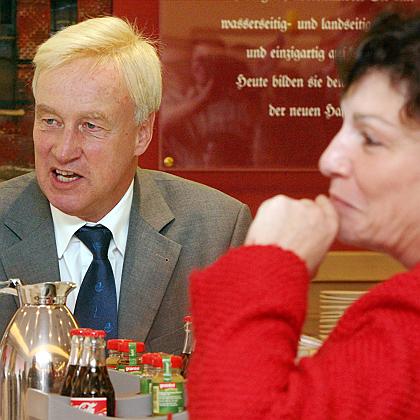
ollowing our mock election and government formation simulation, I thought it might be of interest to you to note that the CDU and the Green Party of have formed an historic alliance in the city-state government of Hamburg (Hamburg is one of the sixteen German states, or Lander). Der Spiegel (the German equivalent of Time magazine) has more on the new coalition government.

Hamburg mayor Ole von Beust, a Christian Democrat, has found \

The conservative Christian Democrats and the environmental Green Party have long been skeptical of one another. But now, the two have joined forces to form a government in the German city-state of Hamburg.

Members of the German Green Party and the conservative Christian Democrats (CDU) have arrived at an agreement “in principle” to govern together in Hamburg, SPIEGEL ONLINE has learned from Green Party sources. It would be the first CDU-Green coalition at the state level in German politics.

We just have to put it in writing,” said the source, who asked not to be named. “It’s just a matter of the preamble (to the coalition agreement), and such things.”

The coalition agreement will reportedly be unveiled late Thursday — which implies that some points of disagreement, like a Hamburg-area schools policy and the fate of two coal-fired power plants, have been settled.

“We have nothing else to discuss in a full meeting,” said a spokeswoman for the Greens, Antje Möller, after the last round of talks on Wednesday. The two sides had reached an understanding, she said, on “the points which still remained.”

(Picture Caption:Hamburg mayor Ole von Beust, a Christian Democrat has found “common ground” with Green leader Christa Goetsch.)

Design a site like this with WordPress.com
Get started