United Nations Security Council Imposes more Sanctions on Iran

In intro to IR, we’ll analyze the role of IGOs, NGOs, and international law in international politics.  Arguably the most important IGO is the United Nations Security Council (UNSC)  Today, the UNSC voted (14-0) to impose tougher sanctions against Iran as a result of that country’s continued pursuit of nuclear weapons.  From the New York Times:

unsc_iran_vote_03mar2008.jpg

UNITED NATIONS — The Security Council on Monday adopted its third resolution imposing sanctions on Iran for its refusal to cease enriching uranium, an activity that the West suspects Iran may be using to create fuel for a nuclear weapon.

 The previous two measures gained the unanimous support of the 15-member panel, but in balloting on Monday Indonesia abstained, saying it “remained to be convinced of the efficacy of adopting additional sanctions at this juncture.” Fourteen countries voted in favor.

The resolution authorizes inspections of cargo to and from Iran that is suspected of carrying prohibited equipment, tightens the monitoring of Iranian financial institutions and extends travel bans and asset freezes against persons and companies involved in the nuclear program.

It adds 13 names to the existing list of 5 individuals and 12 companies subject to travel and asset restrictions. The new names include people with direct responsibility for building fast-spinning centrifuges that enrich uranium ore and a brigadier general engaged in “efforts to get around the sanctions” in the two earlier resolutions.

Notice two things: first, the use of “targeted sanctions.”  Second, the story byline reads “United Nations”, not New York.  I wonder if this is standard practice for stories originating from the United Nations headquarters in New York.  Does anyone know?
Failed States and the Threat of Terrorism

In both intro to IR and intro to comparative, we’ve read about failed states and their impact not only on those living in them but those living even thousands of miles away. Rotberg, Krasner, and Sadowski, have all written about the potential dangers of states that do not have complete sovereignty over their territory. In another example of the potential threat posed by failing states, the Associated Press reports on a US attack on extremists in Somalia:

WASHINGTON – The U.S. launched a military airstrike in Somalia to go after a group of terrorist suspects, defense officials said Monday.

“It was a deliberate, precise strike against a known terrorist and his associates,” one U.S. military official said, speaking on condition of anonymity because he was not authorized to comment on the record.

He gave few other details, except to say the targets were believed staying in building known to be used regularly by terrorist suspects.

In the strike early Monday, Somali police said three missiles hit a Somali town held by Islamic extremists, destroying a home and seriously injuring eight people.

The strike follows one last year in which the U.S. shelled suspected al-QaidaU.S. Navy ship off the shore of the lawless East African nation. targets in Somalia, using gunfire from a

Most Recent Issue of the CrisisWatch Newsletter Released

Crisis Group–an NGO that analyzes and tracks extant and potential conflicts around the world–allows individuals to sign up for the monthly CrisisWatch newsletter. This month’s newsletter informs its readers that “twelve actual or potential conflict situations around the world deteriorated in February 2008, and four improved.”

The situation deteriorated in Armenia, where – as CrisisWatch went to press – a violent crackdown sought to suppress eleven days of protests after presidential elections that the opposition claimed were rigged. A state of emergency has been declared, and armed forces are reportedly mobilising for broader repression.

Attacks on Timor-Leste’s president and prime minister underlined the need for security sector reform in the fragile country. Yet their aftermath – including the killing of former head of military police Alfredo Reinado, who led the attack on the president – presents an opportunity for the government to address key issues.

Rebels in Chad launched a major assault on the capital N’Djamena in which hundreds were killed and thousands displaced. A state of emergency is still in place amid reports of a heavy government crackdown. In Darfur, the Sudanese government attacked three towns and an IDP camp from both ground and air, marking the worst violence in the region in months.

The situation also deteriorated in Cameroon, Comoros Islands, DR Congo, Ethiopia/Eritrea, Israel/Occupied Territories, Philippines, Serbia and Somalia.

Janjaweed Militia Renews Scorched-Eart Policy in Darfur

The New York Times reports that the notorious Janjaweed militia is once again active in Darfur.

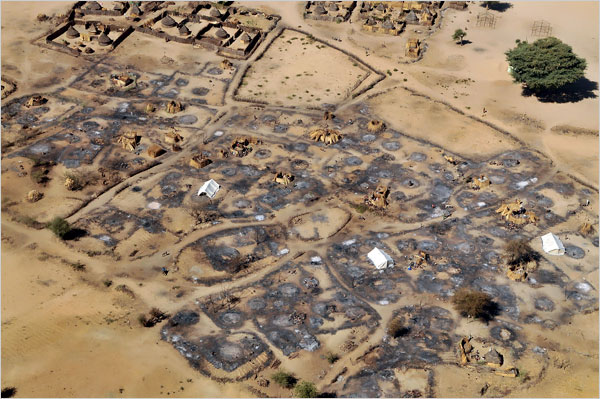
 darfur_scortched_earth.jpg

Abu Surouj, Sudan, after government forces and allied militias burned the town last month. Such attacks in Sudan are a return to the tactics that terrorized Darfur in the early, bloodiest stages of the conflict.

Photo: Lynsey Addario for The New York Times

 SULEIA, Sudan — The janjaweed are back.

They came to this dusty town in the Darfur region of Sudan on horses and camels on market day. Almost everybody was in the bustling square. At the first clatter of automatic gunfire, everyone ran.

The militiamen laid waste to the town — burning huts, pillaging shops, carrying off any loot they could find and shooting anyone who stood in their way, residents said. Asha Abdullah Abakar, wizened and twice widowed, described how she hid in a hut, praying it would not be set on fire.

“I have never been so afraid,” she said.

The attacks by the janjaweed, the fearsome Arab militias that came three weeks ago,, were a return to the tactics that terrorized Darfur in the early, bloodiest stages of the conflict.

Such brutal, three-pronged attacks of this scale — involving close coordination of air power, army troops and Arab militias in areas where rebel troops have been — have rarely been seen in the past few years, when the violence became more episodic and fractured. But they resemble the kinds of campaigns that first captured the world’s attention and prompted the Bush administration to call the violence in Darfur genocide.

I noticed the same pattern during the wars in the former Yugoslavia in the 1990s, with militia groups acting in close concert with government support.  In my study of the Croatian region of Baranya, I noticed that the villages in which civilians were killed all had one thing in common–they were on (or very near) a major regional road.  This meant that government military forces (with their tanks and armed personnel carriers) had easy access to these villages, allowing the militias to swoop in and do their thing.

King Abdullah II of Jordan Speech at the Woodrow Wilson School

In intro to IR, we examined the role of individuals this past week and their effect on international politics.  Elites, other private individuals, and mass publics all have an impact on the shape of international politics.  One such individual–a foreign policy elite–was Woodrow Wilson, who said:
 “Friendship is the only cement that will ever hold the world together. There must be, not a balance of power, but a community of power; not organized rivalries, but an organized peace.”
You can’t get a more concise expression of Wilsonian liberalism (idealism).  King Abdullah II of Jordan spoke to an audience at the Woodrow Wilson School of International Affairs on the subject of peace in the Middle East.  Here are his remarks in their entirety.  (H/t to A. Gunlicks)


Embassy of Jordan – Washington, DC

Information Bureau


Remarks by His Majesty King Abdullah II

Woodrow Wilson School of Public and International Affairs

Princeton University

29′ February 2008


Bismillah ar-Rahman ar-Rahim


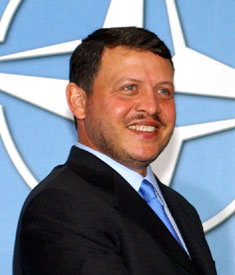
king_abdullah.jpg            Fifty-seven countries are not at peace with Israel today.


Fifty-seven countries out of 193 countries in the world.


            Fifty-seven countries with a total population greater than Europe and the United States combined.


Fifty-seven countries, representing one third of the members of the United Nations.


Fifty-seven countries for whose citizens the conflict in Palestine is the issue of their time.


We must, therefore, ask the important question. What are the implications for global stability if this continues?


Continue reading “King Abdullah II of Jordan Speech at the Woodrow Wilson School”

Turkish Military in Northern Iraq

While Iraq still maintains legal sovereignty over the majority Kurdish areas in the north of the country, the Kurds in that region have been enjoying de facto autonomy/independence since the end of the first Gulf War in 1991.  A direct result of United Nations Security Council resolutions mandating, above all else, the establishment of a no-fly zone in northern Iraq, Saddam Hussein’s regime had no presence there from 1991 on.  The ouster of Saddam’s regime has only made Kurdish control of the territory more secure.  It’s not inconceivable that a Kosovo-type situation could obtain here as well.   A crucial difference in the Kurdish situation is the presence of a large group of ethnic Kurds living in neighboring Turkey, who have waged a sporadic, decades-long campaign (using various tactics, including terrorism) to pressure the Turkish government into granting the Kurds more autonomy, if not outright independence.  The situation has become even more serious, as this report from the New York Times illustrates:

ISTANBUL — Turkey’s military said on Friday that it had sent ground troops into northern Iraq on Thursday night, in an operation aimed at weakening Kurdish militants there, but it was unclear how many or how long they would stay.

The Turkish General Staff, in an announcement on its Web site, gave no details on the size of the incursion. An American military spokesman in Baghdad said the ground offensive would be of “limited duration.”

The Turkish offensive appears to be aimed at dealing a surprise blow to the Kurdish militants, the Kurdistan Workers’ Party, before the snow along the mountainous border between the two countries melts and the guerrillas make their traditional spring advance into Turkey.

The militants, known as the P.K.K., want greater autonomy for Turkey’s Kurdish minority and have fought the Turkish military for decades. Some of their hide-outs are in Turkey, but some are in northern Iraq, and the rebels have crossed the border into Turkey repeatedly to attack.

It was not clear what role the United States had played in the incursion. But the operation sets two of its closest allies in a troubled region against each other. Turkey is a NATO member that borders Iran, Iraq and Syria; the Iraqi Kurds, who control northern Iraq, are the most important American partners in the Iraq war.

The United States has been wary of Turkish efforts to stamp out the Kurdish militants, with Turkish officials chafing at what they view as a double-standard, escalation tension between the NATO allies.

Samuel Huntington of “Clash of Civilizations” fame, Interviewed

Charlie Rose interviews Huntington on the ideas in his oft-cited and even more criticized “Clash of Civilizations” thesis. Rose calls the clash thesis “provocative.”  What do you think about the logic of the clash thesis.  Given that you’ve read Amartya Sen’s response to Huntington, what kinds of questions would you have asked Huntington that Rose failed to?  (The Huntington interview runs from 1:55 until about 21:00.  No, Professor Huntington is not a dead-ringer for John Cleese.  That is, in fact, John Cleese, who is interviewed in the middle segment; hence, the screen shot of Cleese.)

Partition as a Solution to Ethnic Conflict/Violence

Today in class we discussed ethnic identity and various types of inter-ethnic violence. We saw that a large literature in political science (and related disciplines) sees the very fact of cultural (and especially ethnic) heterogeneity is being the source of much that goes wrong within states and societies. In a previous post, I mentioned Robert Putnam’s recent findings that trust is lower in more heterogeneous societies; there is a burgeoning literature on the deleterious economic impact of ethnic (and other forms of) identity (public goods provision, for example, is lower in more heterogeneous societies).

If the very fact of heterogeneity is the cause of conflict and violence, then wouldn’t a reasonable solution to inter-ethnic conflict/violence be to create new more ethnically homogeneous states out of a single ethnically diverse one? Some argue that this may be a legitimate solution to the extant difficulties in Iraq. Chaim Kaufmann has argued in favor of just this approach. Here (pdf) is an article written by Nicholas Sambanis setting out, then critiquing Chaim Kaufmann’s hypotheses regarding the usefulness of partition to resolve endemic inter-ethnic violence.

You can view a fascinating BBC documentary on the partition of India in 1947 here. Here’s an important quote from the documentary:

“…as a British barrister draws a line on a map…”

Much of the violence that occurred during the partition was the result of Muslims and Hindus (of course, the Sikh/Punjab problem adds another layer of complexity altogether) trying to be on (or being forced to move to) the right side of that barrister’s line. Millions were killed.

It Just Keeps on Getting Worse: Violence Escalates in Chad

From the BBC, we learn that the situation in the African state of Chad is going downhill quickly. According to the Failed States Index compiled by the Fund For Peace, Chad was the 5th most failed state in 2007. Chad has been affected negatively by the ongoing conflict and genocide in the neighboring state of Sudan.

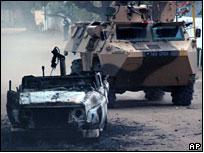
Thousands of people are fleeing the Chad capital, N’Djamena, after two days of fierce fighting between government and rebel forces in the city.

chad.jpgThe government says it has pushed the rebels out of the city but they say they withdrew to give civilians the chance to evacuate. Aid workers report that fighting is continuing outside the city, while dead bodies litter the streets.

The UN Security Council has urged member states to help the government. The BBC’s Laura Trevelyan at the UN in New York says this non-binding statement gives the go-ahead to France and other countries to help President Idriss Deby’s forces against the rebels.

Chad’s former colonial power France has a military base in Chad and has previously helped the government with logistics and intelligence. Thousands of people have been streaming across the Ngueli bridge, which separates Chad from Cameroon.

Local officials have told the UN refugee agency that thousands were also crossing at the border town of Kousseri. “We’re expecting a lot more people coming,” said UNHCR spokesman Ron Redmond. He also said he was extremely concerned for the 240,000 Darfur refugees in Chad.

The International Crisis Group released a report back in 2006 detailing the situation in Chad and fearing a return to war in that country. You can view the executive summary here, where there is a link to the full report (the full report is only in French, however). Here is a snippet from that summary:

The April 2006 rebel offensive brought Chad to the brink of all-out civil war. The victory that President Idriss Déby ultimately achieved in pushing the United Front for Democracy and Change (FUCD) back from the gates of the capital, N’Djamena, to its Darfur sanctuary settled nothing on the military front and underscored the political fragility of the regime. The army’s success was primarily due to French logistical and intelligence support, while the setback paradoxically may encourage the armed opposition groups to forge closer links in order to pursue a war of attrition in the north, the east and along the border with the Central African Republic. The crisis is far from resolved, and is likely to be an enduring one.

Only weeks before the 3 May presidential elections, Déby had to fight off spectacular defections of senior figures from the army and the political elite as well as assassination attempts, all likewise aimed at preventing him from gaining a third term but he won the controversial elections with 64.67 per cent of the vote.[1] Though opposition groups challenged the result, France and the wider international community hastily accepted it to avoid further destabilisation, while declaring that they now expected the president to democratise his regime.

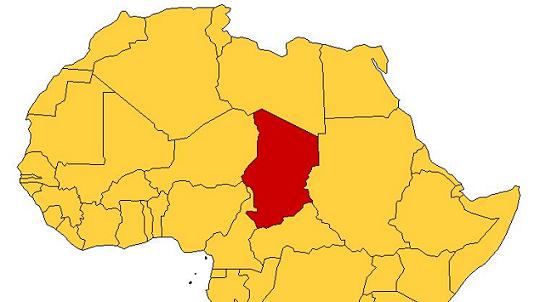
Chad (red on the map) is in north-central Africa and is on the eastern border of Sudan.

chad_map.jpg

President Bush’s Speech Announcing Start of Military Operations in Iraq

Here is President Bush’s address to the nation announcing the beginning of military operations in Iraq in 2003.  How can we use the framework of the “levels-of-analysis” to understand the Bush administration decision to take military action against the Saddam Hussein regime?

Design a site like this with WordPress.com
Get started