The WSJ has published a report on the outcome of last week’s annual meetings of the World Bank and the IMF and how leaders there proposed to deal with the very real problem of rapidly rising food prices worldwide. For a variety of reasons, there has been a dramatic surge in the prices of all commodities, including primary agricultural products, like rice and wheat. This has already led to rioting in Haiti and Egypt (see a previous blog post here) and could lead to even more social and political unrest in developing countries around the world, where large majorities rely on rice and wheat as staple foods. Here are some excerpts from the WSJ article:
WASHINGTON — Finance ministers gathered this weekend to grapple with the global financial crisis also struggled with a problem that has plagued the world periodically since before the time of the Pharaohs: food shortages.
Surging commodity prices have pushed up global food prices 83% in the past three years, according to the World Bank — putting huge stress on some of the world’s poorest nations. Even as the ministers met, Haiti’s Prime Minister Jacques Edouard Alexis was resigning after a week in which that tiny country’s capital was racked by rioting over higher prices for staples like rice and beans.
Rioting in response to soaring food prices recently has broken out in Egypt, Cameroon, Ivory Coast, Senegal and Ethiopia. In Pakistan and Thailand, army troops have been deployed to deter food theft from fields and warehouses. World Bank President Robert Zoellick warned in a recent speech that 33 countries are at risk of social upheaval because of rising food prices. Those could include Indonesia, Yemen, Ghana, Uzbekistan and the Philippines. In countries where buying food requires half to three-quarters of a poor person’s income, “there is no margin for survival,” he said.
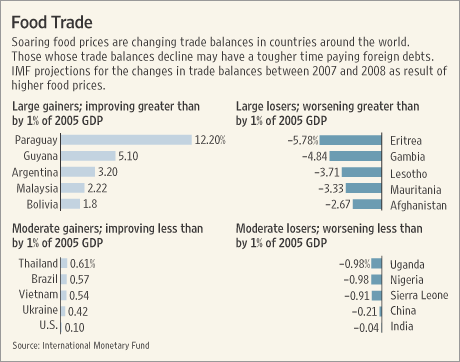
I encourage you to read the whole article, which is free on the WSJ web site. Here is a chart demonstrating how rising food prices have affected balance of payments accounts in select countries around the world. As the graphic states, worsening balance of payments figures will make it much more difficult for some countries to pay off foreign debt and provide the infrastructure necessary for further economic and social development.
In a recent column, Newsweek’s Fareed Zakaria argues that the US should not boycott the Olympic Games in Beijing this summer. He argues that it would have the opposite of the intended effect. Here are some snippets:
Public humiliation does not work nearly as well on the regime in Beijing as private pressure. At first glance, China’s recent crackdown in Tibet looks like a familiar storyline: a dictatorship represses its people. And of course that’s part of the reality — as it often is in China. But on this issue, the communist regime is not in opposition to its people. The vast majority of Chinese have little sympathy for the Tibetan cause. To the extent that we can gauge public opinion in China and among its diaspora, ordinary Chinese are, if anything, critical of the Beijing government for being too easy on the Tibetans. The real struggle here is between a nationalist majority and an ethnic and religious minority looking to secure its rights.
In these circumstances, a boycott of the Olympics would have precisely the opposite effect that is intended. The regime in Beijing would become only more defensive and stubborn. The Chinese people would rally around the flag and see the West as trying to humiliate China in its first international moment of glory. (There are many suspicions that the United States cannot abide the prospect of a rising China.) For most Chinese, the Games are about the world’s giving China respect, rather than bolstering the Communist Party’s legitimacy…
…Some want to punish China for its association with the Sudanese government, which is perpetrating atrocities in Darfur. But to boycott Beijing’s Games because it buys oil from Sudan carries the notion of responsibility too far. After all, the United States has much closer ties to Saudi Arabia, a medieval monarchy that has funded Islamic terror. Should the world boycott America for this relationship?
On the first day of class, I made the argument that in order for me to fulfill my pedagogical goals this semester, I need your help. I needed you to understand that what you choose to do (or not to do) in the classroom (and on your blog) will affect not only the grade you receive and how much you learn in this course, but will also affect the learning and grades of your peers sitting beside you in class. We live in societies, in which we all–to a greater or lesser extent–have an effect on those with whom we come into contact, with whom we share work places, roads, stadia, and class rooms. We all understand that if your neighbor’s house is unkempt and the lawn is overgrown, this will have a detrimental effect on your own property values.
Since we’re talking about property and the effects of social interaction, how is it that the town of Narvik, Norway (on the Arctic Circle) has had to miss a payroll for its municipal workers as the result of residents of Stockton (CA), Miami (FL), Flint(MI), and Worcester (MA), no longer being able to pay their residential mortgages? This New York Times article helps explain, and so does Jon Stewart’s guest, CNN Personal Finance editor Gerri Willis:
— At this time of year, the sun does not rise at all this far north of the Arctic Circle. But Karen Margrethe Kuvaas says she has not been able to sleep well for days.
What is keeping her awake are the far-reaching ripple effects of the troubled housing market in sunny Florida, California and other parts of the United States.
Ms. Kuvaas is the mayor of Narvik, a remote seaport where the season’s perpetual gloom deepened even further in recent days after news that the town — along with three other Norwegian municipalities — had lost about $64 million, and potentially much more, in complex securities investments that went sour.
”I think about it every minute,” Ms. Kuvaas, 60, said in an interview, her manner polite but harried. ”Because of this, we can’t focus on things that matter, like schools or care for the elderly.”
Norway’s unlucky towns are the latest victims — and perhaps the least likely ones so far — of the credit crisis that began last summer in the American subprime mortgage market and has spread to the farthest reaches of the world, causing untold losses and sowing fears about the global economy.
Where all the bad debt ended up remains something of a mystery, but to those hit by the collateral damage, it hardly matters.
Tiny specks on the map, these Norwegian towns are links in a chain of misery that stretches from insolvent homeowners in California to the state treasury of Maine, and from regional banks in Germany to the mightiest names on Wall Street. Citigroup, among the hardest hit, created the investments bought by the towns through a Norwegian broker…
…But Narvik has $34.5 million in a second Citigroup-devised investment, known as a collateralized debt obligation, which has also lost value as a result of the broader market turmoil. The town stands to lose at least some of that money, too.
Those investments represent a quarter of Narvik’s annual budget of $163 million, and covering the losses would necessitate taking out a long-term loan, which the town could only pay off by cutting back on services.
”You can calculate this in terms of places for schoolchildren or help for the elderly,” said Mr. Hermansen, a soft-spoken man who sat in his office in near-darkness, the lights switched off…
…In 2004, Narvik and a number of other towns took out a large loan, using future energy revenue as collateral. They invested the money, through Terra Securities, in the Citigroup debt vehicle, which offered a better return than traditional investments. In June 2007, as the subprime problems were brewing, Narvik shifted some money from that investment into an even more complex one, again through Terra Securities.
Do read the whole thing as it is interesting. Note, however, the really key part of the whole story in bold in the paragraph above and use the experience of Narvik to learn a very important lesson about investing. There is a clear immutable relationship in the investing world: the higher the expected return, the higher the level of risk associated with that return. If you expect to receive outsized returns, be prepared to accept outsized risk. Period. There may have been fraud perpetrated here (and it’s difficult to know without reading the signed agreements), but caveat emptor would have been valid advice in this situation.
What is the general link between subprime mortgages and other collateralized debt obligations (CDOs)–such as auto loans, student loans, and credit card debt–and the international political economy. Is there a general systemic risk to the global economy from new financial instruments, which Warren Buffett has referred to as “financial weapons of mass destruction?” Here is a panel at the 2008 World Economic Forum in Davos, which will shed more light on the financial industry.
There has been a rapid increase in food prices over the last couple of years, seen most dramatically in the recent 30% one-day rise in the price of rice worldwide. This is putting tremendous pressure on the poor and is leading to instability in countries around the world. There have been violent demonstrations–and equally violent government responses–to food rioting in Egypt and Haiti in the last couple of weeks. They may be but a harbinger of the economic and political instability to come. Here is a report from the BBC, in which an expert argues that IMF policies have contributed to the rise in food prices:
“Poor countries need to invest heavily in agriculture to feed their people. There’s been a dearth of investment in agriculture in poor countries, mainly because of IMF and World Bank policies…”
Here is an excerpt from a documentary on the World Bank and the IMF, entitled “The New Rulers of the World,” by John Pilger.
…And at no extra cost, US Congressman Ron Paul (R-TX) unloads on the World Bank with both barrels:
“The World Bank is an organization that is not devoted to capitalism, or to the free market, but to state-run corporate capitalism…the World Bank promotes managed trade by which politically connected individuals and corporations enrich themselves at the expense of the poor and the middle class.”
Anticipating the end of World War II, world leaders gathered in the New Hampshire town of Bretton Woods to create the financial architecture of the post-war global financial system. The three main pillars were the World Bank, the IMF (both of which were created) and the International Trade Organization (this was never built but the governing philosophy behind it eventually gave rise to the General Agreement and Trade and Tariffs (GATT), which morphed into the World Trade Organization (WTO). We’ll discuss these institutions in much more detail beginning Monday.
Here is an excerpt from a newsreel describing the meetings at Bretton Woods in 1944:
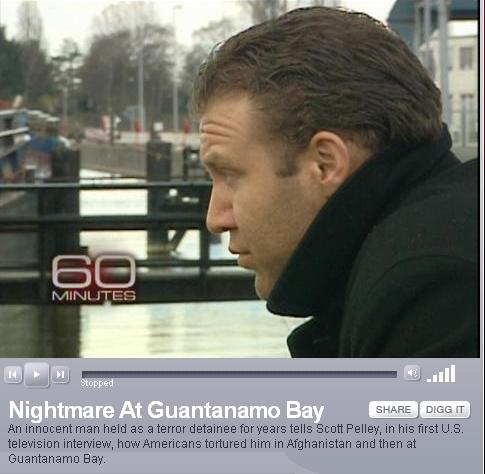
Via the CBS news program 60 Minutes, we learn about a German resident of Turkish origin who was tortured by his captors in Afghanistan and Guantanamo Bay. From the description:
An innocent man held as a terror detainee for years tells Scott Pelley, in his first U.S. television interview, how Americans tortured him in Afghanistan and then at Guantanamo Bay.
Talk about serendipity! We will finish our mock German election and government formation simulation on Tuesday, April 15th and two days later there will be a guest lecture on campus by Dieter Dettke, Visiting Scholar at the American Institute for Contemporary German Studies and Adjunct Professor at Georgetown University, Security Studies Program. on “Is Germany Moving to the Left? The Changing German Party System.
You can find below a copy of the flyer announcing the lecture, which will begin at 5:30 at the Gottwald Science Center Auditorium. I’ll see you there.
The Richmond Eric M. Warburg Chapter
of the American Council on Germany
cordially invites you to a
Discussion and Reception
with
Dr. Dieter Dettke
Visiting Scholar at the American Institute for Contemporary German Studies and
Adjunct Professor at Georgetown University, Security Studies Program
on
“Is Germany Moving to the Left?
The Changing German Party System"
Thursday, April 17, 2008
5:30 – 6:45 pm
at
The University of Richmond, Gottwald Science Center Auditorium
Directions: If coming from Three Chopt Road, turn onto Boatwright Drive and continue straight ahead at the welcoming wall at the bottom of the winding hill (do not turn left for the main campus gate). After passing the Robins Center on your left and a large parking lot on your right, proceed for another 300 yards on College Road to the Westhampton entrance on your left. (If coming from River Road, turn onto College Road and turn right into the Westhampton entrance.) Continue on Keller Road to the Modlin Center and pass through the archway. Opposite the stop sign are parking spaces in front of the Westhampton Deanery and even more spaces between it and the cafeteria and science center. The science center auditorium is in the Gottwald Science Center across from the cafeteria. (In case the above parking spaces are full, there is a parking lot behind the Modlin Center which you can access by turning right at the stop sign or left if exiting the parking lot across from the stop sign.)
If you have any questions, please contactDr. Arthur B. Gunlicks,
Dr. Dieter Dettke is currently a visiting scholar at the American Institute for Contemporary German Studies and Adjunct Professor at Georgetown University, Security Studies Program. He is working on a book on German foreign policy and transatlantic relations – with the working title “In Search of Normalcy: German Foreign and Security Policy Between Realpolitik and the Civilian Power Paradigm.” He has also been a fellow at both the Woodrow Wilson Center and the German Marshall Fund of the United States.
From 1985 to 2006 he served as US Representative and Executive Director of the Washington Office of the Friedrich Ebert Foundation – which is affiliated with Germany’s Social Democratic Party (SPD). Prior to his work with the Ebert Foundation, Dr. Dettke was Political Counsellor of the SPD Parliamentary Group of the German Bundestag (1974 – 1984) and Staff Director of the Working Group on US-German relations. In this capacity, he coordinated all foreign, security and defence policy related issues on the agenda of the German Bundestag and the Committees for Foreign Affairs, Defence, German-German relations, Development Policy and European Affairs.
He has lectured frequently in Europe and the United States on transatlantic relations, German-American security issues and European-American economic relations. He has also presented papers, acted as a discussant and/or chair at U.S. and international conferences of the American Political Science Association, the International Studies Association, the German Studies Association and the American Association of Slavic Studies. In addition, Dr. Dettke testified in Congress on the implications of German unification for the United States and US-European relations.
Dr. Dettke has appeared on the News Hour with Jim Lehrer, C-SPAN, Voice of America as well as other American, German, Swiss, and British television and radio programs to discuss issues and developments related to domestic and foreign policy developments in Europe and the United States. Dr. Dettke studied political science and law at the universities of Bonn and Berlin (Germany) and Strasbourg (France). He was a Fulbright Scholar at the University of Washington in Seattle (1967/68).
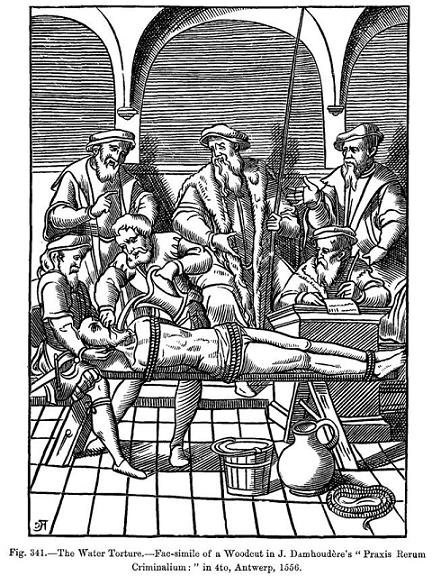
Tomorrow, we will address the morality of torture from both deontological and consequentialists viewpoints. Here I’d like to refer you to what a prominent relatively orthodox Catholic believes about the Catholic Church’s teachings regarding the morality of torture. The Catholic Church knows what of it speaks as it attempted to water-board” Jews into accepting the tenets of the Catholic faith in Spain centuries ago. Mark Shea writes this about the Catholic Church’s views on torture (I encourage you to read his whole post):
The Church’s basic teaching on torture is laid out in Veritatis Splendor 80 (followed by a discussion of what the Holy Father means by “intrinsically immoral” acts). VS cites, I believe, Lumen Gentium and Gaudium et Spes (though I could be wrong and my memory is groggy this early). The Church does not define what torture is (leaving that matter to common sense and to the specialized knowledge of those whose job it has historically been to know such as police, judges, interrogators, philosphers, and other people of good will who operate in the field where interrogation and police work must be done).
The basic guidelines the Church proposes are pretty simple
1. Don’t do evil that good may come of it. [This is about as strong an injunction against consequentialism as is possible.]
2. Some things are intrinsically evil, meaning you *can’t* do them under any circumstance.
3. Torture is one of these things.
4. If you are confused about what “torture” is, then bear in mind the Church’s *other* command, which is that we must treat prisoners humanely, not merely “not torture them”. Aim for that, and you won’t accidently torture them.
5. Seek the intelligence you need while bearing in mind the above.
Some of the basic attempts to justify the use of torture are:
Here is a video of a graphic representation of C02 emissions over the continental United States. Here is a description of the video’s contents:
A new, high resolution, interactive map of United States carbon dioxide emissions from fossil fuels has found that the emissions aren’t all where we thought. The maps and system, called Vulcan, show CO2 emissions at more than 100 times more detail than was available before. Until now, data on carbon dioxide emissions were reported, in the best cases, monthly at the level of an entire state grid. The Vulcan model examines CO2 emissions at local levels on an hourly basis. Purdue researchers say the maps are also more accurate than previous data because they are based on greenhouse gas emissions instead of estimates based on population in areas of the United States.
From thedailygreen.com, we find more information about the details of carbon emissions here in the United States:
Just where is all that global warming pollution coming from?
The Northeast pumps out an awful lot of carbon dioxide, but the Southeast, Midwest and Southern California are also responsible for voluminous pollution that billows out each day.
The precise sources of carbon dioxide have now been mapped, with 100-times more detail than was previously available, by Vulcan project researchers at Purdue University.
The high-resolution, interactive maps combines emissions data from power plants, factories and vehicles, and produces maps and movies that compare the relative contribution of pollution from various parts of the country on an hourly basis. One of the most striking things one sees when watching the animations is the day-night “breathing” cycle of our pollution, with a long exhale of pollution all day, followed by a sharp decline each night. Seasonal spikes – such as those when hot days prompt millions of Americans to turn up their air conditioners – are also evident.

 Clouds, Clocks, and Sitting at Tables
You must be logged in to post a comment.