
The “New Humanitarianism” and Rule vs. Act Utilitarianism (Consequentialism)

In chapter 3 of Humanitarian Intervention Weiss analyses “new wars” and “new humanitarianisms.”  The changing nature of humanitarian work is characterized by many things, but I’d like to focus on one particularly, which will lead us to a discussion of the importance of neutrality and the concepts of rule and act utilitarianism.

Weiss argues that humanitarian responses, by NGOs particularly,  are becoming more ambitious in scope and thereby shifting from a focus on short-term emergency relief to “attacking the root causes and post-conflict peacebuilding.” He continues,

“rather than provide band-aids, they [humanitarians] wish to use assistance and protection as levers. Many aid agencies desire to spread development, democracy, and human rights and create stable, effective, and legitimate states.” (76)

This has led, concomitantly, to a change in the humanitarian principles of neutrality and impartiality. These principles, Weiss notes, “made sense if the objective was to provide relief and gain access to affected populations.” These principles, it is argued, foundered upon the reality that contemporary wars–“new wars”–were creating “unanticipated and unintended negative consequences.” Moreover, in a world in which the combatants are state militaries, neutrality and impartiality retained some internal logic. However, as genocidaires and other ty[es of rebel groups become the main combatants in civil wars and the predominant perpetrators of crimes against humanity, the principles of neutrality and impartiality come to be seen increasingly as relics of a bygone era.

A few students took issue with this argument, insisting that there are also likely to be unintended consequences of humanitarian organizations repudiating the principles of neutrality and impartiality. They mentioned some of these in class. This prompted a quick excursion by me into the difference between act and rule utilitarianism/consequentialism. I’ll explain below the fold:
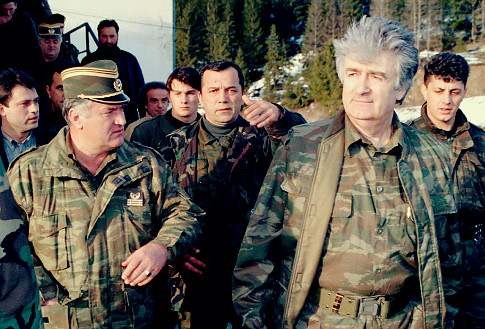
Bosnia Muslim leaders argued that the neutrality policy allowed Messrs. Karadzic and Mladic free reign in their campaign to ethnically cleanse large swaths of Bosnia of (well-fed) Muslims.

Continue reading “The “New Humanitarianism” and Rule vs. Act Utilitarianism (Consequentialism)”

List of All UN Peacekeeping Operations

Here’s an exhaustive list of the peacekeeping operations established by the UN since its inception.Notice how long some of the operations have lasted (and continue to last). The longest continuing peacekeeping operation is UNMOGIP, which continues to the present and was established in 1949! For the complete list, click here.

Acronym Mission name Start date Closing date
UNTSO United Nations Truce Supervision Organization May 1948 Present
UNMOGIP United Nations Military Observer Group in India and Pakistan January 1949 Present
UNEF I First United Nations Emergency Force November 1956 June 1967
UNOGIL United Nations Observation Group in Lebanon June 1958 December 1958
ONUC United Nations Operation in the Congo July 1960 June 1964
UNSF United Nations Security Force in West New Guinea October 1962 April 1963
UNYOM United Nations Yemen Observation Mission July 1963 September 1964
UNFICYP United Nations Peacekeeping Force in Cyprus March 1964 Present
DOMREP Mission of the Representative of the Secretary-General in the Dominican Republic May 1965 October 1966

Current United Nations Peacekeeping Operations

We discussed Tom Weiss’ book–Humanitarian Intervention–in IS 302 today. We spent some time on the changing nature, and number, of peacekeeping operations since the end of the Cold War. Below is a map listing the 16 current UN peacekeeping operations. You can find the source image, which is clickable, here.  How many of these operations are proceeding under the auspices of Chapter VII of the UN Charter?

Here is part of the textof the UNSC resolution, authorizing the establishment of MONUSCO in the Democratic Republic of the Congo:

Resolution 1925 (2010)
Adopted by the Security Council at its 6324th meeting, on 28 May 2010

The Security Council,

Continue reading “Current United Nations Peacekeeping Operations”

Michael Ignatieff and Humanitarian Intervention

Current leader of the Canadian Federal Liberal Party, Michael Ignatieff has long been involved in the issue of human rights–as a historian, journalist, public intellectual, and as the former Carr Professor and Director of the Carr Center for Human Rights Policy at the Kennedy School of Government.

In the aftermath of the contentious NATO military intervention in Kosovo (1999), Ignatieff sat down with WBUR’s Chris Lydon to assess what had gone right (and wrong) during the intervention. A self-identified member of the “something must be done [to stop alleged Serbian war crimes against the Kosovar Albanians]”, Ignatieff stands by his support for the intervention, claiming that, on the whole, the benefits outweighed the costs.

Design a site like this with WordPress.com
Get started