Ethnic Segregation in Kenya Continues Unabated

Kenya seems to be following the template set out in previous inter-ethnic conflicts (see a previous post on the results of residential segregation in Baghdad), where the ultimate result is a more ethnically segregated society.  The “un-mixing of peoples” continues unabated in that increasingly unstable state.  The New York Times reports:
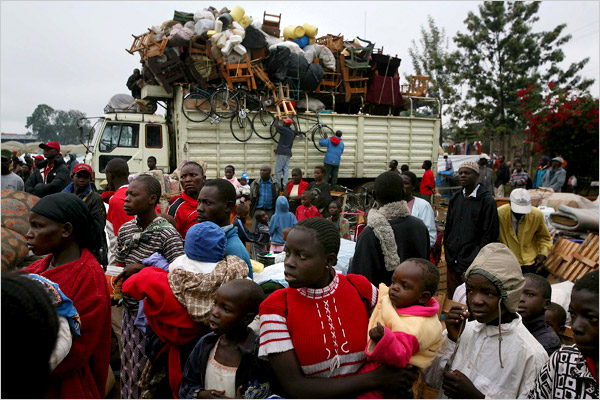
segregation_of_kenya.jpg

Following a flawed election, and a wave of ethnic and political violence, Kenya, once one of Africa’s most promising nations, is resegregating itself. Members of ethnic groups, like these Luos, left, waited for transportation to their ancestral homes.

Photo: Joao Silva for The New York Times

 OTHAYA, Kenya — Sarah Wangoi has spent her entire life — all 70 years of it — in the Rift Valley. But last month, she was chased off her farm by a mob that called her a foreigner. She now sleeps on the cold floor of a stranger’s house, seeking refuge in an area of Kenya where her ethnic group, the Kikuyu, is strong. It is, supposedly, her homeland.

“I am safe now,” said Ms. Wangoi, though the mob still chases her in her dreams.

Across the country, William Ojiambo sat in a field where the ground was too hard to plow. He, too, sought refuge with his ethnic group, the Luo. He used to live in an ethnically mixed town called Nakuru but was recently evicted by a gang from another ethnic group that burned everything he owned.

“We came here with nothing, like cabbages thrown in the back of a truck,” Mr. Ojiambo said.

Kenya used to be considered one of the most promising countries in Africa. Now it is in the throes of ethnically segregating itself. Ever since a deeply flawed election in December kicked off a wave of ethnic and political violence, hundreds of thousands of people have been violently driven from their homes and many are now resettling in ethnically homogenous zones.

Luos have gone back to Luo land, Kikuyus to Kikuyu land, Kambas to Kamba land and Kisiis to Kisii land. Even some of the packed slums in the capital, Nairobi, have split along ethnic lines.

It Just Keeps on Getting Worse: Violence Escalates in Chad

From the BBC, we learn that the situation in the African state of Chad is going downhill quickly. According to the Failed States Index compiled by the Fund For Peace, Chad was the 5th most failed state in 2007. Chad has been affected negatively by the ongoing conflict and genocide in the neighboring state of Sudan.

Thousands of people are fleeing the Chad capital, N’Djamena, after two days of fierce fighting between government and rebel forces in the city.

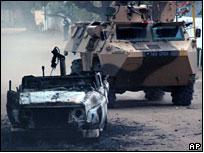
chad.jpgThe government says it has pushed the rebels out of the city but they say they withdrew to give civilians the chance to evacuate. Aid workers report that fighting is continuing outside the city, while dead bodies litter the streets.

The UN Security Council has urged member states to help the government. The BBC’s Laura Trevelyan at the UN in New York says this non-binding statement gives the go-ahead to France and other countries to help President Idriss Deby’s forces against the rebels.

Chad’s former colonial power France has a military base in Chad and has previously helped the government with logistics and intelligence. Thousands of people have been streaming across the Ngueli bridge, which separates Chad from Cameroon.

Local officials have told the UN refugee agency that thousands were also crossing at the border town of Kousseri. “We’re expecting a lot more people coming,” said UNHCR spokesman Ron Redmond. He also said he was extremely concerned for the 240,000 Darfur refugees in Chad.

The International Crisis Group released a report back in 2006 detailing the situation in Chad and fearing a return to war in that country. You can view the executive summary here, where there is a link to the full report (the full report is only in French, however). Here is a snippet from that summary:

The April 2006 rebel offensive brought Chad to the brink of all-out civil war. The victory that President Idriss Déby ultimately achieved in pushing the United Front for Democracy and Change (FUCD) back from the gates of the capital, N’Djamena, to its Darfur sanctuary settled nothing on the military front and underscored the political fragility of the regime. The army’s success was primarily due to French logistical and intelligence support, while the setback paradoxically may encourage the armed opposition groups to forge closer links in order to pursue a war of attrition in the north, the east and along the border with the Central African Republic. The crisis is far from resolved, and is likely to be an enduring one.

Only weeks before the 3 May presidential elections, Déby had to fight off spectacular defections of senior figures from the army and the political elite as well as assassination attempts, all likewise aimed at preventing him from gaining a third term but he won the controversial elections with 64.67 per cent of the vote.[1] Though opposition groups challenged the result, France and the wider international community hastily accepted it to avoid further destabilisation, while declaring that they now expected the president to democratise his regime.

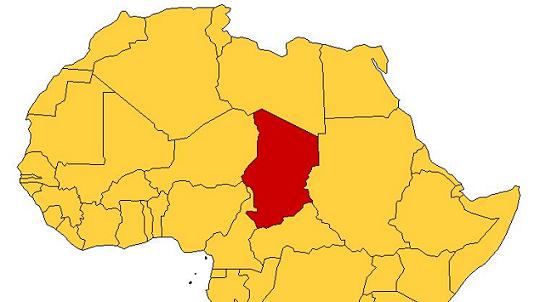
Chad (red on the map) is in north-central Africa and is on the eastern border of Sudan.

chad_map.jpg

Kenyan Violence Menacing for Intertribal Marriages

Kenya’s political troubles have had a immediate impact on marriages composed of partners of different tribes. Individuals in inter-tribal or inter-ethnic marriages are often twice cursed in the event of inter-ethnic violence. On the one hand, each marriage partner is increasingly distrusted by members of the other ethnic/tribal group. But what makes matter even worse is that they are also ostracized and often the victims of violence on the part of members of their own group. Their sin is that, having married someone from the rival ethnic group/tribe, they are no longer seen as trustworthy. In noticed in Croatia that this led to counter-intuitive outcomes where individuals who had married spouses of the other ethnic group often become publicly intolerant toward members of the spouse’s group. This was not the result of true ethnic hostility but in order to prove the individual’s ethnic/nationalist bona fides to his (and it was mostly males in this case) own ethnic brethren.

Here is a report from the Associated Press about a woman in Kenya whose husband had to leave home, fearing for his life.

He doesn’t call. He doesn’t write. His cell phone has been switched off for weeks. After 17 years, Naomi Kering’s husband is gone — one more intertribal marriage fallen victim to the violence that has followed Kenya‘s disastrous presidential election.

“The kids always ask me, ‘Where is he?’ And I always say he is going to come back,” Kering, a 34-year-old of the Kalenjin tribe, told The Associated Press as she stood in the rubble of her home, torched by a mob last month because her kenya_divided_love_abc5031.jpghusband is a Kikuyu. “But I hope he stays away, because I love him and I want him to be safe.”

Since the Dec. 27 vote, marriages that united different ethnic groups have felt the strain as communities shun the Kikuyu tribe of President Mwai Kibaki, whose disputed re-election unleashed a wave of bloodshed that has killed at least 685 people.

Until now, marriages like Kering’s were common enough to go largely unnoticed, representing hope for what Kenya could be as a nation. But now the fabric of Kenyan society is fraying, forcing families to confront tribal identities many had cast aside long ago.

“This election has changed the very essence of these marriages,” said the Rev. Charles Kirui, a Catholic priest whose church in the nearby town of Burnt Forest shelters hundreds of Kikuyus. “Marriages are breaking up because of a tribal conflict, which means we really have a problem in Kenya.”

There are no figures on how many families are affected, but the impact is particularly felt in the heart of opposition territory in western Kenya, where tribal tensions have been most inflamed by the election.

This country of 38 million was once seen as a stable democracy on a violent continent. But it depended on a delicate balance of intertribal power.

Barack Obama Writes Editorial in Kenyan Newspaper

Democratic candidate for US President, Barack Obama, has written an editorial in one of Kenya’s most prominent newspapers addressing the dire situation there, the catalyst for which were disputed elections that took place in late December. Obama, who has family ties to that African country, wrote that Kenya had reached a “defining moment” on its road to democratic consolidation. Here is a snippet and a link to the full text of the opinion piece.

Clearly, Kenya has reached a defining moment. It is up to Kenyan leaders and the Kenyan population to turn away from the path of bloodshed, division, and repression, and to turn towards reconciliation, negotiation, and renewed commitment to democratic governance. There is no doubt that there were serious flaws in the process by which presidential votes were tabulated. There is also no doubt that actions taken by both sides in the aftermath of the election have deepened the stalemate.

But Kenya’s hard-won democracy and precious national unity can be salvaged. Now is the time for all parties to renounce violence. And now is the time for President Kibaki, Raila Odinga, and all of Kenya’s leaders, to calm tensions, to come together unconditionally, and to implement a political process that peacefully addresses the controversies that divide them and restores the Kenyan people’s confidence in their political system.

Image from stuff.co.nz

Congo Civil War Kills 45,000 Persons Monthly

We’ll be covering war and strife later in the semester and we’ll note that the nature of warfare has changed over the years. Whereas most wars in the past were of the inter-state variety, contemporary wars are mostly intra-state (i.e, wars resulting from civil and ethnic conflict). A worrisome characteristic of these contemporary wars is that the vast majority of victims are civilians and they generally succumb to factors, such as disease and hunger, not related to direct conflict. In a new report by the International Red Cross, we learn that 45,000 persons have died (and continue to die) monthly from civil war in Congo.

25congo600.jpg

The effects of one of the bloodiest wars in modern history continue to unfold in relative obscurity in the Democratic Republic of Congo, where 5.4 million lives have been lost as a result of conflict since 1998, according to a nationwide mortality survey that will be released today.

While the conflict in the Darfur region of neighbouring Sudan has begun to draw substantial international attention, the humanitarian crisis resulting from conflict in the Congo has received almost none. About 200,000 people have been killed in Darfur, and two million displaced.

“People aren’t dying dramatically in Congo,” said Richard Brennan, a lead researcher with the U.S.-based International Rescue Committee, which conducted the survey. “It’s not like a Rwandan genocide where people die in a very dramatic and acute manner. They are dying quietly and anonymously.”

In fact, very few of the recorded deaths were caused directly by violence, roughly 0.4 per cent nationwide, the report says. Instead, the principal causes of death across Congo, a largely undeveloped country the size of Western Europe, were malnutrition, preventable diseases and pregnancy-related conditions.
“Our experience in poorly developed countries over the last 20 years is that in most conflicts, the majority of deaths, frequently over 90 per cent, are due to the indirect consequences of that conflict,” Dr. Brennan said. “They are no less devastating, but they are very much below our radar screen in the West.”

McClatchy–Kenyan president lost election, U.S. exit poll indicates

The McClatchy Washington Bureau is an excellent resource for news on political events around the world. Here they report on the results of an exit poll commissioned by a US-government backed foundation, which claims to show the incumbent Kenyan president was soundly defeated in the recent disputed election that has set off rioting and inter-ethnic killing sprees.

NAIROBI, Kenya — An exit poll carried out on behalf of a U.S. government-backed foundation indicated that Kenyan President Mwai Kibaki suffered a resounding defeat in last month’s disputed election, according to officials with knowledge of the document.

The poll by the Washington-based International Republican Institute — not yet publicly released — further undermines Kibaki’s claims of a narrow re-election victory. The outcome has sparked protests and ethnically driven clashes nationwide, killing hundreds.

Opposition leader Raila Odinga led Kibaki by roughly 8 percentage points in the poll, which surveyed voters as they left polling places during the election Dec. 27, according to one senior Western official who’s seen the data, who spoke on condition of anonymity because of the sensitivity of the issue. That’s a sharp departure from the results that Kenyan election officials certified, which gave Kibaki a winning margin of 231,728 votes over Odinga, about 3 percentage points.

U.S. and European observers have criticized the official results, which came after long, unexplained delays in counting the votes, primarily from Kibaki strongholds. Jendayi Frazer, the assistant secretary of state for African affairs, said over the weekend that there were “serious irregularities in the vote tallying, which made it impossible to determine with certainty the final result.”

It wasn’t clear why the International Republican Institute — which has conducted opinion polls and observed elections in Kenya since 1992 — isn’t releasing its data. A spokesman for the U.S. Embassy in Kenya confirmed that a poll was conducted but referred questions to the institute, where officials couldn’t be reached for comment.

Kenyan activists called on U.S. officials to release any data that would shed light on election fraud.

Islam, Religious Attitudes, and Democracy

There is a lot of ink being spilled on the question of the compatibility of Islam with democracy. Here is a link to a paper by Mark Tessler, published in the journal, Comparative Politics, in 2002.

“Islam and Democracy in the Middle East: The Impact of Religious Orientations on Attitudes Toward Democracy in Four Arab Countries,” Comparative Politics, Vol. 34 (April 2002): 337-354.

If you are on campus, here is a direct link to a pdf version of the article.

From the Abstract:

Continue reading “Islam, Religious Attitudes, and Democracy”

Afrobarometer–Key Findings

The very first Afrobarometer Briefing Paper–here’s the link to a PDF version–(April 2002) presents some key findings regarding the views of African residents in about a dozen African countries on phenomena such as democracy, freedom, governance, etc. Here are a few I found interesting:

  • Corruption is seen as pervasive

Whereas about one-half of survey respondents think that corruption among public officials is common (52 percent), about one-third think it is rare (35 percent). Perceived corruption is highest in Ghana, Nigeria, Tanzania, and Zimbabwe, and lowest in Botswana, Lesotho and Namibia. Generally, however, people perceive more corruption than they themselves have personally experienced. Such perceptions, and the social inequalities they reflect, tend to corrode satisfaction with economic reform policies and with democracy.

In class, I use the module on economic and political development as an opportunity to ask students if they have ever tried to bribe an official for any reason whatsoever. The answer amongst my mostly suburban-bred American students is a unanimous “no.” Generally only I (and sometimes a foreign student) raise our hands to answer in the affirmative. I try to impress upon the students that bribery and corruption is a normal part of life in most non-Western countries. In most citizens’ dealings with official (read: governmental and quasi-governmental) institutions, bribing at least one official is absolutely necessary to get anything done.

Continue reading “Afrobarometer–Key Findings”

Afrobarometer Public Opinion Surveys

The Afrobarometer survey allows public access to its data, with a two-year time lag. From a description found on its home page, the Afrobarometer is “a comparative series of public attitude surveys on democracy, markets, and civil society in Africe.” The site is full of resources, in addition to the data, such as publications (including downloadable working papers), results, news and events.

afrobarometer1.jpg

Here are the countries surveyed and the years for each:

Country
Round 1
Round 2
Round 3
Other
Benin
2005
Botswana
1999
2003
2005
Cape Verde
2002
2005
Ghana
1999
2002
2005
1997
Kenya
2003
2005
Lesotho
2000
2003
2005
Madagascar
2005
Malawi
1999
2003
2005
Mali
2001
2002
2005
Mozambique
2002
2005
Namibia
1999
2003
2006
2002
Nigeria
2000
2003
2005
2001, 2007
Senegal
2002
2005
South Africa
2000
2002
2006
1994, 1995, 1997, 1998, 2004
Tanzania
2001
2003
2005
Uganda
2000
2002
2005
Zambia
1999
2003
2005
1993, 1996
Zimbabwe
1999
2004
2005

Informal Institutions and Democracy in Africa

Using results from the Afrobarometer surveys, Michael Bratton has written an article in a recent issue of Journal of Democracy (you must have access to JoD articles to read this) on the relationship between formal and informal institutions and democracy in a sample of African countries.

This is a blurb from the article about Afrobarometer: “[Bratton] is also founder and director of the Afrobarometer, a collaborative international survey-research project that measures public opinion regarding democracy, markets, and civil society in eighteen African countries.”

Design a site like this with WordPress.com
Get started