
Kenyan Violence Menacing for Intertribal Marriages

Kenya’s political troubles have had a immediate impact on marriages composed of partners of different tribes. Individuals in inter-tribal or inter-ethnic marriages are often twice cursed in the event of inter-ethnic violence. On the one hand, each marriage partner is increasingly distrusted by members of the other ethnic/tribal group. But what makes matter even worse is that they are also ostracized and often the victims of violence on the part of members of their own group. Their sin is that, having married someone from the rival ethnic group/tribe, they are no longer seen as trustworthy. In noticed in Croatia that this led to counter-intuitive outcomes where individuals who had married spouses of the other ethnic group often become publicly intolerant toward members of the spouse’s group. This was not the result of true ethnic hostility but in order to prove the individual’s ethnic/nationalist bona fides to his (and it was mostly males in this case) own ethnic brethren.

Here is a report from the Associated Press about a woman in Kenya whose husband had to leave home, fearing for his life.

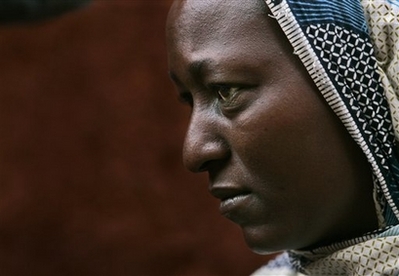
He doesn’t call. He doesn’t write. His cell phone has been switched off for weeks. After 17 years, Naomi Kering’s husband is gone — one more intertribal marriage fallen victim to the violence that has followed Kenya‘s disastrous presidential election.

“The kids always ask me, ‘Where is he?’ And I always say he is going to come back,” Kering, a 34-year-old of the Kalenjin tribe, told The Associated Press as she stood in the rubble of her home, torched by a mob last month because her kenya_divided_love_abc5031.jpghusband is a Kikuyu. “But I hope he stays away, because I love him and I want him to be safe.”

Since the Dec. 27 vote, marriages that united different ethnic groups have felt the strain as communities shun the Kikuyu tribe of President Mwai Kibaki, whose disputed re-election unleashed a wave of bloodshed that has killed at least 685 people.

Until now, marriages like Kering’s were common enough to go largely unnoticed, representing hope for what Kenya could be as a nation. But now the fabric of Kenyan society is fraying, forcing families to confront tribal identities many had cast aside long ago.

“This election has changed the very essence of these marriages,” said the Rev. Charles Kirui, a Catholic priest whose church in the nearby town of Burnt Forest shelters hundreds of Kikuyus. “Marriages are breaking up because of a tribal conflict, which means we really have a problem in Kenya.”

There are no figures on how many families are affected, but the impact is particularly felt in the heart of opposition territory in western Kenya, where tribal tensions have been most inflamed by the election.

This country of 38 million was once seen as a stable democracy on a violent continent. But it depended on a delicate balance of intertribal power.
Barack Obama Writes Editorial in Kenyan Newspaper

Democratic candidate for US President, Barack Obama, has written an editorial in one of Kenya’s most prominent newspapers addressing the dire situation there, the catalyst for which were disputed elections that took place in late December. Obama, who has family ties to that African country, wrote that Kenya had reached a “defining moment” on its road to democratic consolidation. Here is a snippet and a link to the full text of the opinion piece.

Clearly, Kenya has reached a defining moment. It is up to Kenyan leaders and the Kenyan population to turn away from the path of bloodshed, division, and repression, and to turn towards reconciliation, negotiation, and renewed commitment to democratic governance. There is no doubt that there were serious flaws in the process by which presidential votes were tabulated. There is also no doubt that actions taken by both sides in the aftermath of the election have deepened the stalemate.

But Kenya’s hard-won democracy and precious national unity can be salvaged. Now is the time for all parties to renounce violence. And now is the time for President Kibaki, Raila Odinga, and all of Kenya’s leaders, to calm tensions, to come together unconditionally, and to implement a political process that peacefully addresses the controversies that divide them and restores the Kenyan people’s confidence in their political system.

Image from stuff.co.nz

Debaathification redux

In an earlier post, I noted that the Iraqi parliament had passed a law allowing the re-hiring of rank-and-file members of the Baathist party, who had lost their jobs in one fell swoop as a result of a decision by Paul Bremer in the immediate aftermath of the US-led invasion. As has been the case on numerous prior occasions in Iraq, the news may not be as good as originally hoped. From the NY Times we find:

A day after the Iraqi Parliament passed legislation billed as the first significant political step forward in Iraq after months of deadlock, there were troubling questions — and troubling silences — about the measure’s actual effects.

The measure, known as the Justice and Accountability Law, is meant to open government jobs to former members of the Baath Party of Saddam Hussein — the bureaucrats, engineers, city workers, teachers, soldiers and police officers who made the government work until they were barred from office after the American invasion in 2003.

But the legislation is at once confusing and controversial, a document riddled with loopholes and caveats to the point that some Sunni and Shiite officials say it could actually exclude more former Baathists than it lets back in, particularly in the crucial security ministries.

Once again, the crux of the issue in Iraq is the sectional and interethnic struggle amongst Sunni Arabs, Shia Arabs, and non-Arab Kurds, and who get what, when, and where. There are no easy answers.

Ethnicity and Democratic Stability

Ethnic identity and the interaction of ethnic groups form form the basis of a disparate and burgeoning literature in the field of comparative politics (and economics, sociology, psychology, etc.) Two important sub-literatures in this field analyze the effect of ethnicity, and ethnic homogeneity and democratic stability. The first is Arend Lijphart’s consociational theory (consociationalism) and Shepsle and Rabushka’s “ethnic outbidding” model.

Design a site like this with WordPress.com
Get started